Table of Contents
The Emirates is one of the few significant filing destinations that has never published a numbered drawing code. There is no Emirati equivalent of 37 CFR 1.84, no sheet-size table, no line-weight schedule. What governs patent drawings in the UAE instead is a handful of provisions in Federal Decree-Law No. 11 of 2021, the procedural detail in its Executive Regulations, and one document-checklist requirement that quietly reshapes how every figure in the file has to be lettered. Foreign filers read the missing code as permission to send whatever cleared the USPTO. It is not.
Patent Drawings in the UAE: Which Rules Actually Apply
Start with the register, because it explains the rest. There is no emirate-level patent. Patents, utility certificates and industrial designs are federal, granted once by the Ministry of Economy and Tourism through its Development of Innovation in the Economy and Patents Department, and effective across all seven emirates and inside the free zones. A filer in Abu Dhabi, Dubai, Sharjah or Ras Al Khaimah is filing into exactly the same file, under exactly the same rules.
Those rules sit in three places, and only the first is binding:
So the first question to settle is not what a sheet must look like, but which instruments reach it. Three bodies of rule govern patent drawings in the UAE, and only the first of them is binding law.
- Federal Decree-Law No. 11 of 2021 — the statute. Articles 11, 13, 16 and 18 are the ones that touch the figures. It replaced the 2002 patent law.
- The Executive Regulations, issued by Cabinet Decision No. 6 of 2022 — procedural detail on what must be attached, in what language, and by when.
- The Ministry’s own document checklist on the patent-registration service page — not legislation, but it is what the formalities officer works from, and it is where the bilingual requirement bites.
What is conspicuously absent from all three is a specification of the drawing itself. No sheet size. No margins. No line-weight rule. No character-height minimum. No petition procedure for colour. That gap is the single most important fact about drafting for this jurisdiction, and the rest of this guide is about what fills it.
The second most important fact: the Emirates is not a party to the European Patent Convention. You cannot validate a European patent here. There are three ways in — a direct national filing, a Paris Convention filing within the 12-month priority period under Article 12(2), or a PCT national-phase entry — and all three land at the same federal desk with the same language problem.
Article 11: What the Statute Actually Requires of Your Figures

Article 11 is the application-contents provision, and it is worth reading closely because it is unusually economical. Clause 3 requires the application to include the name of the invention, a summary, a detailed description, one or more claims, and — in the official English text — “an illustration figure ‘if any’.”
Two things follow from that phrasing. First, figures are conditional, not automatic. A chemical or method invention that can be fully disclosed in words does not need a drawing here, which is a genuine difference from jurisdictions that require a figure whenever one would aid understanding. Second, once a figure is in the file it is part of the disclosure for every purpose the statute uses disclosure for, and the statute uses it in three places.
- Claim construction. Article 11(6) provides that the description and illustrations “may be used to explain” the claimed protection whenever necessary. Your figures are interpretive material, not decoration.
- Division. Article 16(1) permits an application containing two or more inventions to be split “within the limits of what is stipulated in the description or drawings attached to the first application.” The drawings therefore fix the outer boundary of every divisional you will ever file off that parent.
- Amendment. Article 11(10) allows amendments provided they are not “essential” changes to the information in the original application — the Emirati expression of the added-matter principle.
Article 16(1) is the clause that punishes a thin figure set years later. A European or US practitioner is used to divisionals being bounded by the application as filed, including the drawings. Here that is said explicitly and narrowly, and the Ministry does not have a doctrine of implicit disclosure to lean on. An embodiment that exists only as an unlabelled feature in a crowded assembly view is an embodiment you may not be able to carve out.
Term runs from the filing date, not from grant: Article 18(1) gives a patent 20 years and a utility certificate 10 years, each “commencing as of the date of application.” The utility certificate is worth knowing about — it is granted for inventions that do not reach the inventive-step threshold and it takes the same figures, which makes it a real fallback for incremental engineering work in the energy and industrial sectors.
Arabic and English: The Bilingual Rule Foreign Filers Miss
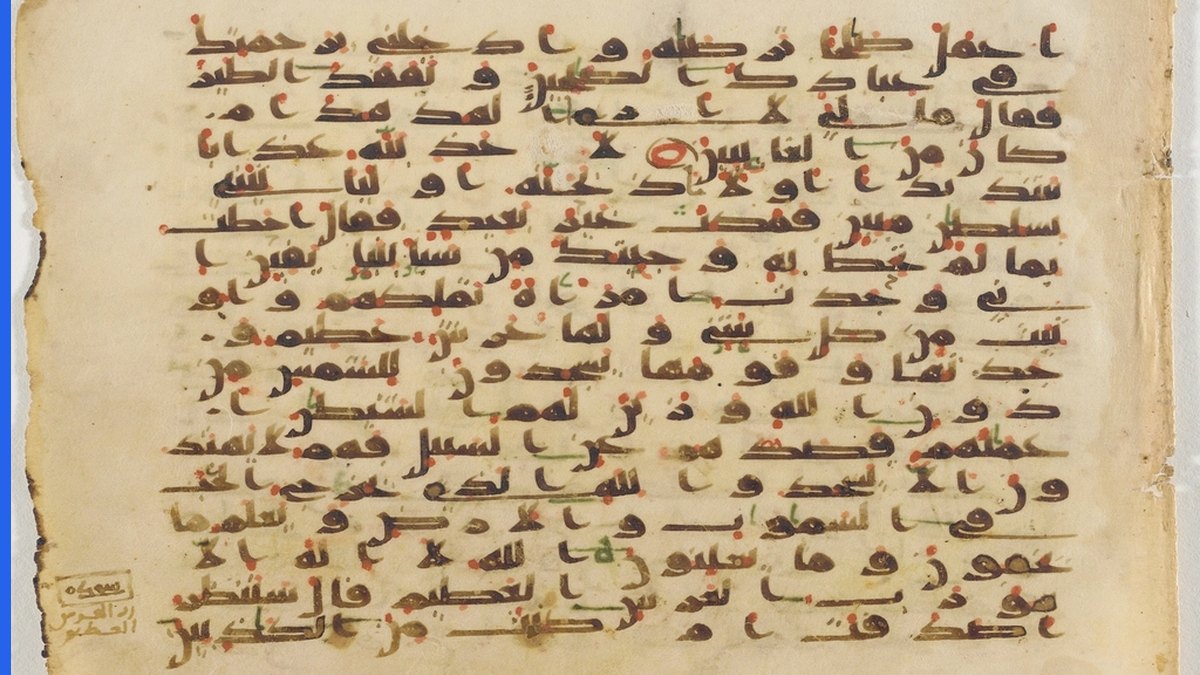
This is the requirement that separates a UAE-ready figure set from a US one, and it is the most common cause of rework we see on Gulf instructions.
Put plainly: patent drawings in the UAE are bilingual documents, in a way that figures filed at the USPTO, the EPO or IP Australia simply are not.
Article 11(8) provides that the application “and the attachments thereto shall be submitted in both Arabic and English,” and that if one of them is not submitted it shall be submitted within the period specified by the Executive Regulations. The Ministry’s own patent-registration checklist says the same thing in operational language: the mandatory documents are the claims, the detailed description and “drawings, if any” — each marked Arabic, English.
Read that literally, because the formalities officer does. Any word that appears inside a figure — a box label on a flowchart, a legend, a units annotation, a stream name on a process diagram, a layer caption on a semiconductor stack — is text in an attachment, and the attachment has to exist in both languages. A set of figures that is wall-to-wall English labels is not a set that can be filed once; it is a set that has to be redrawn into an Arabic twin, with the version-control risk that implies across a family.
There is a clean way out, and it is the oldest discipline in patent draughting: put numbers in the figures and words in the description. A figure whose only textual content is reference numerals, view labels of the form FIG. 1, and the odd universally recognised symbol is language-neutral. The legend that explains numeral 14 lives in the description, where it gets translated once, by a translator, in a document that is already being translated anyway. That is the same logic behind patent drawing reference numerals everywhere else; the Emirates simply makes ignoring it expensive.
For PCT cases the point is confirmed from the other direction. The PCT Applicant’s Guide national chapter for the Emirates lists, among the contents to be furnished on national-phase entry, a translation of the request, description, claims and — expressly — “any text matter of drawings.” WIPO is telling you in advance which part of your figures is going to cost money.
The 90-Day Fuse That Turns an Objection Into a Waiver
In most offices a formalities defect costs you a response and sometimes a fee. Here the default consequence is losing the application, and the clock is short.
Article 13(1) provides that once the prescribed fees are paid the Ministry examines the application and “may ask the applicant to fulfill what it deems necessary” to allow the patent or utility certificate. If the applicant fails to fulfil the requirements within 90 days from the date of notification, the applicant “shall be deemed to have waived his application.” Article 11(9) runs the same 90-day period for requested information and additional data. Industrial designs carry the identical fuse in Article 44(1), with non-compliance treated as relinquishment.
Ninety days sounds generous until you map it onto a real redraw. A notification goes to the registered agent in Arabic. It is reported to foreign counsel, who report it to the client, who approve a budget, who instruct a draughtsman, who produces an Arabic-labelled set, which has to be checked by someone who reads Arabic against a description that may itself need conforming amendment. Three or four weeks of that sequence is administrative, not technical. A ten-sheet process-diagram set with embedded English labels is the case where 90 days stops being comfortable.
There is no statutory extension in Article 13(1), and no restoration provision aimed at missed formalities responses. The provision the statute does supply for fee default is Article 18(3), which leaves re-working of applications where annual fees were unpaid or late to the Executive Regulations. That is not a safety net for a drawing objection.
The practical response is to front-load. The Ministry publishes an indicative schedule of roughly seven months from filing to the first stage, then up to 42 months from payment of the examination fees, then about three months from payment of the publication fees to issue. A file that is formally clean on day one spends that long period in substantive examination rather than in correspondence about lettering.
That is the real reason to settle the lettering question before filing rather than after. The cost of getting patent drawings in the UAE right on day one is a draughting decision; the cost of getting them wrong is a 90-day administrative sprint ending in waiver.
There Is No Emirati 37 CFR 1.84 — So What Do You Build To?
Because the statute and regulations are silent on the physical form of a drawing, the working answer is to build to the strictest standard your family will meet anywhere and file that set everywhere. In practice that means PCT Rule 11, with the US rule as the cross-check.
In other words, patent drawings in the UAE are best treated as a subset of a wider compliance problem rather than a local one. Build for the hardest office in the family and the Emirates takes the same sheets untouched.
The numbers worth committing to memory, from the instruments themselves:
- PCT Rule 11.5 — “The size of the sheets shall be A4 (29.7 cm x 21 cm).”
- PCT Rule 11.6(c) — on sheets containing drawings “the surface usable shall not exceed 26.2 cm x 17.0 cm.”
- PCT Rule 11.13(a) — drawings “shall be executed in durable, black, sufficiently dense and dark, uniformly thick and well-defined, lines and strokes without colorings.”
- PCT Rule 11.13(h) — “The height of the numbers and letters shall not be less than 0.32 cm.”
- 37 CFR 1.84(g) — a top margin of at least 2.5 cm, a left margin of at least 2.5 cm, a right margin of at least 1.5 cm and a bottom margin of at least 1.0 cm, leaving a sight no greater than 17.0 cm by 26.2 cm on A4 sheets.
A set built to those figures satisfies the Emirates comfortably, because there is nothing local for it to conflict with, and it travels. Our PCT drawing requirements guide works through Rule 11 line by line, and the 37 CFR 1.84 walkthrough covers where the US rule diverges — shading, the 8.5 by 11 inch sheet option, and the petition machinery for colour.
Colour deserves a word, because the three regimes have pulled apart. In a US utility application colour is accepted only if the Office grants a petition under 37 CFR 1.84(a)(2), with the fee set by 37 CFR 1.17(h), plus the prescribed specification statement. In a US design application colour drawings are permitted without any petition at all.
At the European Patent Office the picture changed twice. Rule 46 EPC — the old “form of drawings” provision — was deleted with effect from 1 February 2023, moving the presentation requirements into a Decision of the President of the EPO, and since 1 October 2025 the EPO accepts drawings filed electronically in colour or greyscale. Any page still describing Rule 46 EPC as live law is out of date; we cover the current position in EPO color patent drawings.
None of that liberalisation reaches the Emirates, and neither does it reach the PCT. Rule 11.13(a) still says “without colorings,” so an international application is still a black-line document. With no Emirati colour provision to rely on, and a black-line international standard feeding most national-phase entries here, colour is a risk with no upside. Build the set in black line work and carry any colour-dependent information in hatching, stippling or a legend keyed to numerals.
Three Routes In, and the One That Closed in January 2021
Gulf filing strategy changed permanently five years ago and a surprising amount of published guidance has not caught up.
The GCC Patent Office stopped accepting new applications on 6 January 2021. It had offered a single filing covering all six Gulf Cooperation Council states, which made it the obvious regional route. It is gone for new filings. Gulf coverage is now assembled nation by nation: a UAE filing at the Ministry of Economy and Tourism, a Saudi filing at SAIP, a Qatari filing at the Ministry of Commerce and Industry, and so on. Three countries means three files, three agents and three sets of formalities — which is precisely why a single language-neutral master set pays for itself.
That leaves three live routes into the Emirates:
- Direct national filing at the Ministry, with the full bilingual document set.
- Paris Convention filing within the 12-month priority period fixed by Article 12(2), claiming an earlier foreign application.
- PCT national-phase entry. The time limit is 30 months from the priority date, under both PCT Article 22(1) and Article 39(1)(a) — 30, not the 31 months several EPC states allow. The required translation into Arabic or English expressly includes any text matter of the drawings.
Note what is not on that list. The Emirates is not an EPC contracting state and there is no validation agreement, so a granted European patent has no route to effect here. A European portfolio reaches the Gulf only through the PCT or through direct national filings. If your docket treats the Emirates as an EPC extension state, the error surfaces as a lost deadline rather than as a formalities objection.
The 30-month date is also the practical deadline for the drawings work, not a date by which you merely instruct an agent. Entering the national phase with English-labelled figures and a plan to fix them later converts a predictable translation cost into an Article 13(1) notification with a 90-day fuse attached.
Whichever route you take, the figures are the one deliverable that does not change. One master set of patent drawings in the UAE format — which is to say numeral-only and built to Rule 11 — serves a direct filing, a Paris filing and a national-phase entry without rework.
Design Drawings: A Separate Filing With a 20-Year Term
Industrial designs sit in the same statute but run on different rules, and two of them are unusual enough to change strategy.
The term is 20 years from the filing date — Article 45(1). That is long. A US design patent runs 15 years from grant; a registered Community design in the European Union runs a maximum of 25 years in five-year renewals. Twenty years from filing puts the Emirates at the generous end of the range, which makes a design registration here worth more than practitioners used to shorter national terms tend to assume.
The priority period is six months, not twelve — Article 42(2), the standard Paris period for designs. Mixing that up with the patent period in Article 12(2) is an easy docketing error on a file that contains both. Article 43 requires novelty and treats a design as undisclosed where the disclosure occurred within one year before the filing date, which is a grace period rather than a priority period and should not be docketed as one. Article 41 allows more than one design in a single application provided they fall in the same class of the international classification.
The drawing consequence is that utility figures almost never work as design figures, in any jurisdiction, and the reasons are instructive. A design filing claims appearance, so the figures must show the article as it looks, with a sufficient number of views to disclose the whole of it, and with claimed and unclaimed matter distinguished.
The US rule states that expectation directly. 37 CFR 1.152 requires the design to be represented by a drawing that complies with 1.84 and to contain “a sufficient number of views to constitute a complete disclosure of the appearance of the design.” Under that rule surface shading should be used but is not strictly required, broken lines may show environment or a claim boundary but may not be used to show hidden planes and surfaces, and solid black surface shading is not permitted except to represent the colour black or colour contrast.
The Emirates publishes no comparable provision, so the working approach for a design set is to build to 1.152 and 1.84 and let the Ministry’s formalities check find nothing to object to. Our design patent drawing requirements guide sets out the view strategy in detail. One caution for European practitioners: designs in Europe are an EUIPO and Hague matter, not an EPC one, so nothing in EPO drawing practice — including the 2025 colour change — applies to a design filing anywhere.
Where These Figures Are Eventually Tested
A formalities officer is not the last reader of your drawings, and the second reader is a judge who may be working from the Arabic version.
Infringement is a civil action in the onshore Courts of First Instance of the relevant emirate — Dubai Courts, the Abu Dhabi Judicial Department, or the federal courts elsewhere — with appeal to the Court of Appeal and then to the Court of Cassation or the Federal Supreme Court. There is no specialised national patent court, and the courts routinely appoint technical experts whose report tends to drive the outcome. Validity is raised as a defence or counterclaim inside that action rather than in a separate revocation proceeding.
Two complications are worth knowing. The common-law free-zone courts — the DIFC in Dubai and the ADGM in Abu Dhabi — hear IP contract disputes within their jurisdiction in English, but they do not grant or cancel federal patents. And an administrative decision of the Ministry, including a refusal, goes first to a grievances committee and then to the competent federal court, with the Abu Dhabi Federal Court of Appeal designated for IP administrative appeals. We set the enforcement picture out in full in patent litigation in the United Arab Emirates.
The evidential point is the one to act on. Where the Arabic and English figure sets differ — a label translated loosely, a numeral that migrated during the redraw, a view regenerated at a different scale — you have handed the other side a discrepancy in the granted document, in a forum that leans on expert reports. Keeping the figures numeral-only removes the discrepancy at source, because there is nothing in them left to translate differently.
Eight Checks Before You File in the Emirates
Run these before the set leaves your office. Each one maps to a provision above rather than to general good practice.
Treat this as the sign-off sheet for patent drawings in the UAE. Each item maps to a provision discussed above rather than to general good practice.
- No words inside any figure. Reference numerals, FIG. labels and standard symbols only, so Article 11(8) costs you nothing.
- Every numeral in the figures appears in the description, and the same feature carries the same numeral throughout. This is what makes the numeral-only set readable.
- A4 sheets, usable surface within 26.2 cm by 17.0 cm, margins at least 2.5 / 2.5 / 1.5 / 1.0 cm. PCT Rule 11.5 and 11.6(c); 37 CFR 1.84(g).
- Durable black line work, uniformly thick, no colour and no greyscale fills. PCT Rule 11.13(a). Do not rely on the EPO’s 2025 colour allowance here.
- Characters at least 0.32 cm high at final sheet size. PCT Rule 11.13(h) — check after scaling, not before.
- Every embodiment you may want to divide out later is separately and clearly shown. Article 16(1) limits divisionals to what the original description or drawings stipulate.
- Design filings built to 37 CFR 1.152 and 1.84, with a sufficient number of views and claimed versus unclaimed matter distinguished — and docketed to the six-month priority period in Article 42(2), not twelve.
- A named owner for the 90-day clock. Someone has to be accountable for an Article 13(1) notification from day one, because the default outcome is waiver, not a fee.
The fee schedule is worth having in front of the client while you make these decisions. The Ministry publishes a new patent application at AED 1,000 for individuals and AED 2,000 for companies, search and first examination at AED 7,000, and each of the second and third examinations at AED 5,000. Two avoidable formalities rounds are not a rounding error against the cost of getting the figures right once.
Filing across the Gulf changes the arithmetic again, because the GCC route is closed and each country is a separate file. One language-neutral master set, prepared once to Rule 11, is what makes three national filings a copying exercise instead of three draughting projects. City-level detail for the Emirates sits on our patent drawing services in Dubai page, with the wider regional picture on the United Arab Emirates and Riyadh pages.
How PerspireIP Can Help
PerspireIP prepares patent drawings in the UAE for direct national filings, Paris Convention filings and PCT national-phase entries, alongside the Saudi and Qatari files that usually sit beside them.
Our draughting team prepares numeral-only, language-neutral figure sets built to PCT Rule 11 and 37 CFR 1.84, so the same sheets clear the Ministry of Economy and Tourism, SAIP, the USPTO and the EPO without a redraw. Where an Arabic-labelled set is genuinely required — some process and control diagrams cannot be reduced to numerals — we produce the matched pair and keep them under one version.
Send your sketches, CAD exports or draft specification and tell us the jurisdictions in the family. You will have a fixed quote within one business day. See our patent drawing services or contact us to start.
Frequently Asked Questions
What standard do patent drawings in the UAE have to meet?
There is no national drawing code to meet. Federal Decree-Law No. 11 of 2021 requires a figure where one is needed but specifies no sheet size, margin, line weight or character height. In practice patent drawings in the UAE are built to PCT Rule 11 and cross-checked against 37 CFR 1.84, because nothing in Emirati law conflicts with either.
Is there a UAE equivalent of 37 CFR 1.84 for patent drawings?
No. Federal Decree-Law No. 11 of 2021 and its Executive Regulations require drawings where they are needed but publish no sheet size, margin, line-weight or character-height specification. The practical standard is PCT Rule 11, cross-checked against 37 CFR 1.84, which no Emirati provision conflicts with.
Do the drawings themselves have to be in Arabic?
Any text inside a figure does. Article 11(8) requires the application and its attachments in both Arabic and English, and the Ministry’s own checklist lists drawings as Arabic and English. A figure containing only reference numerals and FIG. labels needs no translation, which is why numeral-only sets are the standard answer for Gulf filings.
Can I validate a European patent in the Emirates?
No. The UAE is not a contracting state of the European Patent Convention and there is no validation agreement. The routes in are a direct national filing, a Paris Convention filing within the 12-month priority period under Article 12(2), or PCT national-phase entry at 30 months from the priority date.
What happens if the Ministry objects to my drawings?
Article 13(1) gives you 90 days from the date of notification to fulfil what the Ministry requires. Miss it and you are deemed to have waived the application; industrial designs carry the same 90-day consequence under Article 44(1). There is no extension provision aimed at formalities responses, so the clock needs a named owner.
Is the GCC Patent Office still an option for Gulf coverage?
No. It stopped accepting new applications on 6 January 2021. Gulf protection is now filed country by country, so a UAE, Saudi and Qatari filing are three separate files with three sets of formalities — the strongest practical argument for a single reusable master drawing set.
Is Rule 46 EPC still the standard for European drawings?
No. Rule 46 EPC was deleted with effect from 1 February 2023 and the presentation requirements moved into a Decision of the President of the EPO. Since 1 October 2025 the EPO has accepted drawings filed electronically in colour or greyscale. Neither change reaches the PCT, where Rule 11.13(a) still requires black lines without colorings, or the Emirates, which has no colour provision at all.