
Table of Contents
Most inventors who want French protection reach for a patent out of habit. They should not. France has a faster, cheaper right that many foreign filers overlook entirely: the certificat d’utilité. The utility model in France was quietly rebuilt by the 2019 PACTE law, and the version you can file today lasts far longer and does far more than the one practitioners dismissed a decade ago. If your invention has a short commercial life, a tight budget, or an uncertain future, it may be the smarter filing.
What Is a Utility Model in France?

A utility model in France is a national patent-like right called the certificat d’utilité (utility certificate). It is granted by the Institut National de la Propriété Industrielle (INPI), the same office that issues French patents, and it protects a technical invention against copying inside France.
The key difference from a patent is examination. A utility certificate is granted without the full prior-art search report and in-depth novelty review that INPI applies to a patent application. That makes it quicker and cheaper to obtain. It must still meet the same substantive bar as a patent, meaning the invention has to be new, involve an inventive step, and be capable of industrial application. INPI simply does not test those conditions as rigorously before granting.
- Granting office: INPI, the French national IP office
- Scope: national protection in France only (not a European right)
- Examination: formalities and a light review, no mandatory search report
- Requirements: novelty, inventive step, industrial applicability, the same as a patent
How Long Does Protection Last, and What Does It Cost?
This is where the 2019 reform changed everything. Before the PACTE law of 22 May 2019, a utility certificate lasted just six years, short enough that most applicants ignored it. The reform extended the term to 10 years from the filing date, closing much of the gap with a patent’s 20-year term.
Cost is the other draw. Because INPI does not draw up a search report when you file a utility certificate, you avoid the search fee that comes with a patent. For an early-stage product or a crowded field where you are not sure the invention will earn its keep, skipping that upfront cost is a real advantage. You still pay annual maintenance fees to keep the right alive, on the same schedule as a French patent.
Ten years of enforceable protection, filed at a lower cost, with no search report standing between you and a grant, is a genuinely different value proposition than it was before 2020.
Utility Certificate vs. French Patent: The Real Trade-Offs
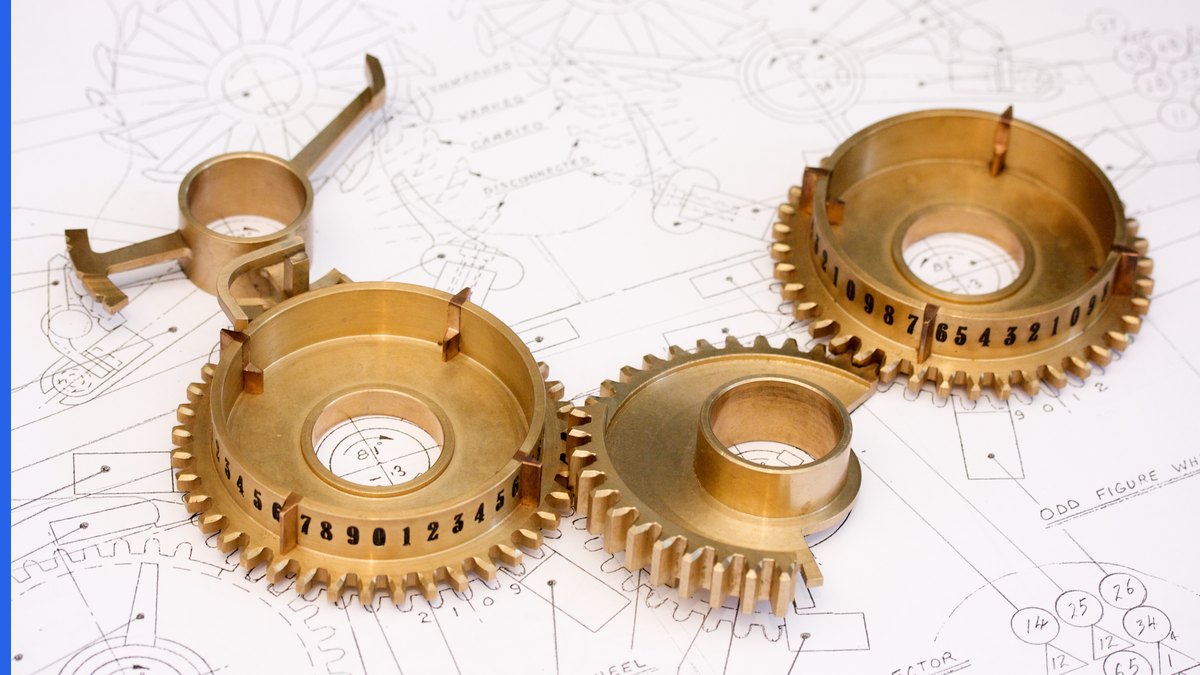
The choice is not about quality of invention. It is about commercial life, budget, and how you expect to use the right. Here is how the two compare in practice:
- Term: patent, 20 years; utility certificate, 10 years
- Search report: patent, always drawn up by INPI; utility certificate, not drawn up at filing
- Speed to grant: utility certificate is typically faster because the search stage is removed
- Cost at filing: utility certificate is lower, with no search fee
- Deterrent value: a granted patent with a clean search report signals strength; a utility certificate is quieter but still enforceable
In our experience, a utility certificate suits incremental mechanical and consumer-product inventions with a predictable, shorter market window. A patent still wins when you need the full 20 years, want a search report in hand to raise money or license, or expect to litigate.
How the PACTE Law Reshaped the Certificat d’Utilité
The PACTE law did more than extend the term. It added flexibility that makes the utility certificate a sensible starting point rather than a dead end.
Most importantly, you can now convert a utility certificate application into a full patent application. Before PACTE, that door only opened the other way, from patent to certificate. Today, if your invention proves more valuable than you expected, you can upgrade the filing and pursue the 20-year patent instead, provided you act within the deadlines INPI sets. That means choosing a certificate no longer locks you out of a patent.
The reform also sharpened how French innovators think about filing strategy. You can file fast and cheap to lock in your priority date, watch how the market and the technology develop, and then decide whether to convert. For startups and SMEs that cannot justify a full patent on day one, that optionality is worth a great deal.
Filing a Utility Model in France: Step by Step
Filing a utility model in France follows the same front end as a French patent. The application is filed with INPI, in French, and the documents mirror a patent application: a description, one or more claims, any drawings, and an abstract.
- Prepare the description, claims, drawings, and abstract in French (translation is required if you drafted in another language)
- File electronically with INPI and pay the filing fee; you can claim priority from an earlier first filing within 12 months
- INPI reviews formalities and conducts its light examination, without drawing up a search report
- The application publishes, typically 18 months after filing or priority
- INPI grants the certificate once the formal requirements are met
- Pay annual maintenance fees to keep the right in force for up to 10 years
If you are a foreign applicant without a presence in France or the EEA, you will generally need a French or European professional representative to act before INPI. Our guide to filing a patent in France walks through the same front-end process in more detail.
Enforcement: Why You Still Need a Search Report
Here is the catch that surprises people. You skip the search report at filing, but you cannot skip it forever. French law requires a prior-art search report to be drawn up before you can pursue an infringement action based on a utility certificate. In other words, the search you avoided at the start resurfaces the moment you want to sue.
That is not a reason to avoid the certificate, but it does shape strategy. If enforcement looks likely, budget for the search when you plan the litigation, and be realistic that a defendant will scrutinize a right that was granted without one. French patent and utility certificate disputes are heard by a single specialist court, the Tribunal judiciaire de Paris, which has exclusive national jurisdiction. Our overview of patent litigation in France covers how those cases run.
One more boundary matters. A utility certificate is a purely national French right, so it falls outside the Unified Patent Court. The UPC hears European patents and unitary patents, not national titles. If you want a right that the UPC can enforce across participating countries, you are looking at validating a European patent in France instead. France is a founding UPC member and hosts the central division’s Paris seat, but that only reaches European patents, not the certificat d’utilité.
When a Utility Model in France Makes Sense
Use a simple decision rule. Pick the certificate when the invention’s commercial value is likely to be realized within a decade, when cash is tight at filing, or when you want to secure a priority date quickly and decide later. Pick a patent when you need 20 years, a search report for investors or licensees, or a strong hand for litigation.
Because you can convert later, the certificate is a low-regret opening move for many French filings. Think of it as protection with an option attached. If you want to understand the broader category before you choose, our utility model vs. patent guide and our breakdown of the utility model in Germany show how the same tool differs across jurisdictions.
How PerspireIP Can Help
Deciding between a certificat d’utilité and a French patent is a strategy question, not a form-filling one, and getting it right early saves money and preserves options. PerspireIP helps inventors and counsel choose the right French filing, prepare INPI-ready applications and drawings, and plan for enforcement before it is needed. Explore our IP services in France, including patent drawings in Paris and patent work in Lyon, or contact our team to map out your filing.
Frequently Asked Questions
What is a utility model in France called?
It is called a certificat d’utilité, or utility certificate. It is France’s national equivalent of a utility model, granted by INPI.
How long does a French utility certificate last?
Ten years from the filing date. The 2019 PACTE law extended it from the previous six-year term.
Does a French utility certificate need a search report?
No search report is drawn up when you file. However, French law requires one before you can bring an infringement action based on the certificate.
Can I convert a utility certificate into a patent?
Yes. Since the PACTE law, a utility certificate application can be converted into a patent application within the deadlines set by INPI, letting you upgrade to a 20-year term.
Is a French utility certificate enforced by the Unified Patent Court?
No. It is a national right heard by the Tribunal judiciaire de Paris. The UPC only handles European patents and unitary patents.
Is a utility certificate cheaper than a French patent?
Yes at filing, mainly because there is no search fee. You still pay annual maintenance fees to keep it in force.