Table of Contents
A distributor finds your product selling online for 30% less than your authorized price — same logo, same packaging, genuine goods — but you never sold to that seller. Welcome to the grey market. These are authentic products diverted into a market they were never meant for, and they are legal far more often than brand owners expect. Effective grey market enforcement depends on a handful of rules that decide, before you spend a cent on litigation, whether you can actually stop the goods at all.
What Grey Market Enforcement Really Means
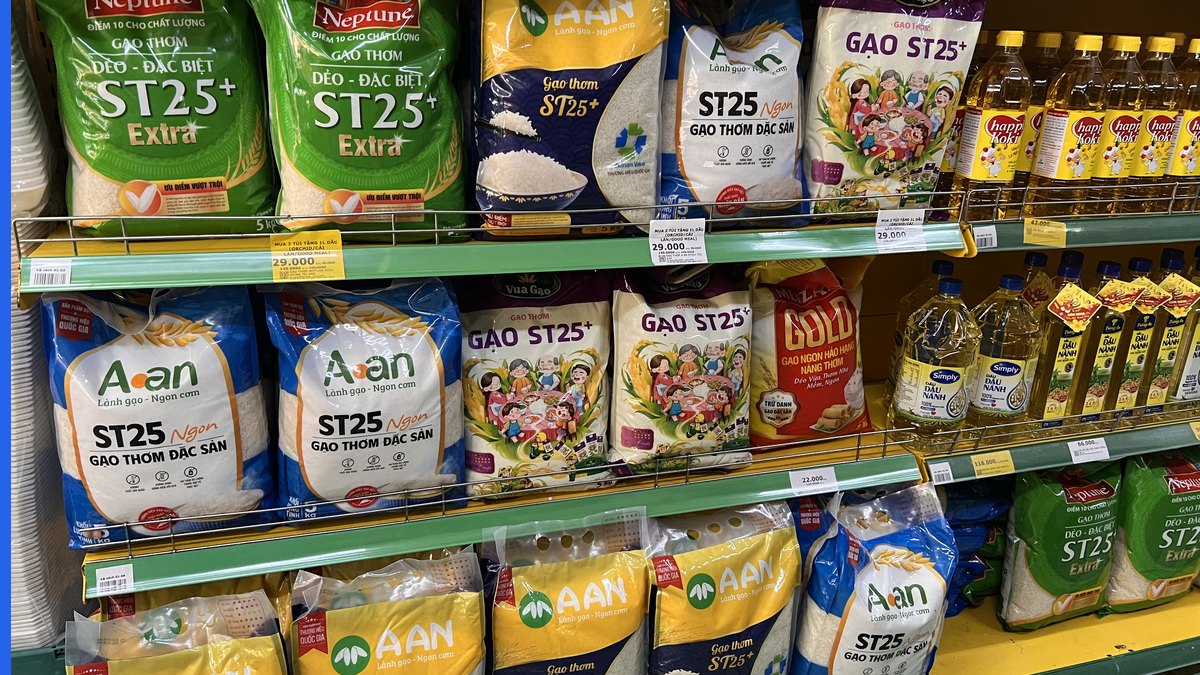
Grey market goods — also spelled gray market — are genuine, trademarked products sold through channels the brand owner never authorized. Think of a fragrance made for the Middle East that turns up on a US marketplace, or a camera built for Europe sold in Chicago. The goods are real. That single fact is what separates grey market enforcement from fighting counterfeits, where the goods are fake and the law is squarely on your side.
Because the products are authentic, you usually cannot claim straightforward trademark infringement or counterfeiting. Instead, enforcement hinges on narrower theories: that the imported goods are materially different from what you authorize for sale, that they damage your quality control, or that an importer violated a specific statute. Pick the wrong theory and a court will send you home.
Parallel imports are a global problem, and the answer changes at every border. The US framework below is the one most brands fight first; we flag the EU position at the end because it works in the opposite direction.
The Legal Backbone: Lanham Act and Section 1526
Two statutes do most of the work in the US. Section 42 of the Lanham Act (15 U.S.C. § 1124) bars the importation of goods bearing a mark that copies or simulates a registered US trademark. Section 526 of the Tariff Act (19 U.S.C. § 1526(a)) goes further, prohibiting importation of goods bearing a genuine US-registered mark without the owner’s written consent.
Read literally, § 1526 sounds like a total ban on parallel imports. It is not — the Supreme Court and the regulations have carved it down significantly. The theory you will actually rely on is almost always the material differences doctrine: goods that differ from the US-authorized version in ways consumers care about can confuse buyers and dilute your quality control, and that confusion is what the law lets you stop.
Material differences can be small on paper but large in the market — different ingredients or formulations, different warranties, missing English-language safety labeling, different packaging sizes, or no access to the US warranty and support. Document them early; they are the backbone of every grey market case.
The Common-Control Trap and the Lever Rule

Here is the trap. In K Mart Corp. v. Cartier, Inc., 486 U.S. 281 (1988), the Supreme Court upheld US Customs regulations that let genuine goods in when the US and foreign trademarks are owned by the same company or by entities under common control. So if your overseas affiliate makes the product, Customs will generally not block it under § 1526 — the “common-control exception.” Many brands discover this only after filing a doomed complaint.
The way back in is the Lever Rule, from Lever Bros. Co. v. United States. It says that even goods from a related company can be barred if they are physically and materially different from the US-authorized product. US Customs and Border Protection codified this at 19 C.F.R. § 133.23. In short:
- Common control plus identical goods = Customs usually lets them in.
- Common control plus materially different goods = you can seek a Lever-rule bar.
- No common control and an unauthorized mark = the strongest position for exclusion.
Proving material difference is a factual exercise, not a slogan. Buy the grey units, buy your authorized units, and line them up side by side — formulation, labeling, warranty card, batch coding, packaging. That evidence is what convinces both Customs and a court.
Recording with CBP: How Customs Blocks Gray Goods
The border is the cheapest place to win. To use it, record your US trademark registration with CBP through its online recordation system, then petition for Lever-rule protection by showing Customs the material differences between the grey goods and your authorized products. Once granted and published, CBP can detain non-conforming imports at the port.
There is a built-in escape valve importers use, so know it. Under 19 C.F.R. § 133.23(b), even materially different goods will not be detained if they carry a conspicuous, legible label stating that the product is not authorized by the US trademark owner and is physically and materially different from the authorized product. A clean label can defeat a border seizure — which is exactly why many grey market battles move from Customs to the courts.
In practice, recordal is step one of any real brand-protection program. It is inexpensive, it scales across every port, and it gives you leverage before a diverter ever reaches a courtroom. Pair it with the online monitoring we describe in our guide to preventing counterfeit products online.
Copyright and the First-Sale Limit
Brands sometimes try to use copyright — in a label, logo artwork, or manual — to block grey goods. That door is mostly closed. In Kirtsaeng v. John Wiley & Sons, 568 U.S. 519 (2013), the Supreme Court held that the first-sale doctrine applies to copies lawfully made abroad. Once a copyrighted item is sold anywhere with the owner’s authority, the owner cannot use US copyright law to stop its resale here.
The lesson for grey market enforcement is to lead with trademark and material-differences theories, not copyright. A copyrighted element on the packaging will rarely carry a parallel-import case on its own after Kirtsaeng. The same exhaustion logic runs through patents — our explainer on the patent exhaustion doctrine shows why an authorized first sale usually ends patent control too.
Enforcement Beyond the Border: Courts, Platforms, Contracts

When Customs cannot hold the goods, you still have options. A federal lawsuit for trademark infringement or unfair competition can succeed where material differences cause consumer confusion or defeat your quality control. Marketplace brand-protection programs let you report listings of unauthorized, materially different goods and have them removed. And the most durable fix is contractual: tight distribution agreements with territory restrictions, serialized tracking to trace the leak, and consequences for distributors who divert.
- Record your marks with CBP and seek Lever-rule protection for materially different goods.
- Build a material-differences evidence file before you accuse anyone.
- Use marketplace takedown programs for online grey listings.
- Sue for infringement or unfair competition where confusion is provable.
- Close the leak with territorial distribution terms and serialized tracking.
- Map each export market separately, because the law flips across borders.
That last point matters for global brands. The EU runs on regional exhaustion: once you sell inside the European Economic Area, you generally cannot stop resale within it, but you can block parallel imports from outside the EEA, a principle the Court of Justice set in Silhouette International Schmied v. Hartlauer (C-355/96). A strategy that works in Europe can fail in the US, and vice versa. For counterfeits rather than genuine diversion, see our broader guide to anti-counterfeiting and the explainer on gray market goods.
Build a Grey Market Enforcement Plan with PerspireIP
PerspireIP helps brand owners stop parallel imports before they erode pricing and reputation — CBP recordal and Lever-rule petitions, material-differences analysis, marketplace takedowns, and distribution terms that close the leak. Talk to our team about a grey market enforcement plan built for the markets you actually sell in.
Frequently Asked Questions
Are grey market goods illegal?
Not inherently. They are genuine products sold outside authorized channels. You can usually only stop them when they are materially different from your US-authorized goods or when a specific statute is violated.
What is the Lever Rule?
It lets US Customs bar imports of genuine goods that are physically and materially different from the US-authorized version, even when the US and foreign marks are under common control. It is codified at 19 C.F.R. § 133.23.
How do I use Customs for grey market enforcement?
Record your trademark registration with CBP, then petition for Lever-rule protection by documenting the material differences. CBP can then detain non-conforming imports at the port.
Can I block grey goods made by my own overseas affiliate?
Usually only under the Lever Rule. Under the common-control exception from K Mart v. Cartier, Customs generally admits identical goods from a commonly controlled entity unless they are materially different.
Can copyright stop parallel imports?
Rarely. After Kirtsaeng v. Wiley (2013), the first-sale doctrine applies to copies lawfully made abroad, so copyright in packaging or manuals usually cannot block resale of genuine goods.
Does the EU treat grey market goods the same as the US?
No. The EU applies regional exhaustion: you cannot stop resale within the EEA after an authorized sale, but you can block imports from outside the EEA under Silhouette (C-355/96).