Table of Contents
Two drawings of the same product can claim wildly different things, and the only visible difference is which lines are dashed. Design patent drawing broken lines are not a stylistic choice: under 37 CFR 1.152 and MPEP 1503.02 they are the mechanism that carves subject matter out of your claim. Solid lines claim. Broken lines disclaim. Get the split wrong and you either claim so much that a competitor designs around you in an afternoon, or so little that the patent covers a fragment nobody sells. Worse, the Federal Circuit has made clear you often cannot fix it later. Here are the seven rules that decide what your dashed lines really do.
Why Design Patent Drawing Broken Lines Decide Your Claim Scope
A design patent has exactly one claim, and that claim is written in a single sentence that points at the drawings: “The ornamental design for a [article], as shown and described.” There is no independent claim to negotiate, no dependent claims to fall back on, and no prose limitation an attorney can argue around. Whatever the figures show in solid line is the protected design. Whatever they show in broken line is expressly outside it.
This is why design prosecution feels so different from utility work. In a utility application the drawings support the claims; in a design application the drawings are the claims. We walk through that divergence in detail in our guide to utility versus design patent drawings, but the practical consequence is worth stating plainly: a draftsperson choosing line types is making a claim-drafting decision.
The strategic logic runs in one direction. Every element you leave in solid line becomes a feature an accused infringer can point to as absent from their product. The ordinary-observer test compares the accused design against the claimed design as a whole, so a cluttered solid-line drawing full of incidental detail is a narrow patent wearing a broad costume. Converting that incidental detail to broken line removes it from the comparison entirely.
The opposite failure is just as real. Disclaim too aggressively and you are left claiming a contour so abstract that the examiner raises indefiniteness under 35 U.S.C. 112, or so generic that prior art you never worried about suddenly reads on it. The right answer is almost never “dash everything optional.” It is a deliberate decision, feature by feature, about what the design actually is.
- Solid line — claimed. Part of the ornamental design and part of the infringement comparison.
- Broken line — unclaimed. Shown for context or to bound the claim; forms no part of the design.
- Not shown at all — also unclaimed, but with no disclosure of how the design sits on the article.
Rule 1: Broken Lines Do Two Jobs, and Only Two
MPEP 1503.02 is unusually direct about this. It states that the two most common uses of broken lines are to disclose the environment related to the claimed design and to define the bounds of the claim. Those are different jobs with different drafting consequences, and conflating them is the single most common source of objections we see on incoming design files.
Environmental structure is real, physical subject matter that exists on or around the article but is not being claimed. A dashed automobile body around a claimed tail-light lens. A dashed phone housing around a claimed camera bump. The MPEP permits this: structure that is not part of the claimed design, but is considered necessary to show the environment in which the design is associated, may be represented in the drawing by broken lines. It includes any portion of the article the design is applied to that is not considered part of the claimed design.
Boundary lines are different. A boundary line does not depict anything physical at all. It is a cartographic device that says “the claim stops here,” typically slicing across an otherwise continuous surface where no edge, seam or feature exists. Rule 4 below deals with the specific hazards these carry.
If a dashed line in your figure is doing neither job — if it is a construction line, a centre line, a hatching artefact or a hidden edge your CAD package exported by default — it does not belong in a design patent drawing. Examiners read every dashed line as a disclaimer, because that is what the rules tell them to do.
Rule 2: 37 CFR 1.152 Bans Hidden Lines and Alternate Positions
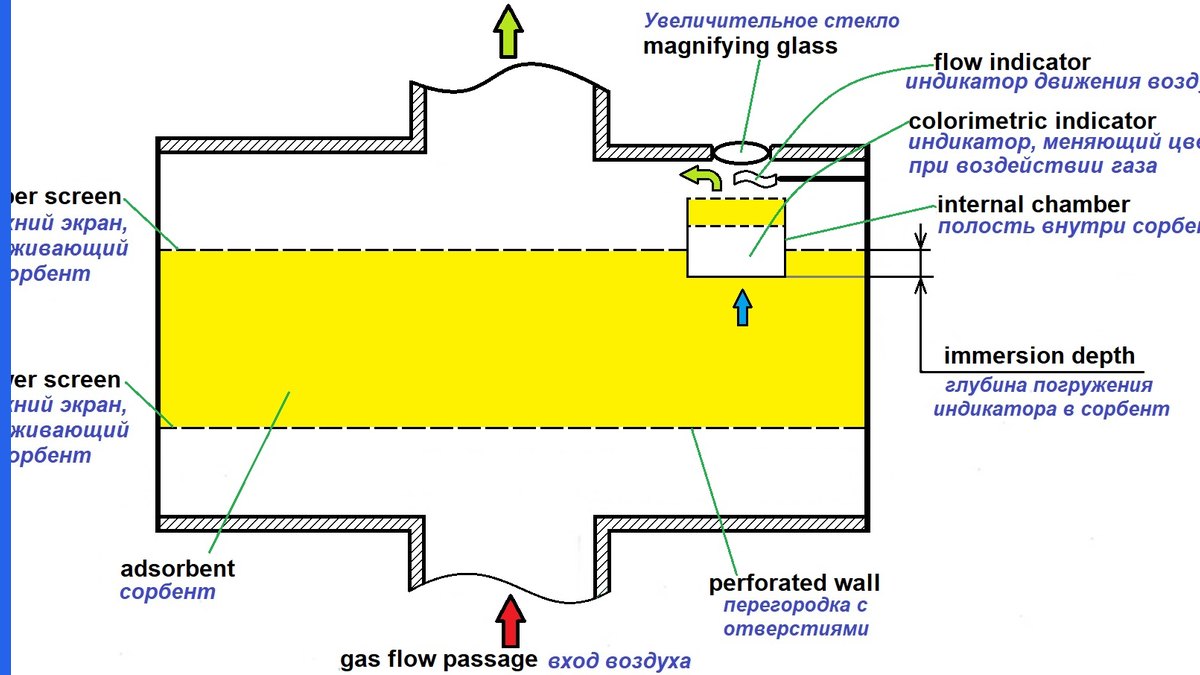
The regulation itself is short, and two of its sentences are routinely violated. 37 CFR 1.152 provides that broken lines may be used to show visible environmental structure, but may not be used to show hidden planes and surfaces that cannot be seen through opaque materials. It then adds that alternate positions of a design component, illustrated by full and broken lines in the same view, are not permitted in a design drawing.
The first prohibition catches engineers by reflex. In mechanical drafting, a dashed line is the standard convention for a hidden edge — the far side of a bore, an internal rib, a concealed fastener. Export that same model to a design application and every one of those hidden-detail dashes reads as a disclaimer of something that cannot be seen anyway. The result is an incoherent claim and, frequently, a 112 rejection for indefiniteness. The word doing the work in the regulation is visible.
The second prohibition catches product designers. A hinge shown open in solid line and closed in dashed line in the same figure is an alternate-position drawing, and Rule 1.152 forbids it outright. Articles that genuinely change configuration need separate figures for each position, with the specification describing what each one shows — not one figure carrying both states.
Note also what Rule 1.152 does not restrict. It expressly permits solid black surface shading to represent the colour black or colour contrast, which is the opposite of the position taken for utility drawings under 37 CFR 1.84(m). That asymmetry trips up draftspeople moving between the two, and we cover it further in our piece on patent drawing shading requirements.
Rule 3: Every Broken Line Needs a Statement in the Specification
Drawing the dashes is only half the job. MPEP 1503.02 requires that unclaimed subject matter be described as forming no part of the claimed design or of a specified embodiment thereof. In practice that means a short descriptive statement in the specification, and its absence is one of the most common formalities objections in design prosecution.
The conventional wording is unglamorous and should stay that way:
- “The broken lines in the drawings depict portions of the [article] that form no part of the claimed design.”
- “The broken lines immediately adjacent the shaded areas represent the bounds of the claimed design, and form no part thereof.”
- “The [element] shown in broken lines is environmental structure only and forms no part of the claimed design.”
Where a figure mixes both functions — environmental structure in one place, a boundary line in another — the statement must distinguish them. A single blanket sentence covering “all broken lines” is acceptable only when all of the broken lines really are doing the same job. Examiners do check this against the figures, and a mismatch between what the statement says and what the drawings show is an invitation to a rejection under 35 U.S.C. 112.
One further point of discipline: the statement belongs in the specification, not in the drawings. Text written onto a design figure is generally improper, and legends are tightly constrained. The drawing carries the linework; the specification explains it.
Rule 4: Boundary Lines Are a Separate Tool With Separate Risks
A boundary line is the device that makes partial claiming possible. The foundational authority is In re Zahn, 617 F.2d 261 (CCPA 1980), which held that a design claim may be directed to a portion of an article of manufacture rather than the article as a whole. Zahn claimed the shank of a drill bit and showed the fluted remainder in broken line; the court confirmed the claim was proper. Every modern partial design claim — the icon on a screen, the grille on a car, the heel of a shoe — descends from that holding.
The hazard is that a boundary line frequently has no physical referent. If the claimed region ends in the middle of a smooth, continuous surface, the line marking where it ends is pure legal construct. Practitioners typically render these as dashed or dot-dash lines and then explain in the specification exactly what they are, because an unexplained line crossing a blank surface is genuinely ambiguous to a reader.
Where the boundary follows something real — a seam, a parting line, an edge, a change in material — say so. Where it does not, the specification should make clear that the line defines the bounds of the claim and forms no part of the design. The distinction matters enormously for the next rule.
Screen designs are the most demanding case, because the boundary is doing double duty: it separates the claimed graphical elements from the unclaimed display, and it often also separates them from the unclaimed device. Our guide to GUI design patent drawings works through the conventions the USPTO expects for that specific situation.
Rule 5: In re Owens Limits the Broken Lines You Add Later

This is the rule that costs real money, and it is the one most often discovered too late. The instinct is reasonable: file broad, see what the market copies, then file a continuation that dashes out everything the competitor did not take. The Federal Circuit constrained that strategy in In re Owens, 710 F.3d 1362 (Fed. Cir. 2013).
Owens had a granted design for a bottle. In a continuation he sought to claim only part of the front panel, introducing a new broken line that bisected a trapezoidal surface which the parent had disclosed as a single uninterrupted region. No such division appeared anywhere in the parent drawings. The court affirmed the rejection: the parent did not convey possession of a design bounded at that particular place, so the continuation was not entitled to the earlier filing date under the written-description requirement.
The practical test that emerged is whether the boundary you want to introduce was already disclosed — as an edge, a seam, a change of surface, an existing line — in the application as filed. Converting an existing solid line to broken line is generally safe, because the original drawing plainly disclosed a design with that feature present and the line already existed. Drawing a brand-new line across virgin surface generally is not.
Compare In re Daniels, 144 F.3d 1452 (Fed. Cir. 1998), where removing surface ornamentation from a leecher design did not offend the written-description requirement, because the underlying article had been fully disclosed. The two cases sit together comfortably: you may subtract what was shown, but you may not invent a new boundary after the fact.
- Safe, usually: solid → broken conversion of a line that already exists in the filed drawings.
- Risky: a new boundary line placed where the filed drawings show continuous, unbroken surface.
- Best practice: file the partial-claim variants you actually want at the outset, or file a continuation with the boundaries already disclosed.
Rule 6: Line Quality Must Keep Claimed and Unclaimed Distinguishable
Because Rule 1.152 requires design drawings to comply with 37 CFR 1.84, every general drawing standard applies — margins, sheet numbering, reproduction quality and the requirement under 1.84(l) that lines be durable, clean, black, sufficiently dense and dark, and uniformly thick and well-defined. Broken lines are not exempt from any of it.
The functional requirement that follows is simple: a reader must be able to tell at a glance which lines claim and which do not. That means dashes long enough and spaced widely enough to read as dashes after the drawing is reduced for publication, and drawn lightly enough that they do not compete visually with the solid claimed contour. Faint, tightly spaced dashes reproduce as a grey solid line, and a grey solid line is an ambiguous claim.
- Keep dash length and gap consistent across every figure in the application.
- Do not let broken lines cross or obscure claimed solid-line features.
- Check the drawings at published scale, not at CAD zoom — dashes vanish when reduced.
- Never mix line conventions between views: an element dashed in Fig. 1 must stay dashed in Fig. 4.
That last point deserves emphasis. Inconsistency between views is a leading cause of design rejections, because an element claimed in one figure and disclaimed in another leaves the examiner unable to determine the scope of the single claim. If you are correcting this after filing, read our guidance on amending patent drawings before touching the figures, since Rule 5 above applies with full force.
Rule 7: Broken Lines Do Not Travel Well Across Borders
A disclaimer convention that is routine at the USPTO can be refused elsewhere, and filers using the Hague system discover this only when the individual designated offices respond. A single international application produces national rights that are examined under national rules, so one set of design patent drawing broken lines can be accepted in one jurisdiction and objected to in another.
- EUIPO — registered EU designs accept visual disclaimers, and the converged practice recognises broken or dotted lines, boundaries, colour shading and blurring as ways to exclude features from protection. The conventions are close to US practice but not identical.
- Japan — the JPO has operated a partial design system for decades and uses broken lines to indicate the portion not claimed, with its own requirements for how the portion is specified.
- China — CNIPA only began accepting partial designs when the fourth amendment to the Patent Law took effect on 1 June 2021. Applications claiming a portion via broken lines before that date were not available at all.
It is worth being precise about Europe, because the terminology misleads people. The European Patent Office does not grant design rights — EU-wide design protection comes from the EUIPO. The EPO’s drawing rules govern technical drawings in patent applications, and they have changed: Rule 46 EPC, headed “Form of the drawings,” was deleted with effect from 1 February 2023, with the form requirements moved into a Decision of the President of the EPO so they can be updated without amending the Implementing Regulations. Anyone still citing Rule 46 EPC as live law is working from a stale source. Separately, since 1 October 2025 the EPO accepts drawings filed electronically in colour or greyscale, provided they are contrast-rich and clear.
If your filing programme runs through Geneva, the sequencing of these national differences matters more than the drawings themselves. Our guide to Hague System design drawings covers how to prepare one drawing set that survives the widest range of designated offices.
Where the conventions genuinely conflict, the usual answer is not a compromise drawing but parallel drawing sets prepared for each family of offices — which is cheaper than it sounds, and far cheaper than a refusal in your most important market.
Need Design Drawings That Claim Exactly What You Intend
PerspireIP prepares design and utility figures that clear formalities the first time, and we treat the solid-versus-broken decision as the claim-scope decision it actually is — not a drafting afterthought. See our patent drawing services for scope, turnaround and pricing, or talk to our team about a design portfolio you are planning. If you are new to the format, start with our overview of design patent drawings.
Frequently Asked Questions
What do broken lines mean in a design patent drawing?
They mark unclaimed subject matter. Under MPEP 1503.02 broken lines disclose either environmental structure surrounding the claimed design or the boundary of the claim itself, and a broken-line disclosure is understood to form no part of the claimed design. Only the solid lines are claimed.
Can I use broken lines to show hidden edges in a design patent?
No. 37 CFR 1.152 permits broken lines for visible environmental structure but prohibits using them to show hidden planes and surfaces that cannot be seen through opaque materials. The mechanical-drafting convention for hidden edges does not carry over to design applications.
Can I convert solid lines to broken lines after filing?
Often yes, if the line already exists in the drawings as filed, since you are subtracting disclosed subject matter. Introducing a brand-new boundary line across a surface the parent showed as continuous is the situation In re Owens, 710 F.3d 1362 (Fed. Cir. 2013), rejected for lack of written-description support.
Do I need a statement in the specification about the broken lines?
Yes. MPEP 1503.02 requires unclaimed subject matter to be described as forming no part of the claimed design. A short sentence identifying what the broken lines represent is standard, and its omission is a routine formalities objection.
Does a broken-line boundary narrow or broaden my design patent?
It broadens the claim by removing features from the infringement comparison, which is why partial claiming is so widely used. The trade-off is that an overly abstract remainder can attract prior art or a 35 U.S.C. 112 indefiniteness rejection.
Are broken lines treated the same outside the United States?
No. EUIPO recognises broken lines among several visual disclaimers, Japan has long used them for partial designs, and China only began accepting partial designs when its fourth Patent Law amendment took effect on 1 June 2021. Hague filings are examined office by office under local rules.