Table of Contents
A PCT application buys you time, not a patent. It holds your filing date in more than 150 countries while you decide where protection is worth paying for, but it never ripens into an enforceable US right on its own. To turn that option into a real patent you have to leave the international system and enter the country, and the PCT national phase in United States is where that happens. Because the US is not part of the European patent system, there is no validation shortcut and no regional filing to piggyback on — you enter the USPTO directly, and a single hard deadline decides whether you keep the US market or lose it.
How the PCT National Phase in United States Works
Your PCT application already went through an international phase — an international search, perhaps a preliminary examination, and publication by WIPO. None of that grants a patent anywhere. The PCT is a placeholder that preserves your earliest filing date while you work out which markets justify the cost of prosecution. Every national deadline still runs from that original priority date.
Entering the national stage under 35 U.S.C. 371 converts that reservation into a live US application before the United States Patent and Trademark Office. The US is not a member of the European Patent Convention, so you cannot reach it by validating a European patent — that route simply does not exist here. You enter the USPTO directly, either as a 371 national stage or by filing a “bypass” continuation under 35 U.S.C. 111(a), a distinction covered in MPEP 1895.
If you are still mapping your overall route abroad, read this alongside our guide on filing a PCT international patent application, which explains how the international application is assembled before any national entry.
Rule 1: Enter by the 30-Month Deadline
The US national-phase deadline is 30 months from the priority date — not the 31 months several European offices allow. That one-month difference quietly trips up teams that docket every country to a single global date. If your PCT application claimed no priority, the 30 months run from the international filing date instead.
Treat 30 months as a hard wall. Under MPEP 1893, an international application is regarded as abandoned in the US if the basic national fee and a copy of the international application have not reached the USPTO by that date. Docket the US separately the moment you file the PCT application, and never assume it shares the deadline you use for your European targets.
Rule 2: File the English Translation and the Oath

Section 371(c) sets out what the USPTO must receive to complete national-stage entry: the basic national fee, a copy of the international application (usually already on file through WIPO), an English translation if the application was not filed in English, and an oath or declaration from each inventor.
The office builds in some flexibility on timing. The inventor oath or declaration can be filed after entry, as late as when the application is otherwise in condition for allowance, though filing it early avoids a surcharge. A translation filed after the 30-month date also carries a surcharge. The practical rule is simple: assemble the translation and declaration early, because the English text — not your original-language filing — defines the claims a US examiner reads and a court later construes.
Using USPTO Form PTO-1390 is strongly encouraged. It flags the submission clearly as a 371 national-stage entry, which keeps the paperwork from being misrouted and the clock from being misread.
Rule 3: Budget for USPTO National-Stage Fees (2026)
Three official fees dominate a US national-stage budget, and each is discounted for small and micro entities. On the fee schedule effective January 19, 2025, the basic national fee is $350 for a large entity ($140 small, $70 micro). Confirm the current numbers on the USPTO fee schedule before you pay, because these figures are adjusted periodically.
The search and examination fees turn on who did the international work. The search fee is $0 when the USPTO was the International Searching Authority, $580 (large entity) when a usable search report was prepared, and $770 otherwise. The examination fee is $0 where the US acted as ISA or IPEA and the claims satisfy the PCT Article 33 conditions, and $880 (large entity) in the usual case. In other words, choosing the USPTO as your ISA during the international phase can erase thousands of dollars at national entry.
- Basic national fee: $350 large / $140 small / $70 micro
- Search fee: $0 (US was ISA) / $580 (report provided) / $770 otherwise (large entity)
- Examination fee: $0 (US was ISA/IPEA, claims meet Art. 33) / $880 otherwise (large entity)
- Excess-claim and application-size fees may apply on top of these
Trimming redundant claims before entry pays off directly, since excess-claim fees stack on top of the base figures above.
Rule 4: Revive a Missed Entry Only as a Last Resort
Miss the 30-month deadline and the US route is presumptively over — but not always irretrievably. The USPTO can revive an abandoned national-stage application under 37 CFR 1.137 where the delay was unintentional, on a petition with the required fee and a statement of unintentional delay.
This relief is real but should never sit in a filing plan. The petition fee is substantial, the office may require more than a bare statement, and reliance on revival signals a docketing failure to anyone later reviewing the file. In practice, the only safe strategy is to enter on time.
Rule 5: Watch the Foreign Filing License if the Invention Was Made in the US
One trap sits upstream of national entry. If an invention was made in the United States, 35 U.S.C. 184 requires a foreign filing license before you file abroad — including filing the PCT application at a non-US receiving office. Filing the PCT with the USPTO as receiving office normally secures that license automatically.
Teams with distributed R&D sometimes file through a foreign receiving office without clearing this, which can jeopardize the resulting US patent. If any inventor was in the US when the invention was made, confirm the foreign filing license was obtained before you worry about the national phase at all.
Rule 6: After Grant, Where You Enforce a US Patent
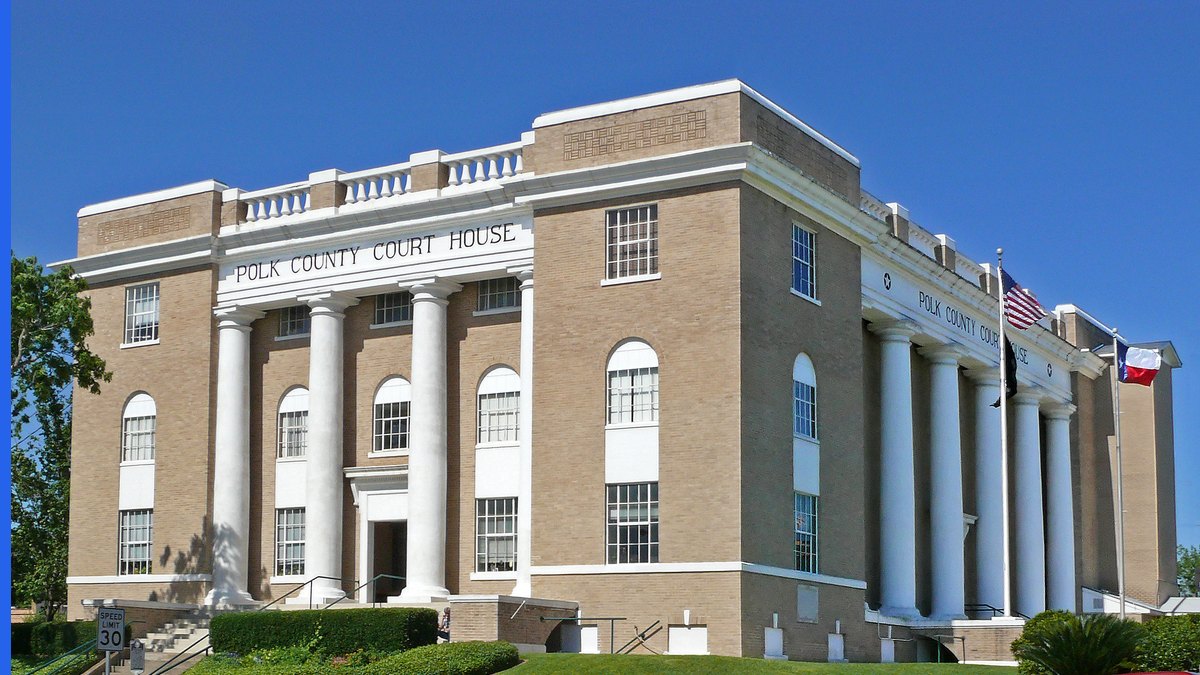
A US patent is enforced in the federal courts: infringement suits are filed in the US district courts, with appeals to the Court of Appeals for the Federal Circuit, which hears every patent appeal nationwide and whose decisions set uniform law. For imported goods, the International Trade Commission offers a fast Section 337 exclusion-order track that can block products at the border.
Validity is tested differently than in Europe. There is no opposition division; instead, challengers use the Patent Trial and Appeal Board through inter partes review or post-grant review, or raise invalidity as a defense in district court. None of this is reachable through the European systems — there is no UPC dimension to a US patent, only the US federal courts and the PTAB. If you expect a dispute, our patent invalidation team supports both petitioners and patent owners.
Rule 7 and 8: Docket Early, Then Choose Deliberately
Rule 7 is procedural: the day you file the PCT application, dock the US 30-month date on its own line, flag whether an English translation and foreign filing license are needed, and decide early whether to enter as a 371 national stage or a 111(a) bypass continuation. The bypass route gives you a fresh US continuation and more flexibility on claims and continuations later, at the cost of a new filing; the 371 route is simpler and keeps the international application’s identity.
Rule 8 is strategic: national entry is the first move in a US commercialization or litigation plan you will execute years later. The US is often the single most valuable market in a global portfolio, so choose it deliberately, translate it well, and treat entry as more than a formality. Applicants who plan the national phase around these two clocks — 30 months to enter, oath and fees to complete — rarely lose a US right they meant to keep.
How PerspireIP Can Help
PerspireIP dockets your 30-month US entry deadline, prepares the English translation and inventor declarations, advises on the 371-versus-bypass choice, and manages the USPTO national stage from entry through grant. Explore our United States IP hub and our teams in New York, San Francisco and Boston, then contact us well before the clock runs out.
Frequently Asked Questions
What is the deadline for the PCT national phase in United States?
30 months from the priority date — or from the international filing date if no priority was claimed. Unlike several European offices, the US does not allow 31 months, so docket it separately.
Do I need an English translation to enter the US national phase?
Yes, unless the PCT application was filed in English. The English translation is part of what Section 371(c) requires, and filing it after the 30-month date triggers a surcharge.
How much are the USPTO national-stage fees in 2026?
On the current schedule the basic national fee is $350 for a large entity ($140 small, $70 micro), plus a search fee ($0–$770) and examination fee ($0 or $880) that depend on who performed the international search. Confirm current figures on the USPTO fee schedule.
Can I revive a missed 30-month US entry?
Sometimes. The USPTO can revive an abandoned national-stage application under 37 CFR 1.137 if the delay was unintentional, on a petition with the required fee. It is costly and discretionary, so never rely on it in a filing plan.
Can I reach the United States by validating a European patent?
No. The US is not a member of the European Patent Convention, so there is no validation route. You must enter the US national phase at the USPTO or file directly under the Paris Convention.
Where is a US patent enforced after grant?
In the federal courts — infringement in the US district courts with appeals to the Federal Circuit, plus Section 337 actions at the ITC for imports. Validity is challenged at the PTAB through inter partes or post-grant review.