
Table of Contents
Switzerland is the rare jurisdiction that will grant you a patent without ever asking whether the invention is new. It will not, however, let a bad figure set through. The Swiss Federal Institute of Intellectual Property examines form, and form is where Swiss filings actually stall. Get the patent drawings in Switzerland wrong and you are not facing an argument about prior art — you are facing a deadline, and then a refusal. Below are the nine rules that decide whether a set clears the IPI’s first review, and where a drawing that is perfectly compliant in Washington or Munich quietly fails in Bern.
Why Patent Drawings in Switzerland Carry Unusual Weight

Start with the provision that defines Swiss prosecution. Article 59(4) of the Federal Act on Patents for Inventions (PatA, SR 232.14) says it plainly: “The Institute shall not examine whether the invention is new or whether it is obvious having regard to the state of the art.” No novelty search is imposed, no inventive-step objection is raised. A Swiss national patent is granted on an unexamined merit.
That does not make the file unexamined. Article 59(2) PatA requires the IPI to set the applicant a time limit to remedy any case where the application “does not meet the other requirements of this Act or the Ordinance.” The drawing rules sit in the Ordinance. And Article 59a(3)(b) PatA closes the loop: the IPI shall reject the application if the Article 59(2) deficiencies have not been remedied.
So the practical position is inverted from the one most attorneys are trained for. The substantive examination you are used to does not happen; the formalities examination is the examination. A figure problem in Switzerland is not a tidy-up request from a draftsperson — it is the one ground on which the Institute will actually refuse you. Our patent drawing services treat a Swiss set as a formalities-critical deliverable for exactly that reason.
The Three Instruments Governing Patent Drawings in Switzerland
Swiss drawing practice is unusually compact. There is no multi-hundred-page manual equivalent to the MPEP. Three instruments carry all of it:
- The Patents Act (PatA, SR 232.14) — Article 59 for the scope of examination, Article 59a for rejection, Article 59c for post-grant opposition.
- The Patents Ordinance (PatV, SR 232.141), in force in its current form since 1 January 2019 — Article 25 for the technical documents generally, Article 28 for the drawings, Article 26(4) for the list of figures, Article 27 for sequence listings, and Article 46c for missing drawings.
- The IPI’s own filing guidance, which compresses Article 28 into a single sentence: technical drawings must be black and white line drawings, and it must be possible to copy or reproduce them.
Article 28 PatV is the whole drawing code — nine paragraphs. Read against 37 CFR 1.84’s twenty-odd lettered subsections it looks thin, and that is the trap. The brevity is not permissiveness; it means the IPI reads each paragraph broadly, and it means a US or EPO set can satisfy a rule Switzerland never wrote while breaching one it did. You can read the consolidated text on Fedlex, the Swiss federal law portal, and the filing guidance on the IPI website.
Rule 1 and 2: A4 Only, and a 17 × 26.2 cm Usable Surface
Article 25(4) PatV requires the technical documents on “light, white, smooth, matt, durable paper of A4 format (21 × 29.7 cm).” Article 25(3) adds that only one side of a sheet may be used and the sheets must not be folded. Article 25(6) requires every sheet numbered in Arabic numerals.
Article 28(1) then sets the drawing area: “The usable surface of the sheets containing drawings shall not exceed 17 × 26.2 cm or be framed.” Two obligations in one clause — a size ceiling and an outright ban on a frame drawn round the working area.
Here is the useful coincidence. 37 CFR 1.84(g) sets margins of at least 2.5 cm top, 2.5 cm left, 1.5 cm right and 1.0 cm bottom, “thereby leaving a sight no larger than 17.0 cm by 26.2 cm” on an A4 sheet, and 1.84(i) forbids frames round the sight. The numbers are identical. A USPTO-compliant A4 sheet already satisfies Article 28(1).
The trap is the sheet, not the margin. 37 CFR 1.84(f) permits either A4 or 21.6 × 27.9 cm — US letter. Letter is the default in most American drafting workflows, and it is not A4. Article 25(4) admits no second format:
- A US A4 set transfers to Switzerland with the usable surface already correct.
- A US letter set breaches Article 25(4) on sheet size before anyone looks at the figures.
- Rescaling letter artwork to A4 shrinks every line weight and reference character — which then has to survive the Article 28(4) reproduction test, so it is a redraw, not a print setting.
- Frames are banned both sides of the Atlantic, so a bordered template fails in Bern and in Alexandria alike. See our note on USPTO drawing margins for the measurement detail.
Rule 3: Black Lines, No Colours, No Washes — and No Petition
Article 28(2) PatV: the drawings “shall be executed in indelible, even and well-defined lines, without colours or washes; they must permit direct printing or electronic reproduction.” WIPO’s PCT Applicant’s Guide records the same answer for Switzerland as a designated Office — colour drawings are not accepted under Swiss national law.
What matters is what is absent. There is no petition route. In a US utility application colour is available: 37 CFR 1.84(a)(2) accepts colour drawings once the Office grants a petition, with the fee under 37 CFR 1.17(h) and the prescribed statement in the specification. Design applications are easier still — under 1.84(a)(2) and 37 CFR 1.152 colour is permitted in a design application with the required sets and specification reference but no petition and no fee.
The EPO has moved further. Rule 46 EPC — the old “Form of the drawings” provision — was deleted with effect from 1 February 2023, together with Rule 49(3) to (12) EPC; the presentation requirements now sit in a Decision of the President of the EPO published in the Official Journal. Since 1 October 2025 the EPO accepts electronically filed drawings in colour or greyscale. Anyone still citing Rule 46 EPC as live law is three years out of date — our page on EPO colour patent drawings sets out what replaced it.
Switzerland did not follow. Neither did the PCT: Rule 11.13(a) still requires black lines “without colorings.” So the EPO is now the permissive forum and the Swiss national route is the strict one — the reverse of the position before 2025, and a reason to keep a monochrome master set even when your EPO filing is in colour.
Rule 4: Photographs Have No Route In
Article 28(2) requires execution “in indelible, even and well-defined lines.” A half-tone photograph is not a line drawing, and the IPI’s guidance says the same in plain terms: black and white line drawings. Nothing in Article 28 creates a photograph exception.
That is a real divergence, and it cuts against the intuition that strict-on-colour means strict-on-everything. Compare the neighbours:
- United States — 37 CFR 1.84(b)(1) accepts black-and-white photographs where photography is the only practicable medium, and 1.84(b)(2) addresses colour photographs on the same footing as colour drawings.
- France — INPI accepts black-and-white photographs that are reproducible and otherwise compliant, while banning colour outright and offering no petition. See patent drawings in France.
- United Kingdom — Schedule 2 to the Patents Rules 2007 allows photographs where they are clear enough to be reproducible; see UK patent drawing requirements.
- Switzerland — line drawings, with no stated alternative.
For metallurgy, composites and histology cases this is the practical constraint on patent drawings in Switzerland. A micrograph that supports the disclosure in a US or UK filing has to be redrawn as a line figure for the Swiss set, and the redraw must not add matter. Plan it at drafting time, not at national-phase entry.
Rule 5: Hatching and Scale Must Survive Reproduction
Article 28(3) PatV requires cross-sections to be “indicated by hatching which does not impede the clear reading of the reference signs and leading lines.” The test is legibility of the annotation, not the density of the hatch — so a dense 45-degree fill that is technically correct still breaches 28(3) if a leader line disappears into it.
Article 28(4) is the reproduction test: the scale and graphical execution must be such that photographic or electronic reproduction “would enable all details to be distinguished without difficulty.” It then adds a rule that catches people out — if a scale is given on a drawing it must be represented graphically, as a scale bar; and “other indications of size shall in general not be allowed.”
Dimensioned engineering drawings therefore do not transfer. A CAD plot carrying 48.6 mm callouts, tolerance boxes and a title block is a manufacturing document, not a patent figure, and the numeric dimensions are the specific thing Article 28(4) excludes. Strip them and substitute a scale bar if scale genuinely matters to the disclosure.
Rule 6: Reference Signs Must Match the Claims, Not Just the Description
Article 28(5) requires that numbers, letters and reference marks on the drawings be “simple and clear.” Article 28(6) is the one to diarise: “The reference signs used on the drawings shall correspond to those used in the description and claims.”
Most jurisdictions tie the figures to the description. Switzerland reaches the claims as well, and that changes the maintenance burden. Every claim amendment is now a drawing-consistency event: delete a feature from claim 1 and its reference sign may be orphaned; add a feature and you may be relying on a sign the figures never carried.
Article 26(4) PatV pulls the other direction, requiring the description to “contain a list of the figures included in the drawings” and to indicate briefly the contents of each figure. Between 26(4) and 28(6) the Swiss file has to be internally consistent in three places at once. The disciplined approach is a single reference-sign register reconciled before each response — the method we set out in patent drawing reference numerals.
The US analogue is 37 CFR 1.84(p), which requires the same part to carry the same reference character in every view and forbids reusing one character for different parts. Compliant under 1.84(p) is not automatically compliant under Article 28(6): the US rule polices consistency within the drawings, the Swiss rule polices consistency between the drawings and the claims.
Rule 7: Figure Numbers Run Independently of Sheet Numbers
Article 28(8) PatV: the different figures “shall be clearly separated from one another and arranged without wasting space. They shall be numbered consecutively in Arabic numerals, independently of the numbering of the sheets.” Two separate series, then — sheets numbered under Article 25(6), figures numbered under 28(8), and neither one driving the other.
Article 28(7) permits a single figure to be spread across several sheets, “on condition that the whole figure may be readily assembled by placing the sheets side by side.” A large assembly view can be split, but the split has to be designed: matching cut lines, no duplicated overlap, and the partial sheets still carrying one figure number between them.
The “without wasting space” instruction in 28(8) is enforced more readily than attorneys expect. One small figure centred on an otherwise empty A4 sheet invites an objection, and the fix — recomposing the sheet — means renumbering nothing but redrawing everything. Compose for the usable surface from the start.
Rule 8: Text in the Figures Must Be in the Language of the Application
Article 28(9) PatV is the rule that breaks incoming PCT sets: the drawings “shall not contain any textual matter; only short terms or keywords when required for the understanding of the drawings, and these in the same language as the application shall be allowed.”
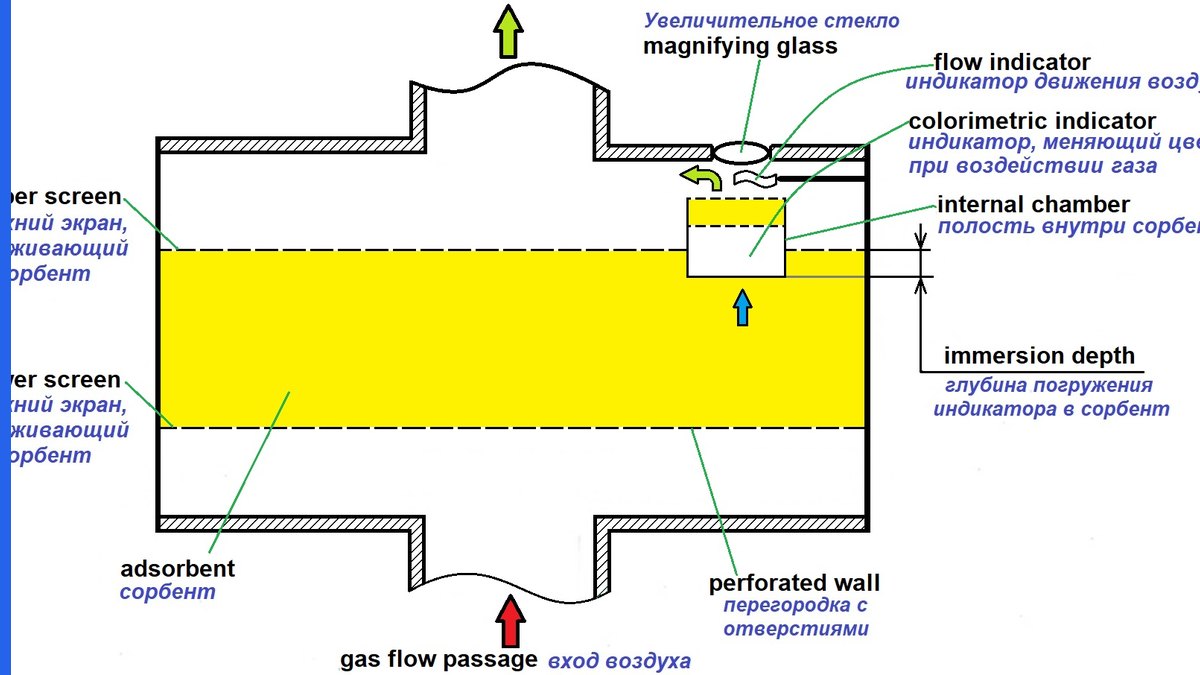
Switzerland’s official languages are German, French and Italian, and a Swiss application proceeds in one of them. An English-labelled figure set is therefore non-compliant twice over — once for carrying more text than Article 28(9) tolerates, and once for carrying it in the wrong language.
The PCT route makes this explicit. The time limit for entering the Swiss national phase is 30 months from the priority date under PCT Article 22(1) and Article 39(1)(a) — not 31 — and the translation furnished on entry must include any text matter of the drawings, in German, French or Italian. Relabelling a figure set is drafting work with a hard deadline attached, and it is routinely discovered in the last fortnight. Our PCT drawing requirements guide covers the upstream choices that reduce the work.
A practical consequence for patent drawings in Switzerland: keep in-figure annotation to numeral-only reference signs wherever the disclosure allows it. A set with no words needs no translation, in Switzerland or anywhere else.
Rule 9: Missing Drawings Can Move Your Filing Date
Article 46c PatV governs late drawings, and the default is unforgiving. Under 46c(1) the applicant may supply missing drawings within three months of the document file date. Under 46c(2) the filing date then “is regarded as the date on which the… missing drawings are filed.” The application keeps living; the priority date moves.
Unlike several jurisdictions, Switzerland provides a worked escape. Article 46c(3) lets the applicant keep the original date if three conditions are all met:
- The missing drawings feature in their entirety in the earlier application whose priority is claimed.
- The documents as filed contain a reference to that earlier application.
- That reference is in an official language or in English, and states that the earlier application’s contents form an integral part of the request.
Article 46c(4) adds the mechanics — the request must be made inside the same three months, must specify where in the earlier application the drawings are found, and must be accompanied by a copy and, if needed, a translation, unless the IPI can retrieve the document electronically or it was filed at the IPI in an official language. Article 46c(5) gives a last option: within one month of the IPI issuing the certificate of deposit, the applicant may ask that the late-filed drawings be treated as non-existent, preserving the original date at the cost of the disclosure.
Set against the region, Switzerland sits in the middle. France re-dates under R.612-9 with a two-month window and a narrower priority rescue. Saudi Arabia is harsher still — Article 36 makes the application void. The Swiss combination of three months plus a documented priority rescue is survivable, but only if the priority application actually contains the figures.
Where a Swiss Patent Is Enforced — and Why the Figures Decide It
Switzerland has been an EPC contracting state since 1977, so a European patent can be validated here. It is not an EU member, which means it is outside the unitary patent and outside the Unified Patent Court — no UPC division has jurisdiction over a Swiss patent, and no opt-out question arises.
One Swiss filing covers two states. Under the patent treaty between Switzerland and Liechtenstein only a unitary patent for the two can be granted; in an international application, designating either state automatically designates both, and they cannot be designated independently. There is no separate Liechtenstein filing to make or forget.
Enforcement is centralised. The Federal Patent Court, seat in St. Gallen, has been operating since 1 January 2012 and holds exclusive jurisdiction in civil matters over both validity and infringement; its decisions are appealed to the Federal Supreme Court. There is no forum shopping. Before that, Article 59c PatA allows anyone to oppose a granted Swiss patent within nine months of publication of the register entry — but only on the patentability grounds in Articles 1a, 1b and 2, which do not include novelty.
Put the chain together and patent drawings in Switzerland carry unusual evidential weight. The IPI never tested novelty. The opposition cannot raise it. The first body to construe the invention against the prior art is the Federal Patent Court, reading the file as granted — description, claims, and the figures that Article 28(6) required to match them. A reference sign that drifted during prosecution is not a formality at that point. We prepare and audit sets from our local pages in Zurich, Basel and Geneva.
Pre-Filing Checklist for a Swiss Figure Set
Run this over your patent drawings in Switzerland before the set goes to the IPI or into a 30-month national-phase entry:
- Sheets are A4, 21 × 29.7 cm — not US letter (Art. 25(4)).
- Usable surface is within 17 × 26.2 cm and there is no frame (Art. 28(1)).
- Every line is black, indelible and even. No colour, no wash, no greyscale, no photographs (Art. 28(2)).
- No numeric dimensions or tolerance callouts; any scale is a graphic scale bar (Art. 28(4)).
- Hatching leaves every reference sign and leader line readable (Art. 28(3)).
- Reference signs reconcile against both the description and the claims (Art. 28(6)), and the description carries the list of figures (Art. 26(4)).
- Figures numbered consecutively in Arabic numerals, independently of sheet numbers (Art. 28(8)); sheets numbered separately (Art. 25(6)).
- In-figure text reduced to essential keywords, in German, French or Italian — ideally numerals only (Art. 28(9)).
- If any figure is missing at filing, the three-month Article 46c window and the priority-rescue conditions are diarised the same day.
File Into Switzerland With Figures the IPI Will Not Send Back
PerspireIP prepares patent drawings in Switzerland to IPI format — working from CAD, engineering files, prototypes or an existing foreign set — A4 at the correct usable surface, black line only, numeric dimensions stripped, in-figure text reduced to numerals or translated into the language of the application, and reference signs reconciled against the description and the claims as Article 28(6) requires. We prepare the matching USPTO, EPO and PCT variants from the same master so one invention does not become four inconsistent disclosures.
See our patent drawing services for scope and turnaround, or contact us with your specification and we will tell you which figures need rework before you file.
Frequently Asked Questions
Are colour patent drawings allowed in Switzerland?
No. Article 28(2) of the Patents Ordinance requires drawings executed in indelible, even and well-defined lines “without colours or washes,” and WIPO’s PCT Applicant’s Guide records that Switzerland does not accept colour drawings under national law. There is no petition route, unlike a US utility application under 37 CFR 1.84(a)(2) with the 37 CFR 1.17(h) fee, and no electronic-filing exception, unlike the EPO, which has accepted colour and greyscale for electronically filed drawings since 1 October 2025.
Does the IPI examine whether my invention is new?
No. Article 59(4) PatA states that the Institute shall not examine whether the invention is new or obvious having regard to the state of the art. You may order a state-of-the-art report under Article 59(5) for a fee, but it is optional and does not become an objection. The IPI does examine form, and Article 59a(3)(b) lets it reject an application whose formal deficiencies — including the Article 28 drawing requirements — are never remedied.
Can I use my US patent drawings for a Swiss filing?
Only if they were drawn on A4. 37 CFR 1.84(f) permits A4 or US letter; Article 25(4) PatV permits A4 alone. If the set is A4, the good news is that 1.84(g)’s sight of 17.0 by 26.2 cm is exactly the usable surface Article 28(1) allows, and both rules ban frames, so the geometry transfers. You will still need to remove numeric dimensions, replace any photographs with line figures, and bring in-figure text into German, French or Italian.
What is the deadline for entering the national phase in Switzerland from a PCT application?
Thirty months from the priority date, under PCT Article 22(1) and Article 39(1)(a) — not the 31 months some neighbouring offices allow. The translation furnished on entry must be in German, French or Italian and must include any text matter appearing in the drawings, so relabelling the figures is part of the national-phase work and needs to be scheduled well before the deadline.
What happens if I file a Swiss application without the drawings?
Article 46c(1) PatV gives you three months from the document file date to supply them, but under 46c(2) the filing date then becomes the date the drawings arrive. Article 46c(3) preserves the original date only if the drawings appear in their entirety in the priority application, the filed documents refer to that earlier application, and the reference — in an official language or English — states that its contents form an integral part of the request. Article 46c(5) alternatively lets you withdraw the late drawings within one month of the certificate of deposit to keep the date.
Is a Swiss patent enforced at the Unified Patent Court?
No. Switzerland is an EPC contracting state but not an EU member, so it is outside both the unitary patent and the UPC. Swiss patents — national or validated European — are enforced at the Federal Patent Court in St. Gallen, which has held exclusive jurisdiction over validity and infringement since 1 January 2012, with appeal to the Federal Supreme Court. A single Swiss patent also covers Liechtenstein under the treaty between the two states.