Table of Contents
A chemist’s invention rarely looks like a machine, and that one fact is why patent drawings for chemical inventions trip up otherwise careful filers. There is no exploded view of a catalyst. The disclosure lives in a structural formula, a reaction scheme, a chromatogram or a stained gel — and each of those sits in a different corner of the rulebook. Rule 1.58 says the specification may carry a formula. Rule 1.84(d) says the same formula may be filed as a drawing instead. Sequence data belongs in neither. Route the disclosure to the wrong place and you collect a formalities objection on subject matter nobody was arguing about.
Rule 1: A Formula Can Be a Drawing, and Each One Is Its Own Figure
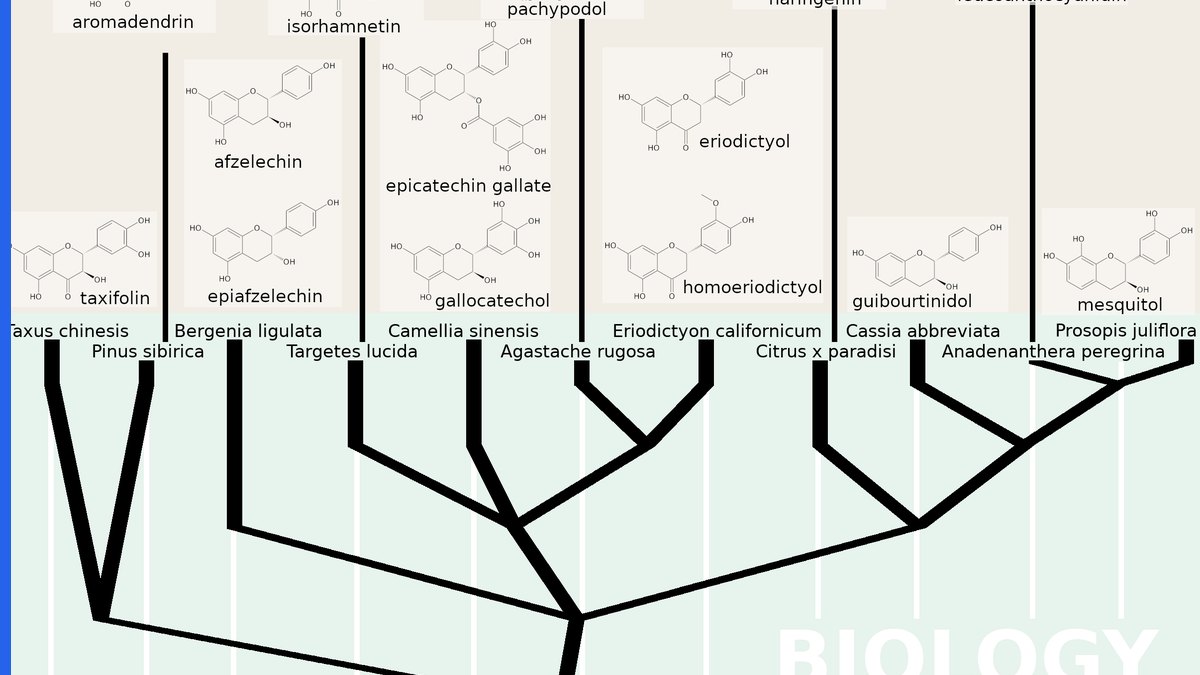
The starting point is 37 CFR 1.84(d), headed “Graphic forms in drawings”: “Chemical or mathematical formulae, tables, and waveforms may be submitted as drawings, and are subject to the same requirements as drawings.” That sentence does two things at once. It permits the filing, and it drags the formula into every other requirement of Rule 1.84 — margins, line quality, sheet numbering, character size.
The clause filers skip is the labelling instruction that follows: each chemical or mathematical formula must be labelled as a separate figure, using brackets where necessary to show that information is properly integrated. A four-step reaction scheme is therefore a decision, not a default. Filed as one figure, it must read as one integrated disclosure. Filed as four, each step needs its own figure number and its own line in the brief description of the drawings.
That brief description is not optional housekeeping. The content requirements in 37 CFR 1.83 and the specification’s figure list have to account for every sheet you file. An unlisted Figure 3b is the single most common formalities objection we see on chemical cases.
- A formula on a drawing sheet obeys all of Rule 1.84, not a relaxed subset
- Each formula is labelled as a separate figure unless brackets integrate it
- Every figure you create must appear in the brief description of the drawings
- Reaction schemes need a deliberate choice: one integrated figure, or several
Rule 2: Rule 1.58 Decides Whether You Need a Drawing Sheet at All
37 CFR 1.58(a) draws the cleanest line in this whole area: “The specification, including the claims, may contain chemical and mathematical formulae, but shall not contain drawings or flow diagrams.” Read it twice, because both halves are load-bearing.
The first half means a structural formula can simply sit in the body text. You do not have to convert it into a figure, and for a Markush group recited in the claims you generally should not — a claim that depends on a separate drawing sheet for its own structure reads badly and creates an antecedent problem you did not need.
The second half is the trap. A flow diagram is banned from the specification. The moment your reaction scheme acquires arrows, process boxes or a recycle loop, it has stopped being a formula and become a flow diagram, and it must move to a drawing sheet. Process chemistry and continuous-manufacturing cases cross that line constantly.
Two mechanical points round out the rule. Under 1.58(b), formulae and tables may be placed in landscape orientation when portrait will not present them satisfactorily. Under 1.58(c), “Large Tables” — a single table over 50 pages, or tables totalling more than 100 pages — may be submitted electronically as ASCII plain text rather than consuming the printed specification.
Where a scheme genuinely has to work both ways — a formula in the claims and a process diagram in the figures — file both and keep them consistent. Numbering that drifts between the claim text and the drawing sheet is the most expensive kind of inconsistency in patent drawings for chemical inventions, because it invites an argument about what was actually disclosed.
Rule 3: Photographs Are the Exception Chemistry Actually Earns
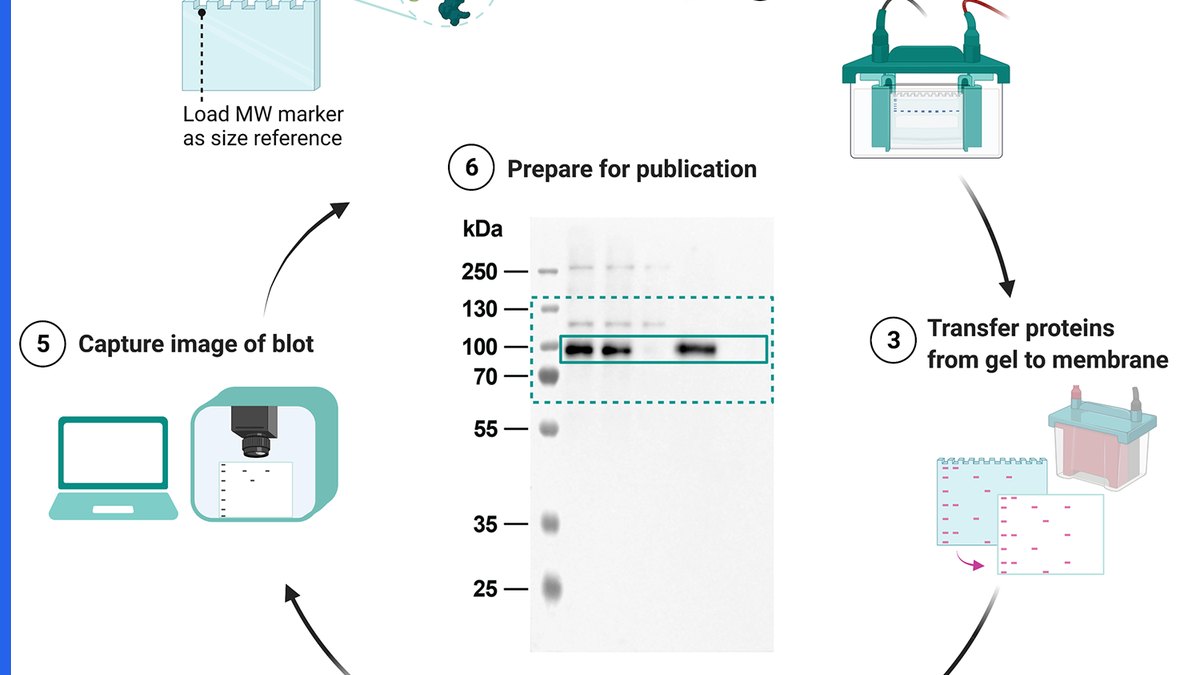
Most applicants are told photographs are forbidden. 37 CFR 1.84(b)(1) is narrower than that: “Photographs, including photocopies of photographs, are not ordinarily permitted in utility and design patent applications.” The Office then accepts them where a photograph is the only practicable medium for illustrating the claimed invention.
The examples the rule itself gives are overwhelmingly chemical and biological — electrophoresis gels, blots, autoradiographs, tissue sections, animals and plants. This is the one area of practice where the exception is the normal case. A Western blot cannot be redrawn in India ink without destroying the very evidence the figure exists to convey.
Colour photographs sit one step further out. Rule 1.84(b)(2) accepts them only “if the conditions for accepting color drawings and black and white photographs have been satisfied” — so you clear two gates, not one. Our guide to photographs in patent applications works through the quality and reproduction thresholds in detail.
Practical warning: photographs must still meet the sheet size, margin and numbering requirements of Rule 1.84. A gel image pasted onto an oversized sheet fails on form even though the content was admissible.
There is a records point buried here too. Because the exception turns on necessity, keep the reasoning with the file: which imaging or separation method produced the figure, and why a line drawing would lose the result. If an examiner questions the photograph two years later, that note is the difference between a one-line reply and a reconstruction exercise.
Rule 4: Colour Costs a Petition in a Utility Case
Fluorescence micrographs, heat maps and phase diagrams lose most of their meaning in greyscale, which is why colour comes up so often here. Rule 1.84(a)(2) permits colour drawings outright in design applications. In a utility application it is a three-part burden: a petition under the rule, the fee set by 37 CFR 1.17(h), and a specific statement inserted into the specification.
That statement is prescribed text, not a paraphrase: “The patent or application file contains at least one drawing executed in color. Copies of this patent or patent application publication with color drawing(s) will be provided by the Office upon request and payment of the necessary fee.” Filing the colour sheets without it is a guaranteed round trip.
Europe moved the other way. The EPO began accepting colour drawings on 1 October 2025, ending a long-standing requirement that everything be reproduced in black and white. If you are filing on both sides of the Atlantic, see our note on EPO colour patent drawings before you decide which version of a figure is the master.
The strategic question is whether colour is doing work that hatching, stippling or a legend could do instead. If a monochrome version carries the disclosure, file monochrome and keep the petition in reserve.
Rule 5: Sequence Listings Are Not Drawings and Never Were
Biotech filings fail this one by trying to be helpful. Nucleotide and amino acid sequence disclosures do not go into figures. They go into a sequence listing governed by its own rule set, 37 CFR 1.831 to 1.835, which implement WIPO Standard ST.26.
ST.26 became mandatory for applications with a filing date on or after 1 July 2022. The listing is a single XML file, encoded UTF-8, conforming to the ST.26 Document Type Definition — not a PDF, and not a drawing sheet.
Two applicability traps catch experienced practitioners. For a US national phase entry under 371, the controlling date is the international PCT filing date, not the date of entry. And there is no grandfathering down a family: a continuation or divisional filed on or after 1 July 2022 needs an ST.26 listing even where the parent was filed under the old ST.25 standard.
Reproducing a short sequence inside a figure as a courtesy does not satisfy the sequence rules and does not substitute for the listing. It simply adds a figure you must now describe, number and defend.
Rule 6: The PCT and the EPO Draw the Line Somewhere Else
PCT Rule 11.10 inverts the American arrangement. Rule 11.10(a) provides that the request, description, claims and abstract “shall not contain drawings”, while 11.10(b) confirms that the description, claims and abstract “may contain chemical or mathematical formulae”. Rule 11.10(d) then allows tables and formulae to be placed sideways, with the tops at the left edge of the sheet.
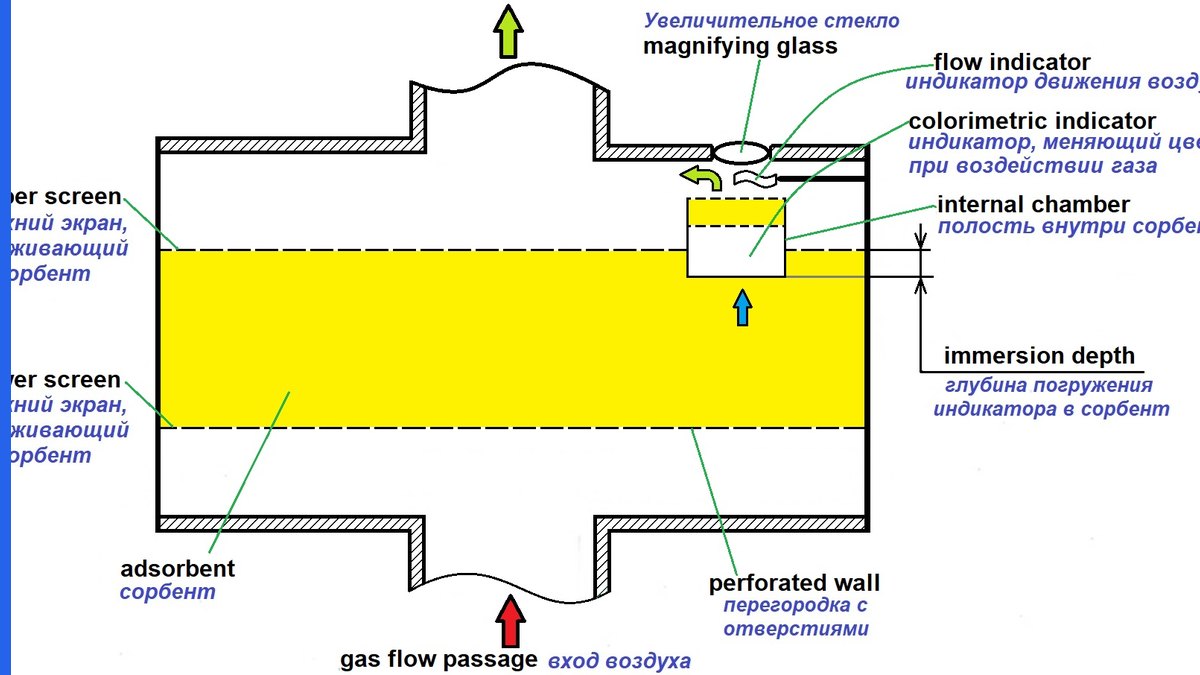
Rule 11.11 is the one that bites chemical schemes. Drawings “shall not contain text matter, except a single word or words, when absolutely indispensable” — with an express allowance, for flow sheet diagrams, of “a few short catchwords indispensable for understanding”. Reagent and solvent labels crowded along every arrow will not survive that test. Move them into the description and key them to the figure.
Rule 11.13 supplies the physical standard: lines must be “durable, black, sufficiently dense and dark, uniformly thick and well-defined … without colorings”; cross-sections are shown by oblique hatching that does not obscure reference signs; and the drawing must survive a linear reduction to two-thirds with all details still distinguishable.
One correction worth making, because it is repeated across the internet: Rule 46 EPC, the old “form of drawings” provision, was deleted by decision CA/D 10/22 with effect from 1 February 2023. The EPO page now reads simply “Rule 46 — (deleted)”. The presentation requirements live in Rule 49 EPC and the Guidelines for Examination A-IX. Citing Rule 46 in a 2026 response tells the examiner your precedent is stale.
Text handling differs enough between offices that it deserves its own read: see patent drawing legends for what each office will tolerate on the face of a figure.
Rule 7: When the Chemistry Ships in a Shape, Rule 1.152 Takes Over
Pharmaceutical and consumer-chemical portfolios routinely carry design patents — a tablet profile, a score line, an inhaler body, a bottle. The instant you file one, 37 CFR 1.152 displaces the habits you built on utility figures.
The rule requires the design to be represented by a drawing complying with 1.84, containing “a sufficient number of views to constitute a complete disclosure of the appearance of the design”. Appropriate surface shading should be used to show the character or contour of the surfaces represented — and here is the divergence that catches people: solid black surface shading is not permitted, except when used to represent the colour black or colour contrast.
Broken lines are the other divergence. Under 1.152 they may show visible environmental structure, but may not be used to show hidden planes and surfaces that cannot be seen through opaque materials. In a utility figure a broken line often means exactly that hidden geometry, so the convention reverses between the two application types.
Because the drawings are the claim in a design patent, an error is substantive rather than formal. Our comparison of utility and design patent drawings sets the two conventions side by side.
Portfolio teams often run the design filing months behind the utility case, with a different draftsman. That is precisely how a solid-black tablet face from a utility figure ends up in a design application that cannot accept it. Where both filings cover the same product, brief the illustrator once, for both conventions, at the same time.
A Filing Checklist for Patent Drawings for Chemical Inventions
Most objections against patent drawings for chemical inventions are not close calls. They are routing errors — a diagram left in the specification, a figure that never made it into the brief description, a sequence typed into a drawing. Examiners catch them early, which is fortunate, because they are also cheap to prevent.
Run the disclosure through five questions before the figures are finalised. They take ten minutes and they catch nearly every formalities objection in this area.
- Is any element of this scheme a flow diagram? If yes, it leaves the specification and becomes a drawing (1.58(a)).
- Is every formula filed as a drawing labelled as its own figure, and listed in the brief description?
- If a photograph is used, can you state why no drawing could carry the disclosure (1.84(b)(1))?
- If colour is used in a utility case, are the petition, the 1.17(h) fee and the prescribed statement all in the filing?
- Does any nucleotide or amino acid sequence appear in a figure instead of an ST.26 XML listing?
- For the PCT copy, has reagent text been stripped back to indispensable catchwords (Rule 11.11)?
Software and electronics cases fail in a different pattern entirely — flowchart granularity and 112 support rather than formula routing. If your portfolio spans both, our guide to patent drawings for software inventions covers that half.
Need Chemical Figures That Clear Formalities the First Time
PerspireIP prepares patent drawings for chemical inventions — reaction schemes, phase diagrams, micrographs and design figures — to USPTO, PCT and EPO standards, with the brief description and figure numbering delivered alongside. See our patent drawing services or talk to our team about a pending filing.
Frequently Asked Questions
Can a chemical formula be filed as a patent drawing?
Yes. 37 CFR 1.84(d) states that chemical or mathematical formulae, tables and waveforms may be submitted as drawings and are subject to the same requirements as drawings. Each formula must be labelled as a separate figure, using brackets where necessary to show that the information is properly integrated. Filing it as a drawing also brings the formula under the margin, line-quality and sheet-numbering rules that govern every other figure in the application.
Can I put a reaction scheme in the specification instead?
Only if it is a formula rather than a flow diagram. 37 CFR 1.58(a) allows the specification and claims to contain chemical and mathematical formulae but expressly prohibits drawings or flow diagrams in the specification. Arrows, process boxes and recycle loops push a scheme across that line and onto a drawing sheet.
Are photographs of gels and blots acceptable to the USPTO?
Yes, under the narrow exception in 37 CFR 1.84(b)(1). Photographs are not ordinarily permitted, but the Office accepts them where a photograph is the only practicable medium — and the rule’s own examples include electrophoresis gels, blots, autoradiographs, tissue sections, animals and plants.
Do colour drawings need a petition in a utility application?
In a utility application, yes. Rule 1.84(a)(2) permits colour outright in design applications, but a utility filing needs a petition, the fee under 37 CFR 1.17(h), and the prescribed colour-drawing statement added to the specification. The EPO, by contrast, began accepting colour drawings on 1 October 2025.
Should a DNA sequence be shown in a figure?
No. Nucleotide and amino acid sequences belong in a sequence listing under 37 CFR 1.831–1.835, which implement WIPO Standard ST.26 — a single UTF-8 XML file, mandatory for applications filed on or after 1 July 2022. Putting the sequence in a drawing does not satisfy the sequence rules.
Is Rule 46 EPC still the authority for the form of drawings?
No. Rule 46 EPC was deleted by decision CA/D 10/22 with effect from 1 February 2023, and the EPO’s own page now shows it simply as deleted. The presentation requirements for drawings are found in Rule 49 EPC and in the Guidelines for Examination Part A, Chapter IX.