Table of Contents
The reference that sinks a claim is often not a paragraph. It is a figure – an old catalogue cut, a forgotten utility patent, a drawing whose specification never mentions the feature you are arguing about. Patent drawings as prior art carry real evidentiary weight, and both examiners and PTAB panels rely on them. But that weight has hard edges: a picture can anticipate everything it clearly shows, and prove almost nothing about how big anything is. Getting that line right is the difference between an invalidity position that survives and one that gets dismissed in a paragraph.
Why Patent Drawings as Prior Art Decide More Cases Than Attorneys Expect

Search reports and invalidity charts are still written as if disclosure lives in text. It frequently does not. A mechanical assembly, a circuit topology, a housing profile – these are often shown completely in a figure and described in the specification only in passing, or not at all. When that happens, the drawing is the disclosure.
The USPTO’s position is stated plainly in MPEP 2125, titled Drawings as Prior Art: “Drawings and pictures can anticipate claims if they clearly show the structure which is claimed.” The authority behind that sentence is In re Mraz, 455 F.2d 1069 (CCPA 1972). There is no requirement that the reference’s text call out the feature, and no requirement that the reference’s author intended to teach it.
That cuts both ways. If you are prosecuting, a figure in a reference you dismissed as irrelevant may already show your claimed combination. If you are challenging a patent, a drawing may hand you an anticipation argument that no keyword search would ever surface. Either way, the analysis has rules, and most of the arguments that fail in this area fail for the same three or four reasons.
The seven rules below are the ones that actually decide these disputes – what a drawing proves, what it cannot prove, and how the same figure is treated on the other side of the Atlantic.
Rule 1: A Drawing Can Anticipate Without a Word of Supporting Text
Anticipation under 35 U.S.C. 102 requires a single reference disclosing every element of the claim. Nothing in that standard privileges prose. If Figure 3 of a 1974 patent shows the arrangement your claim recites, that figure anticipates, even if the specification is silent about the arrangement and even if the patentee was describing something else entirely.
This is where practitioners lose ground unnecessarily. Arguing that a reference “does not teach” a feature because the text never names it is not a response to a drawing-based rejection. The examiner is not relying on the text.
- The reference’s intent is irrelevant – an incidental or unexplained feature still counts as shown.
- The drawing need not be prior art in isolation; it is read as part of the reference as a whole.
- A figure can supply the missing element in an obviousness combination just as readily as it can anticipate outright.
- Non-patent illustrations qualify – catalogues, manuals and product literature are all fair game.
The productive response is to attack what the figure actually shows, not whether anyone wrote about it.
Rule 2: The Figure Must Show Every Element and How They Fit Together
The limit on Rule 1 comes from Jockmus v. Leviton, 28 F.2d 812 (2d Cir. 1928) – a case about an illustration in a French lamp catalogue – and MPEP 2125 quotes its standard directly: the picture “must show all the claimed structural features and how they are put together.”
Two words in that sentence do the work. All means a figure that shows four of five claimed elements does not anticipate; it is at best an obviousness reference. How they are put together means a picture showing the right parts in the wrong relationship – or in no discernible relationship – fails as well. Exploded views are a common trap here: they show components clearly and their assembled interconnection only by implication.
When you are the one asserting a drawing, chart it element by element against the claim exactly as you would chart text. When you are defending, find the element the figure leaves ambiguous and make the examiner or the Board articulate where it is shown. Our annotated set of patent drawing examples shows how much structural detail a competent figure set genuinely carries – and how much it quietly leaves out.
Rule 3: Scale and Proportion Prove Almost Nothing
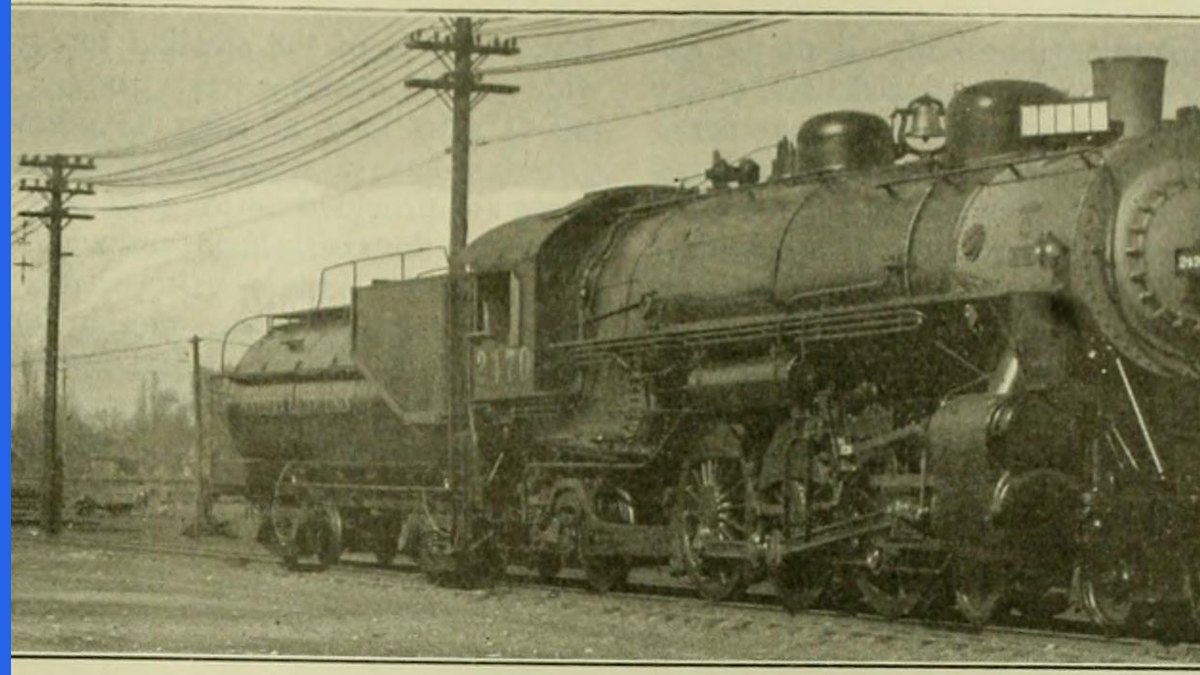
This is the single most common failed argument involving patent drawings as prior art: someone measures the figure. They put a ruler on Figure 2, calculate that the flange is 1.4 times the width of the base, and assert that the reference discloses the claimed ratio.
The Federal Circuit closed that door in Hockerson-Halberstadt, Inc. v. Avia Group International, Inc., 222 F.3d 951, 956 (Fed. Cir. 2000): “It is well established that patent drawings do not define the precise proportions of the elements and may not be relied on to show particular sizes if the specification is completely silent on the issue.” MPEP 2125 restates the practical consequence – where a reference does not disclose that its drawings are to scale and says nothing about dimensions, “arguments based on measurement of the drawing features are of little value.”
There is a narrow exception, and In re Mraz is it. Where a drawing was clearly prepared with care and evidently rendered to scale, the proportions it shows can be given weight. That is an evidentiary showing you have to make, not an assumption you get for free.
- Silent specification plus unlabelled figure equals no dimensional disclosure.
- An express statement that a figure is drawn to scale changes the analysis entirely.
- Relative relationships that are structurally necessary – one part must pass through another – survive even when measurements do not.
- Claims reciting numeric ranges or ratios are the ones most exposed to this rule.
Rule 4: What the Skilled Reader Reasonably Derives Is the Test
The governing question is not what a figure depicts to a careful layperson with a magnifier. MPEP 2125 adopts the standard from In re Aslanian, 590 F.2d 911 (CCPA 1979): drawings are evaluated for “what they reasonably disclose and suggest to one of ordinary skill in the art.”
In re Wright, 569 F.2d 1124 (CCPA 1977), adds the companion point that the specification and drawings are read together for what they would reasonably teach that same skilled reader. A figure is not quarantined from its text; it is informed by it.
In practice this is where declaration evidence earns its keep. A person skilled in the relevant art can testify that a particular hatching convention denotes a specific material, that a symbol has a settled meaning in that field, or that a depicted arrangement is mechanically impossible as drawn. That evidence moves the analysis in a way that attorney argument about pixels does not.
Rule 5: Your Own Drawings Are Disclosure – 37 CFR 1.83 and 1.84
The same principle that makes someone else’s figure dangerous makes your own figures valuable. Under 37 CFR 1.83(a), the drawings in a nonprovisional application “must show every feature of the invention specified in the claims” – and once shown, that feature is part of your disclosure whether or not the description elaborates on it.
The Federal Circuit confirmed the consequence in Vas-Cath Inc. v. Mahurkar, 935 F.2d 1555 (Fed. Cir. 1991), holding that drawings alone may satisfy the written description requirement of 35 U.S.C. 112. Design drawings filed as the disclosure of a utility application supported claims the text never spelled out.
That is an argument for filing figures that are complete rather than minimal. It is also an argument for filing figures that are formally correct: 37 CFR 1.84 governs how those drawings must be executed, and a figure that is objected to, redrawn and refiled is a figure whose content can shift. We cover the substantive side of this in our guide to what 37 CFR 1.83 requires drawings to contain, and the description side in writing the brief description of the drawings.
- Show structure you may later want to claim, even if the claims as filed do not reach it.
- Label features you intend to rely on – an unnumbered element is harder to point to years later.
- Keep the brief description aligned with the figures; mismatches invite objections and create ambiguity.
- Remember that anything you show also publishes as prior art against everyone, including you.
Rule 6: In Europe, Drawings Are Disclosure Too – Article 123(2) EPC
European practice reaches a similar destination by a different route. Drawings form part of the European patent application under Article 78(1)(d) EPC, and the content of the application as filed – drawings included – fixes the outer boundary of permissible amendment under Article 123(2) EPC.
The leading decision on taking a feature out of a figure is T 169/83. Features shown only in the drawings may be brought into a claim provided their structure and function are clearly, unmistakably and fully derivable from the drawings by the skilled person, and are not at odds with the rest of the disclosure. That is a demanding standard, but it is a real one – a well-drawn figure can rescue an amendment when the description will not.
One point of housekeeping that still trips up US practitioners citing European formalities: Rule 46 EPC, which used to set out the form of the drawings, was deleted with effect from 1 February 2023. Those requirements now sit in a Decision of the President of the EPO – currently the Decision of 7 July 2025 (OJ EPO 2025, A49) – and are explained in the Guidelines. The obligation to give a brief description of the figures remains in Rule 42(1)(d) EPC. Since 1 October 2025 the EPO also accepts colour and greyscale drawings filed electronically, without conversion to black and white. Our breakdown of the EPO Guidelines A-IX drawing rules tracks the current position.
On the prior-art side, the EPO applies its own “directly and unambiguously derivable” gold standard to drawings, which is stricter in practice than the US inquiry into what a figure reasonably suggests. A drawing-based novelty attack that succeeds at the USPTO may still fail in an opposition.
Rule 7: In a Design Patent, the Drawings Are the Claim
Everything above concerns utility claims, where drawings are evidence of disclosure. Design patents invert the relationship: the drawing is the claim. Under 37 CFR 1.152, “the design must be represented by a drawing that complies with the requirements of 1.84 and must contain a sufficient number of views to constitute a complete disclosure of the appearance of the design.”
Rule 1.152 also carries several requirements that directly control claim scope. Broken lines may show visible environmental structure but may not show hidden planes and surfaces that cannot be seen through opaque materials. Solid black surface shading is not permitted except to represent the colour black or colour contrast. Photographs and ink drawings may not be combined as formal drawings in one application. Each of those is a scope decision disguised as a formality – see our treatment of broken lines in design patent drawings.
For prior art purposes, that means a design patent’s figures are compared as a whole against the accused or challenged design under the ordinary observer test of Egyptian Goddess, Inc. v. Swisa, Inc., 543 F.3d 665 (Fed. Cir. 2008) (en banc). There is no element-by-element charting and no text to fall back on. The line weights, the shading and the choice of what to disclaim in broken lines are the entire dispute.
A Seven-Point Check Before You Rely on a Figure
Before a drawing goes into a search report, an invalidity chart or a response to an office action, run it through the same checks the other side will.
- Does the figure show every claimed element, or only most of them?
- Does it show how those elements are connected, or only that they coexist?
- Are you relying on any measured dimension or ratio? If so, does the reference state that its drawings are to scale?
- Would a person of ordinary skill in this art read the figure the way you are reading it – and can you prove that with a declaration?
- Have you read the figure together with the reference’s text, including any incorporated material?
- If the fight will be in Europe, does the feature survive the stricter directly-and-unambiguously-derivable standard?
- If it is a design patent, have you compared overall visual impression rather than charting elements?
Most drawing-based arguments that collapse do so at points two and three. Charting a figure honestly, including the parts it does not resolve, produces a position that holds up under scrutiny – and tells you early when it will not.
Need a Search That Actually Reads the Figures?
Most prior-art searches are run on text. PerspireIP’s analysts chart the drawings as well – which is where a surprising number of invalidating disclosures are hiding. We handle invalidation and prior-art searching, and our draftspeople prepare USPTO, PCT and EPO-compliant patent drawings for filing. Talk to us about your matter and we will tell you honestly whether the figures carry your argument.
Frequently Asked Questions
Can a patent drawing anticipate a claim by itself?
Yes. MPEP 2125 states that drawings and pictures can anticipate claims if they clearly show the claimed structure, following In re Mraz, 455 F.2d 1069 (CCPA 1972). The reference’s text does not have to describe the feature.
Can I measure a prior-art drawing to prove a dimension?
Generally no. Under Hockerson-Halberstadt v. Avia Group International, 222 F.3d 951 (Fed. Cir. 2000), drawings do not define precise proportions and cannot be relied on for particular sizes where the specification is silent. Measurements only carry weight if the reference indicates its figures are to scale.
Do non-patent illustrations count as prior art?
Yes. Jockmus v. Leviton, 28 F.2d 812 (2d Cir. 1928), treated a lamp catalogue illustration as prior art. Product literature, manuals and catalogues all qualify, provided the illustration shows the claimed features and how they are assembled.
Can drawings alone satisfy the written description requirement?
They can. In Vas-Cath Inc. v. Mahurkar, 935 F.2d 1555 (Fed. Cir. 1991), the Federal Circuit held that drawings alone may provide written description support under 35 U.S.C. 112, which is one reason to file complete rather than minimal figures.
Is Rule 46 EPC still the source of European drawing requirements?
No. Rule 46 EPC was deleted with effect from 1 February 2023. The form requirements for drawings are now set by a Decision of the President of the EPO and explained in the Guidelines; the brief description of the figures is required by Rule 42(1)(d) EPC.
Can I amend a European claim using a feature shown only in a drawing?
Sometimes. Under T 169/83, a feature disclosed only in the drawings may be added to a claim if its structure and function are clearly, unmistakably and fully derivable from the drawings by the skilled person and are consistent with the rest of the disclosure.