
Table of Contents
You commissioned a freelance draftsperson, paid the invoice, filed the application, and the patent issued. Then a competitor lifts Figure 3 straight out of your published patent and drops it into a sales brochure. Can you stop them? Most inventors assume the answer is obvious, and most of them guess wrong. Patent drawing copyright sits at the junction of two statutes that barely speak to each other, and the loudest answer online — that patent figures are automatically public domain — is simply not the law. Here is what actually governs ownership, notice, and reuse of your figures.
Patent Drawing Copyright and the Patent Itself Are Two Different Rights
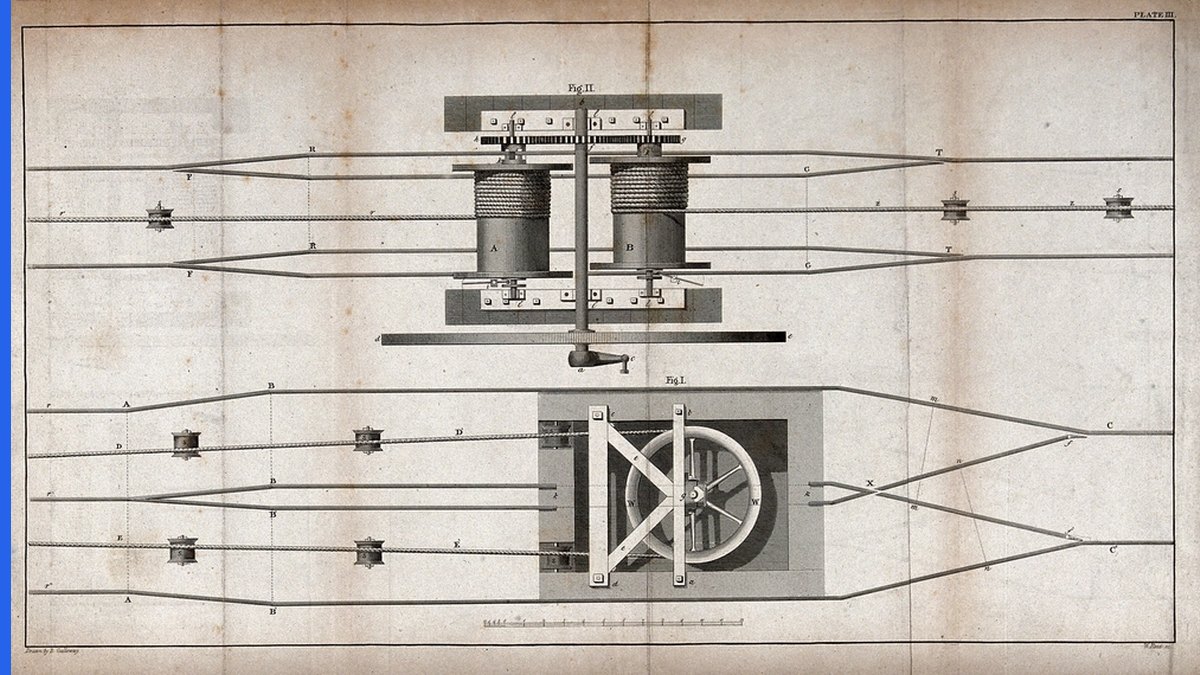
A patent gives you the right to exclude others from making, using, or selling the claimed invention. Copyright protects original expression fixed in a tangible medium. A technical figure can be both at once: the invention it depicts is patent subject matter, while the particular rendering — the line work, the choice of views, the arrangement on the sheet — is a pictorial or graphic work under 17 U.S.C. § 102(a)(5).
The distinction matters because the two rights expire differently, are owned differently, and are infringed differently. Copying your figure into a brochure is not patent infringement at all — no one is practicing the claims. It may still be copyright infringement.
What copyright never reaches is the underlying engineering. Section 102(b) excludes any “idea, procedure, process, system, method of operation” from protection. So a competitor who reads your figure, understands the mechanism, and redraws their own version of that mechanism has taken nothing a copyright can stop. They have copied the idea, not the expression.
Why “Patent Drawings Are Public Domain” Is Wrong
Search this question and you will find confident claims that a figure filed without a copyright notice falls into the public domain. That advice is roughly thirty-five years out of date.
The Berne Convention Implementation Act of 1988 made copyright notice optional for works published on or after 1 March 1989. Before that date, publishing without notice could forfeit protection. After it, notice is a useful signal and nothing more. Omitting the circled C from your Figure 3 in 2026 costs you no rights whatsoever.
A second bad argument invokes 17 U.S.C. § 105, which denies copyright to works of the United States Government. The USPTO publishes your patent, but it did not author your drawings — you or your illustrator did. Publication by a federal agency does not convert a private work into a government work. The Office itself puts the point mildly on its terms-of-use pages, noting that patent text and drawings are typically not subject to copyright restrictions. “Typically” is doing a great deal of work in that sentence, and it is not a legal conclusion about your figures.
So why does the public-domain myth persist? Because in practice most applicants never assert these rights, and because the authorization language discussed below genuinely does license a broad category of copying. The practical freedom is real. The legal dedication is not. Treat patent drawing copyright as live but rarely enforced, and you will be closer to the truth than either extreme.
Who Owns the Figures You Paid For

This is where real money gets lost. Patent drawing copyright ownership does not follow the invoice — it follows the author, and the default rule depends entirely on who drew the figure.
- An employee drew it, within the scope of employment. The work is made for hire under 17 U.S.C. § 101(1) and your company owns the copyright from the moment of creation. No paperwork required.
- A contractor or outside drafting firm drew it. Work-for-hire status under § 101(2) applies only to nine enumerated categories of commissioned works, and only when the parties expressly agree in a signed writing. Technical patent figures are a poor fit for those categories.
- You paid an invoice and nothing else. Absent a signed assignment, the illustrator owns the copyright. You hold an implied licence to use the figure for the purpose it was commissioned for — filing the application — and little more.
Community for Creative Non-Violence v. Reid, 490 U.S. 730 (1989), settled that the employee/contractor line is drawn using ordinary agency principles, not by what the parties call each other on an invoice. And under 17 U.S.C. § 204(a), a transfer of copyright ownership is invalid unless it is in writing and signed by the owner. A handshake, a purchase order, or an email saying “all rights included” will not reliably carry the copyright across.
The practical fix takes one sentence in your engagement letter: the illustrator assigns all copyright in the delivered figures to you, and signs. Get it before the work starts, not after a dispute. The same discipline applies to figures produced with generative tools, where authorship questions are murkier still — we cover that in detail in our guide to AI-generated patent drawings.
How 37 CFR 1.84(s) and 1.71(e) Work Together
The USPTO does permit a copyright notice on a drawing sheet, but only on tightly drawn conditions. Under 37 CFR 1.84(s), the notice “may appear in the drawing, but must be placed within the sight of the drawing immediately below the figure representing the copyright or mask work material and be limited to letters having a print size of .32 cm. to .64 cm. (1/8 to 1/4 inches) high.” Content is limited to the elements the law requires — think © 2026 Acme Corp. and nothing more.
The condition that trips people up is the cross-reference. A notice is permitted only if the authorization language of 37 CFR 1.71(e) appears at the beginning of the specification, preferably as the first paragraph. Put the notice on the sheet without the specification language and you have an objection waiting for you in the first Office action.
Rule 1.71(d) is the companion provision: it allows a copyright or mask work notice to sit adjacent to the protected material anywhere in a design or utility application. Together the two rules create a narrow, permissioned slot for a notice — not a general right to decorate your sheets with legal text. For the broader rules on what text may appear on a drawing sheet at all, see our breakdown of patent drawing legends.
One caution for anyone searching the rule numbers: a great deal of online material attributes drawing standards to the wrong provision. Section 1.84 is the US domestic standard for drawings. It is not the PCT rule, and it is not an MPEP chapter. Cite it precisely or you will be corrected by an examiner who reads these for a living.
What the Section 1.71(e) Authorization Actually Waives
Read the required language closely, because its scope is narrower than most people assume:
A portion of the disclosure of this patent document contains material which is subject to (copyright or mask work) protection. The (copyright or mask work) owner has no objection to the facsimile reproduction by anyone of the patent document or the patent disclosure, as it appears in the Patent and Trademark Office patent file or records, but otherwise reserves all (copyright or mask work) rights whatsoever.
Three limits are doing the work here. The licence covers facsimile reproduction — faithful copying, not adaptation. It covers the document as it appears in Office files or records — the patent as published, not your underlying CAD file or a cleaned-up redraw. And it closes with an express reservation of all other rights.
Apply that to the brochure scenario from the opening. A competitor who photocopies the whole published patent and hands it to a court is squarely inside the licence. A competitor who crops Figure 3, recolours it, and prints it in marketing material is not reproducing the patent document as it appears in Office records. That is the fact pattern where a patent drawing copyright claim has something to bite on.
MPEP 608.01(w) collects the Office’s practice on these notices if you want the examiner-facing version. Note what the authorization is not: it is not a dedication, and it does not run to your pre-filing drafts, your exploded assembly views that never made it into the application, or the drawings you prepared for a filing you abandoned.
Design Patents: The Drawing Is the Claim
Design practice raises the stakes because the figures are not illustrations of the claim — they are the claim. Under 37 CFR 1.152, the design must be represented by a drawing complying with § 1.84, with enough views to constitute a complete disclosure of the appearance of the design. Surface shading shows contour; broken lines show visible environmental structure but may not depict hidden planes.
Two consequences follow. First, an ownership gap in design figures is far more dangerous than in utility figures, because the illustrator’s line work defines the scope of your exclusive right. Second, the same product appearance may carry overlapping design patent and copyright protection, which means a licence drafted for one regime can leave the other untouched.
If broken-line practice is where your design application lives or dies, our rules for design patent drawing broken lines walk through the claiming consequences view by view.
Europe Has No Counterpart to the US Notice Rule
Practitioners often assume a mirror-image provision exists at the European Patent Office. It does not, and the rule most people reach for no longer exists either.
Rule 46 EPC — the old “Form of the drawings” provision — was deleted with effect from 1 February 2023, along with Rule 49(3) to (12) EPC, as part of the EPO’s digital-transformation package. The presentation requirements moved into a Decision of the President published in the Official Journal, which lets the Office adjust them without amending the Implementing Regulations. The working text practitioners should now cite is the EPO Guidelines, Part A, Chapter IX. A surprising number of law-firm pages still cite Rule 46 as live law; some of them are selling drawing services on that basis.
On text matter, Guidelines A-IX, 8 is strict: drawings must not contain text matter except, where absolutely indispensable, a single word or a few words — “water”, “steam”, “section on AB”. A copyright legend is not indispensable to understanding a figure, so there is no European slot for the notice that § 1.84(s) permits in the United States. File the same sheets in both offices and the notice that is permitted in Washington is surplus text in Munich.
Worth knowing alongside this: since 1 October 2025 the EPO accepts electronically filed drawings in colour or greyscale, provided they are contrast-rich and clear at 300 dpi. The PCT was not changed — Rule 11.13(a) still calls for black lines without colourings — so a single drawing set rarely satisfies every office at once.
Seven Rules to Apply Before You File
Condensed to the checks that actually change outcomes:
- Get a signed copyright assignment from every outside illustrator before work begins — § 204(a) means an invoice will not do it.
- Treat the figures as a separate asset in diligence. Buyers ask who owns the drawings; “we paid for them” is not an answer.
- Decide deliberately whether you want a notice on the sheet. Most applicants should not bother; the protection does not depend on it.
- If you do add one, comply with § 1.84(s) on placement and 1/8-to-1/4-inch lettering, and put the § 1.71(e) language first in the specification.
- Never assume publication dedicated anything. The authorization covers facsimile reproduction of the published document, not adaptation of your artwork.
- Keep your source files. The licence attaches to the patent as published, so your CAD originals remain fully yours and are the asset worth archiving.
- Strip US-specific notices from European and PCT sheets, and stop citing Rule 46 EPC.
None of this is exotic. Getting patent drawing copyright right is the kind of housekeeping that costs an hour at the start of a project and saves a painful conversation during a financing round. Our patent drawing compliance checklist covers the formalities side of the same pre-filing review.
This article is general information, not legal advice; consult a qualified attorney for your situation.
How PerspireIP Can Help
We prepare USPTO, EPO, and PCT-compliant figures through our patent drawing services, and every set we deliver comes with a written copyright assignment to you — so the ownership question is answered in your file before anyone thinks to ask it. If you have inherited a portfolio with undocumented drawing provenance, we can audit it. Talk to our team about your next filing.
Frequently Asked Questions
Are patent drawings in the public domain?
No. Copyright notice has been optional since 1 March 1989, so filing without a notice forfeits nothing, and 17 U.S.C. § 105 does not apply because the USPTO publishes your drawings but did not author them. What exists is a narrow licence under 37 CFR 1.71(e), not a dedication to the public.
Who owns a patent drawing prepared by a freelance illustrator?
The illustrator does, unless you have a signed assignment. Commissioned technical figures rarely qualify as works made for hire under 17 U.S.C. § 101(2), and § 204(a) requires any transfer to be in a signed writing.
Can a competitor copy figures out of my issued patent?
They may reproduce the patent document as it appears in USPTO files or records, because the § 1.71(e) authorization permits facsimile reproduction. Cropping, recolouring, or adapting a figure for their own marketing falls outside that licence.
Do I need a copyright notice on my drawing sheets?
Almost never. Protection does not depend on it. If you want one, 37 CFR 1.84(s) requires it immediately below the relevant figure in 1/8-to-1/4-inch lettering, and only if the § 1.71(e) authorization appears at the start of the specification.
Does the EPO allow a copyright notice in drawings?
There is no European counterpart to § 1.84(s). Guidelines A-IX, 8 limits text matter in drawings to a single word or a few words where absolutely indispensable, and a copyright legend does not meet that standard.
Is Rule 46 EPC still the European drawing rule?
No. Rule 46 EPC was deleted with effect from 1 February 2023 together with Rule 49(3)–(12) EPC. The presentation requirements now sit in a Decision of the President, and the Guidelines Part A, Chapter IX is the working text.