Table of Contents
There is a quirk at the heart of IP enforcement in South Africa that catches foreign rights holders off guard: the country grants patents without ever examining whether they are valid. Novelty and inventive step are tested for the first time in litigation, not at the registry. That makes the enforcement forum, the remedies and the evidence rules decisive in a way they are not in examining jurisdictions. This guide maps the seven levers that actually move a South African IP dispute — from interdicts to customs seizures.
IP Enforcement in South Africa Starts With the Right Forum
Choosing the forum is the first strategic call. Patent infringement and revocation go to the Court of the Commissioner of Patents, a specialist court seated in the Gauteng Division of the High Court in Pretoria. It is the only IP-specialist court in the country. Everything else — trade mark, copyright, design and counterfeit-goods matters — is heard in the ordinary High Court divisions, with no general IP tribunal sitting beneath them.
The governing statutes are long-standing and worth naming precisely: the Patents Act 57 of 1978, the Trade Marks Act 194 of 1993, the Copyright Act 98 of 1978, the Designs Act 195 of 1993, and the Counterfeit Goods Act 37 of 1997. Each sets its own remedies and its own procedural rules, so the Act you are enforcing under shapes the whole litigation plan.
If you are building rights before you enforce them, start with how to file a patent in South Africa and our guide to PCT national phase in South Africa.
The Non-Examining Trap: Validity Is Only Tested in Court
South Africa is a depository (non-examining) jurisdiction. The Companies and Intellectual Property Commission (CIPC) grants a patent on formalities alone — it never assesses novelty or inventive step. Those questions are litigated only if someone applies to revoke the patent under section 61 or raises invalidity as a defence to an infringement claim under section 65.
Reform has been promised for years. The 2018 IP Policy foreshadowed substantive search and examination, utility models and post-grant opposition, and CIPC is training examiners and running a voluntary pilot. But as of 2026 none of that is law, and the depository system still governs. Plan around the system you have, not the one that may arrive.
The practical consequence: a granted South African patent is a presumption, not a guarantee. Before you assert one, pressure-test it as a defendant would — a thorough prior-art review is cheaper than discovering a fatal reference mid-trial. Our teams run that analysis through the patent invalidation service in Johannesburg.
Civil Remedies: Interdicts, Damages and Delivery-Up

South African courts call an injunction an interdict, and it is the remedy most rights holders want most. Both interim and final interdicts are available to stop infringement. Alongside the interdict, a successful claimant can recover damages, or a reasonable royalty in lieu of damages — a pragmatic measure where actual loss is hard to prove — plus delivery-up or destruction of infringing goods.
- Interdict — interim relief to hold the line, and a final interdict after trial.
- Damages or a reasonable royalty — the claimant elects; section 65 covers patents and section 34(3) covers trade marks.
- Delivery-up or destruction — removal of the infringing goods and the means of making them.
- Costs — courts frequently award attorney-and-client costs in clear infringement cases.
Because validity rides along with every patent case, the choice of which invalidity grounds to run — and when — carries lasting weight. The Constitutional Court’s deadlocked decision in Ascendis Animal Health v Merck [2019] ZACC 41 (reported 2020 (1) SA 327 (CC)) left a res judicata bar standing: a party that had already litigated revocation could not return with fresh invalidity grounds against the same patent. Pick your grounds carefully; you may only get one shot.
Anton Piller Orders: Preserving Evidence Before It Vanishes
Counterfeiters and infringers destroy evidence. The answer is the Anton Piller order — an ex parte, in camera order authorising a supervised search of the respondent’s premises to preserve evidence before it disappears. South Africa has unusually strong jurisprudence here; the Appellate Division endorsed the remedy in Universal City Studios Inc v Network Video (Pty) Ltd 1986 (2) SA 734 (A), and it remains a workhorse of anti-counterfeiting practice.
These orders are powerful and courts guard them closely — you must show a strong prima facie case, real evidence of the material, and a genuine risk it will be destroyed. Prepared properly, an Anton Piller order can decide a case before the respondent has filed a single affidavit.
Border Enforcement Under the Counterfeit Goods Act
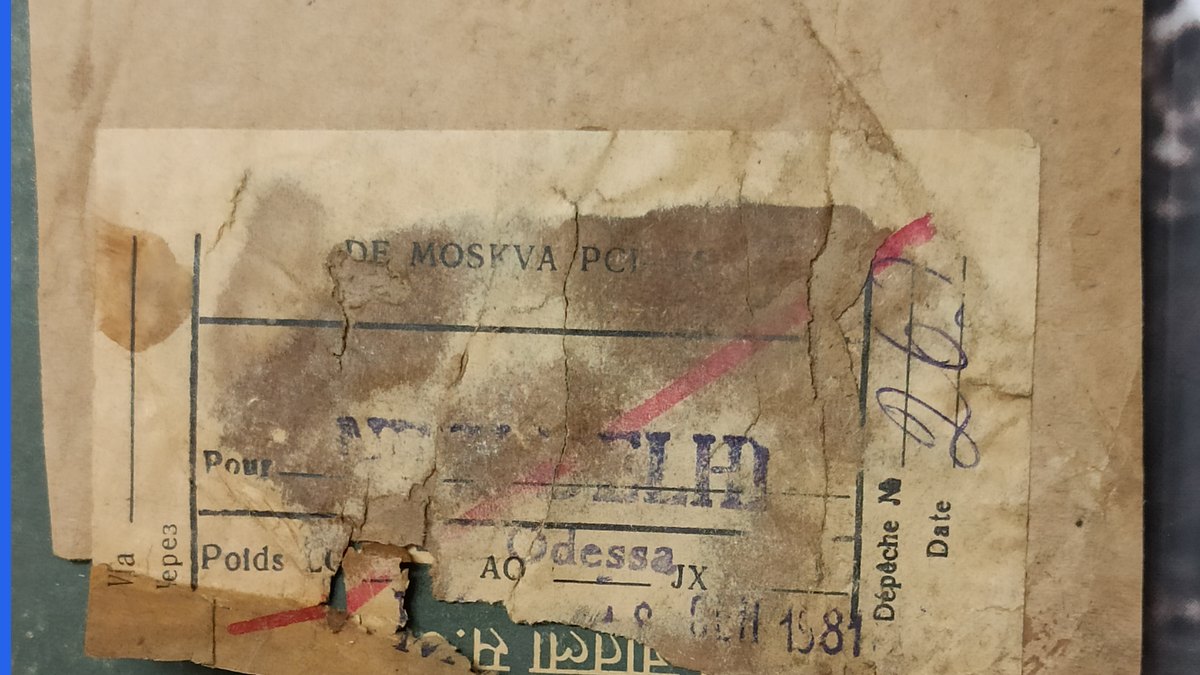
For brand owners, the border is often the best battlefield. Under the Counterfeit Goods Act, a rights holder lodges a recordal application with the Commissioner for the South African Revenue Service (SARS), who can then detain and seize suspected counterfeit goods for a set period. Inspectors may enter premises, search, and seize on complaint or on their own initiative, and goods can be held pending civil or criminal proceedings.
Dealing in counterfeit goods is also a crime. The Act provides fines and imprisonment that escalate on repeat offences — up to R5,000 per article and three years for a first conviction, and up to R10,000 per article and five years thereafter. Criminal and civil tracks can run together, and a customs seizure often supplies the evidence that anchors both.
Where cross-border trade and local distribution overlap, pair a customs recordal with civil action. PerspireIP coordinates both through our infringement analysis in Johannesburg and the wider South Africa practice.
Trade Marks, Passing Off and Copyright
Trade mark infringement is governed by section 34 of the Trade Marks Act: 34(1)(a) covers an identical mark on the same goods, 34(1)(b) a similar mark where confusion is likely, and 34(1)(c) protects well-known marks against dilution even on dissimilar goods. For unregistered marks, the common-law action of passing off remains available where you can prove reputation, misrepresentation and likely damage.
Copyright enforcement runs through the High Court under the Copyright Act 98 of 1978, and overlaps heavily with the Counterfeit Goods Act for pirated media and branded packaging. In practice, a single enforcement campaign in South Africa often blends trade mark, copyright and counterfeit-goods claims, because a counterfeit product usually infringes all three at once. For brand portfolios, align enforcement with trademark filing in Johannesburg so your registered rights are enforcement-ready.
Build an Enforcement Plan That Holds Up
Enforcing IP in a non-examining jurisdiction rewards preparation: validity-tested patents, recorded trade marks, and a customs recordal already in place before infringement starts. PerspireIP helps rights holders assemble that position across South Africa and the wider region. Contact our team to pressure-test your rights and map the fastest route to an interdict.
Frequently Asked Questions
Which court hears patent cases in South Africa?
The Court of the Commissioner of Patents, a specialist court seated in the Gauteng Division of the High Court in Pretoria. Trade mark, copyright, design and counterfeit matters are heard in the ordinary High Court divisions.
Does South Africa examine patents before granting them?
No. CIPC grants patents on formalities only, without substantive examination. Novelty and inventive step are tested for the first time in revocation or infringement proceedings, which makes validity a live issue in almost every patent case.
What remedies are available for IP infringement?
An interdict (interim and final), damages or a reasonable royalty in lieu, delivery-up or destruction of infringing goods, and often attorney-and-client costs. Anton Piller orders are available to preserve evidence.
How do customs seizures work under the Counterfeit Goods Act?
A rights holder lodges a recordal application with the SARS Commissioner, who can detain and seize suspected counterfeit goods. Inspectors may search and seize, and dealing in counterfeits is also a criminal offence carrying fines and imprisonment.
Are Anton Piller orders available in South Africa?
Yes, and the jurisprudence is well established since Universal City Studios v Network Video 1986 (2) SA 734 (A). They are ex parte search-and-preserve orders granted where there is a strong case and a real risk evidence will be destroyed.
Can I enforce an unregistered trade mark?
Yes, through the common-law action of passing off, which protects the goodwill in an unregistered mark where you can show reputation, misrepresentation by the infringer, and a likelihood of damage.