Table of Contents
A United States design patent and an international design registration can protect the same product and be refused for opposite reasons. File at the USPTO and your figures answer to 37 CFR 1.152 and the surviving parts of 37 CFR 1.84. File through WIPO and neither rule applies. Hague System design drawings are governed by Rule 9 of the Common Regulations and by Part Four of the Administrative Instructions, and a designated office may refuse them on one ground only: that they do not disclose the design fully. Here are the seven rules that decide whether your reproductions survive that test.
What Hague System Design Drawings Must Do Under Rule 9

The Hague System is a filing route, not a harmonised design law. One application at WIPO, one set of fees, one set of reproductions, and then each designated Contracting Party applies its own substantive law to the result. Our guide to Hague design registration covers the strategy and the costs. This piece covers the part of the file that every designated office looks at and that you cannot tailor office by office.
Rule 9(1)(a) of the Common Regulations under the Geneva Act (1999) sets the form: reproductions “shall, at the option of the applicant, be in the form of photographs or other graphic representations of the industrial design itself or of the product or products which constitute the industrial design.” The same product may be shown from different angles, and views from different angles must be included in different photographs or other graphic representations.
Rule 9(2)(a) sets the quality standard, and it is one sentence long: reproductions “shall be of a quality permitting all the details of the industrial design to be clearly distinguished and permitting publication.” There is no line-weight table, no margin schedule and no lettering-height minimum of the kind a US utility filer expects. Hague System design drawings are judged on two questions instead: do they reproduce, and do they disclose?
The International Bureau checks the formalities before registration and publication. After that, the only drawing-based objection left to a designated office is the one in Rule 9(4), and understanding that provision is what turns this from a formatting exercise into a scope exercise.
Rules 1 and 2: Form, Quality and the Six-View Ceiling
A Contracting Party that wants particular views has to say so in advance. Rule 9(3)(a) requires it to notify the Director General by declaration, specifying the views required and the circumstances in which they are required. Rule 9(3)(b) then caps what any office can ask for: “No Contracting Party may require more than one view where the industrial design or product is two-dimensional, or more than six views where the product is three-dimensional.”
Read that as a ceiling on demands rather than a safe harbour. Six views is the most an office can insist on; it is not a guarantee that six views disclose your product. WIPO’s September 2025 Guidance on Preparing and Providing Reproductions, written expressly against Rule 9(4), recommends:
- Six orthogonal views of a three-dimensional product — front, back, top, bottom, right side and left side — or two views showing the front and rear surfaces of a two-dimensional product such as a postcard or a textile
- Perspective views instead, where they show the entire configuration of the product
- The same scale across every view, with an enlarged view added where a small part cannot otherwise be made out
- A legend of no more than 50 characters, or a description, indicating the direction of each orthogonal view
- Full and independent disclosure of every design where one application carries several
Where you leave a view out, say why. WIPO’s own worked example omits the back and bottom views “because the surfaces of the back and the bottom of the product are flat and include no ornamentation” and the right side view “because it is a mirror image of the left side view.” That single line of description is the difference between a deliberate omission and an incomplete disclosure.
Two jurisdictional footnotes matter more than they look. Where Canada, Israel, Mexico or the United States is designated, WIPO records that there is no requirement of a strict numerical quantity of views at all — adequacy is determined by sufficiency of disclosure, not by counting. Where Viet Nam is designated, a perspective view is required under its Rule 9(3) declaration. The same figure set therefore faces a numeric test in some offices and a substantive one in others, which is why we plan Hague System design drawings around the strictest designated office rather than the average one. Our note on choosing patent drawing views works through the underlying view logic.
Rule 3: Why 37 CFR 1.84 and 1.152 Do Not Apply

This is the rule that catches experienced US practitioners, because it reverses an assumption rather than adding a requirement. The formal drawing rules that govern a domestic design patent do not govern an international design application.
37 CFR 1.1061 is explicit: “The provisions of § 1.74, § 1.84, except for § 1.84(c), and §§ 1.152 through 1.154 shall not apply to international design applications.” So the design drawing rule you would normally reach for, 37 CFR 1.152, is switched off, and so is the utility drawing rule, 37 CFR 1.84, apart from subsection (c) on identification of drawings. In their place, 37 CFR 1.1026 provides that reproductions shall comply with the requirements of Rule 9 and Part Four of the Administrative Instructions.
What survives on the US side is substantive rather than formal. MPEP 2920.04(b) requires the reproductions to be “a clear and complete depiction of the design applied to the article designated in the title, and that nothing regarding the design sought to be patented is left to conjecture,” and it accepts either a drawing in black and white or in colour, or a photograph.
One mechanical difference is worth putting on a checklist: figures in an international design application are identified in dot notation — 1.1, 1.2, 1.3 — rather than the sequential FIG. numbering a domestic design application uses. If you are preparing both, the numbering schemes are not interchangeable. The wider divergence between the two regimes is set out in our comparison of utility and design patent drawings and in our guide to design patent drawings.
Rule 4: The 16 x 16 Centimetre Cap in Part Four
Part Four of the Administrative Instructions supplies the mechanical detail that Rule 9 deliberately leaves out. The number to design around is in Section 402(b): the dimensions of the representation of each industrial design appearing in a photograph or other graphic representation may not exceed 16 x 16 centimetres.
Representations larger than that are scaled down by the International Bureau to fit the limit. That sounds administrative and is not. A reduction you did not design for is a reduction that can close up hatching, merge adjacent contour lines and lose the surface detail that distinguishes your design from the prior art — and Rule 9(2)(a) still requires every detail to be clearly distinguishable after it happens.
The working rule is to compose each reproduction inside the 16 x 16 centimetre box from the start, then test it at the size it will publish at. Hague System design drawings that arrive oversize are resized by someone with no view on which detail carries the design. We build our patent drawing sets to the publication size rather than the screen size for exactly this reason.
Rule 5: Disclaimers Need Broken Lines and Words
Rule 9(2)(b) permits matter shown in a reproduction for which protection is not sought to “be indicated as provided for in the Administrative Instructions.” Section 403 is that provision: unclaimed matter may be indicated by dotted or broken lines or by colouring in the reproduction, or stated in the description. So Hague System design drawings can disclaim in the drawing, in the text, or in both.
Both is the right answer, and WIPO says why. Its guidance notes that dotted or broken lines “may have a variety of meanings with respect to the claimed design,” and gives an example worth remembering: broken lines on a shoe, with no explanation, may be read as a disclaimed part of the design or as stitching. The fix is one sentence in the description — WIPO’s own model wording is that “the parts shown by means of broken lines in the reproductions are not part of the claimed design.”
There is a further trap for anyone drawing to US habits. Where Brazil, Canada, Israel or the United States is designated, portions of an article that are not shown in the views and not otherwise described are simply treated as forming no part of the claimed design. WIPO’s example is a bookstand: if the back has not been shown or described, it is excluded from the claim, and a view showing the entire back in broken lines is not required. Under 37 CFR 1.152 practice, drawing the environment in dashes is reflexive; here it can be redundant work that adds ambiguity. Our analysis of design patent broken lines covers the domestic rules those habits come from.
Rule 6: Never Mix Forms, and Never Mix Colour With Black and White
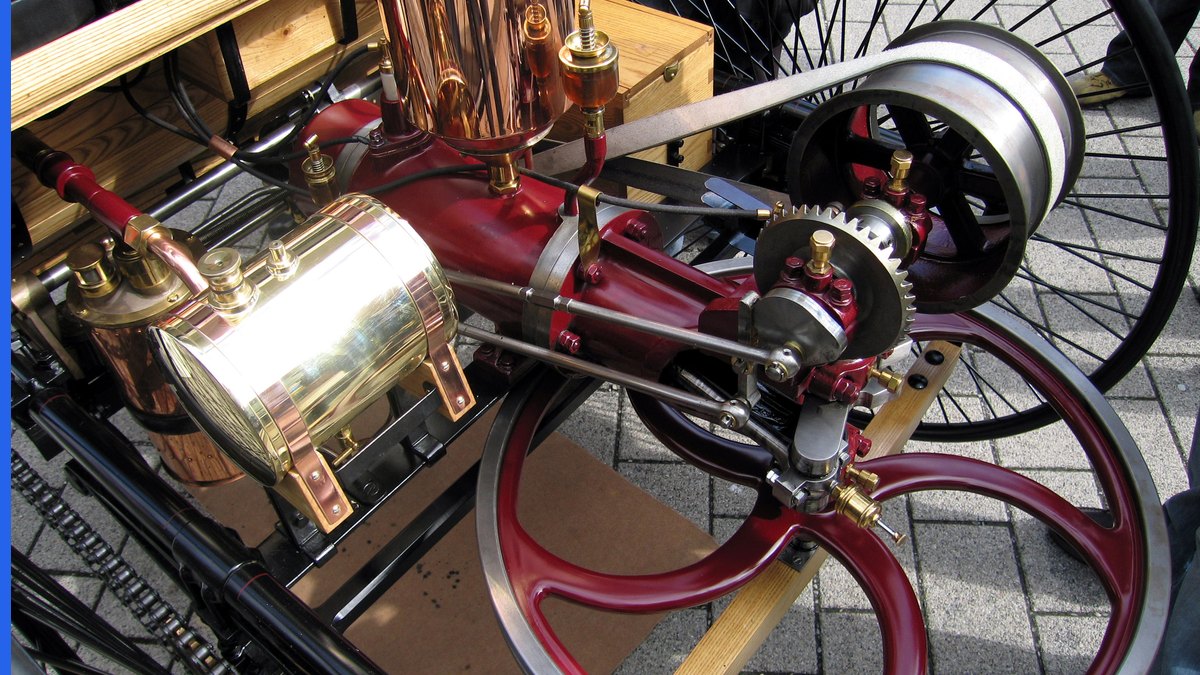
Guidance No. 4 in WIPO’s September 2025 document is two lines long and prevents a common, expensive mistake: all reproductions should be in the same form, and representations should be all in either black and white or in colour.
The failure patterns it identifies are exactly the ones a product launch produces:
- At least one reproduction is a photograph while the rest are line drawings
- At least one reproduction is a line drawing while the rest are computer-graphic renderings
- At least one representation is in colour while the rest are in black and white
The consequence is not a formalities notice. Examining offices may read the inconsistency substantively — as meaning that the colour, the pattern or the surface treatment of the claimed design actually differs between views — and that is a disclosure objection, not a paperwork one.
In practice this is where marketing assets and engineering assets collide. The renders are colour CGI, the technical figures are monochrome line art, and a filing assembled under deadline uses whichever file was to hand for each view. Decide the medium once, at the start, and render every view in it. The same discipline governs colour in patent figures generally, which we cover in our piece on colour patent drawings.
Rule 7: Rule 9(4) Is the Only Real Refusal Risk
Rule 9(4) has two halves and practitioners tend to remember only the comfortable one. A Contracting Party “may not refuse the effects of the international registration on the ground that requirements relating to the form of the reproductions of the industrial design that are additional to, or different from, those notified by that Contracting Party in accordance with paragraph (3)(a) have not been satisfied under its law.” That is the protection: local formal quirks you were never told about cannot be used against you.
The second half is the exposure. The same rule continues that a Contracting Party “may however refuse the effects of the international registration on the ground that the reproductions contained in the international registration are not sufficient to disclose fully the industrial design.” Form is federalised; sufficiency is not.
At the USPTO that refusal has a statutory shape. MPEP 2920.04(b) directs examiners that where inconsistencies among the views are of such magnitude that the overall appearance of the design is unclear, the claim should be rejected under 35 U.S.C. 112(a) and (b) as nonenabling and indefinite. A drawing problem becomes a patentability problem.
WIPO’s guidance on surfaces is the most useful preventative material in the document. Shading, hatching, dots or lines may be used to indicate the relief or contours of a three-dimensional surface, and a computer-graphic rendering can do the same job. But where China, Japan or Viet Nam is designated, sectional or perspective views are preferred to shading as a way of showing relief concretely; and where Brazil, Canada or the United States is designated, shading, hatching or other lines will sometimes need further explanation before the design is regarded as fully disclosed.
Hague System design drawings that fail this test fail late. The registration has published, the reproductions are fixed, and the objection arrives in a designated office that will not let you redraw your way out of it.
Rule 46 EPC Has Nothing to Do With Design Drawings
One citation deserves to be retired, because it still appears in drawing checklists aimed at design filers. Rule 46 EPC governed the form of drawings in European patent applications. It was deleted with effect from 1 February 2023, together with Rule 49(3) to (12) EPC; the presentation requirements are now set by a decision of the President of the EPO under the amended Rules 49 and 50 and are reflected in the EPO Guidelines at Part A, Chapter IX.
Even while it was in force, it never touched designs. The EPO grants patents; it does not register industrial designs. The European routes for a design are a registered Community design at the EUIPO, or a Hague application designating the European Union. So a checklist that cites Rule 46 EPC for a design filing is citing a deleted rule from the wrong office, and the reproductions in your international registration answer to Rule 9 and Part Four of the Administrative Instructions instead.
Have Your Reproductions Checked Before the International Registration Publishes
Send CAD geometry, product photographs, renders or rough sketches and we will build a consistent reproduction set for a WIPO international design application — sized inside the 16 x 16 centimetre limit of Section 402(b), rendered in one medium, disclaimed in the drawing and in the description, and checked against the declared view requirements of every office you intend to designate. We prepare Hague System design drawings alongside domestic design and utility figure sets, so a family filed by more than one route stays consistent. Talk to us about your filing or see our patent drawing services.
Frequently Asked Questions
Do 37 CFR 1.84 and 1.152 apply to Hague System design drawings?
No. 37 CFR 1.1061 provides that the provisions of section 1.74, section 1.84 except for section 1.84(c), and sections 1.152 through 1.154 shall not apply to international design applications. Under 37 CFR 1.1026, Rule 9 of the Common Regulations and Part Four of the Administrative Instructions apply instead.
How many views does a Hague design application need?
Rule 9(3)(b) prevents any Contracting Party from requiring more than one view for a two-dimensional design or more than six views for a three-dimensional product. WIPO’s guidance recommends six orthogonal views, or perspective views that show the entire configuration. Where Canada, Israel, Mexico or the United States is designated there is no numerical requirement at all; sufficiency of disclosure decides.
Can I use photographs instead of line drawings?
Yes. Rule 9(1)(a) leaves the choice between photographs and other graphic representations to the applicant. What you must not do is mix them: WIPO’s guidance asks that all reproductions be in the same form and that representations be all in either black and white or colour.
How large can a reproduction be?
Section 402(b) of the Administrative Instructions caps the representation of each industrial design at 16 x 16 centimetres. Larger representations are scaled down by the International Bureau, which can cost you detail that Rule 9(2)(a) requires to remain clearly distinguishable.
Can a designated office refuse my registration over the drawings?
On one ground only. Under Rule 9(4) a Contracting Party cannot refuse because form requirements it never notified were unmet, but it can refuse because the reproductions are not sufficient to disclose the design fully. At the USPTO that appears as a rejection under 35 U.S.C. 112(a) and (b), per MPEP 2920.04(b).
Does Rule 46 EPC govern the form of design drawings?
No, for two reasons. Rule 46 EPC applied to European patent applications rather than designs, and it was deleted with effect from 1 February 2023 along with Rule 49(3) to (12) EPC. The EPO’s presentation requirements now come from a decision of the President of the EPO under the amended Rules 49 and 50.