
Table of Contents
Freedom to operate renewable energy products is no longer a formality reserved for pharma and consumer electronics. As solar, wind and storage scale into one of the most heavily patented corners of technology, a clean-energy launch now runs the same infringement risk as any crowded field — and the incumbents that built the early patent walls are enforcing them. This guide explains what freedom-to-operate clearance means for a renewable product, why storage is the hardest case, and the five steps that turn a wall of patents into a short, actionable list before you commit capital.
Why Freedom to Operate Renewable Energy Projects Matters Now
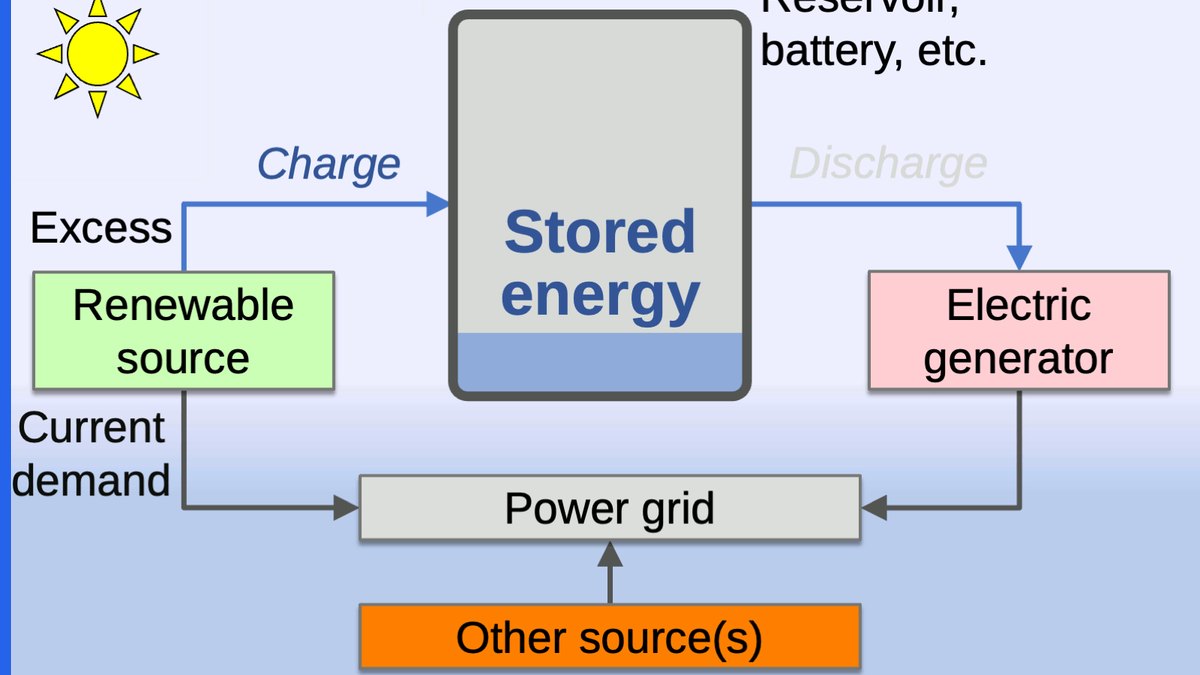
A freedom-to-operate (FTO) analysis asks one question: would making or selling your product infringe a patent still in force in the market where you plan to sell? For years, renewable-energy engineers treated that question as someone else’s problem. That is over. The build-out is enormous — IRENA’s Renewable Capacity Statistics 2025 reported a record 585 GW of new renewable capacity added in 2024, with renewables making up 92.5% of all new power capacity — and where the money goes, the patents follow.
The reason freedom to operate renewable energy now demands the same rigor as any dense field is simple: a granted patent of your own does not clear the road. Patentability and infringement are opposite-facing questions, and you can hold your own patents while still reading on a competitor’s earlier claim under 35 U.S.C. § 271. A clearance study is how you find out before a cease-and-desist letter does it for you.
The Storage Thicket: Where Renewable FTO Gets Hardest
Every gigawatt of solar and wind needs storage, and storage is where renewable patenting is most intense. The joint EPO–IEA study Innovation in batteries and electricity storage found sector patenting grew about 14% a year between 2005 and 2018 — roughly four times the all-technology average — with annual international patent families rising from about 1,500 to more than 7,000, over 65,000 filed since 2000, and batteries making up close to 90% of all electricity-storage patenting.
The pace has not eased. The EPO Patent Index 2024 recorded battery-technology filings rising about 24% year on year, one of the fastest-growing categories at the office. For a developer bringing a battery energy storage system to market, that density means a naive keyword search returns more hits than any team can read — which is exactly why clearance in this field is an exercise in triage, not exhaustive reading.
- Thousands of live claims from a small set of well-resourced Asian cell makers who defend them.
- Fast-moving chemistries — every pivot to a new cell type resets the clearance question.
- Overlapping coverage across cells, modules, thermal management, and battery-management software.
Solar and Wind: A Different Clearance Picture
Not every renewable field looks like storage. Patenting in the mature renewable-supply technologies — wind, solar, hydro and geothermal — has actually been easing since around 2012 as those technologies matured, according to the EPO–IEA report Patents and the energy transition. A lower filing rate does not mean a clear field, though: the foundational patents filed during the boom years are exactly the ones still in force and still being asserted.
Solar proves the point. The industry’s litigation has clustered around each new cell architecture — passivation (PERC), then TOPCon and back-contact designs — with the incumbents who patented each generation enforcing against fast-scaling entrants. A solar FTO read therefore focuses less on filing volume and more on which specific cell-architecture patents are live in each target market, and whether the product’s process steps read on them.
The Five-Step Clearance a Renewable Launch Needs
A defensible renewable-energy clearance moves through five checks, in order. Skipping any one is how a product clears on paper and still draws a demand letter in its first quarter on the market.
- Claim mapping — break the product into patent-relevant features (cell chemistry, thermal design, inverter controls) and read each against the independent claims of candidate patents, not their abstracts.
- In-force screening — drop expired and maintenance-lapsed patents, but keep pending applications from major assignees, which can still issue with covering claims.
- Blocking-patent identification — triage hundreds of live claims down to the handful the product genuinely reads on.
- Territorial clearance — repeat the read for each target market, because a patent granted in Korea grants nothing in the EU.
- Design-around or licence — for each real blocker, cost an engineering change against the price of a licence, and stress-test shaky patents on validity.
Our renewable-energy FTO case study shows this method applied to a grid-scale battery storage system, where triage cut more than 600 live claims to four genuine blockers and sequenced a clean five-market launch. The full method is set out on our freedom-to-operate analysis service page.
Real Disputes That Prove the Point
The renewable patent wars are not hypothetical. In batteries, LG Energy Solution v. SK Innovation ran through the US International Trade Commission before settling in April 2021 for a reported $1.8 billion, per public records of the settlement. In solar, Hanwha Q CELLS sued JinkoSolar, LONGi and REC across the ITC, a US court and the Düsseldorf Regional Court over cell-passivation technology, and newer TOPCon and back-contact disputes — Trina Solar v. Runergy in the US and Maxeon actions in Europe, including before the Unified Patent Court — show the litigation tracking each new architecture.
The stakes are amplified by the willfulness rule. Under 35 U.S.C. § 284, a court may treble damages for willful infringement — and a competent, timely freedom-to-operate opinion is evidence of the good-faith belief that helps rebut a willfulness finding. In a field with billion-dollar settlements on record, that written opinion is not a luxury.
When to Run the Analysis
Timing decides whether clearance is cheap or catastrophic. Run a scoping read at the prototype stage, a full freedom-to-operate analysis before you commit to tooling or a supply contract, and a formal written opinion before a high-volume launch or a fundraising round where diligence will ask to see it. Every blocker is cheaper to clear while the design can still change; the same finding after production means scrapped inventory.
Clearance is also not a one-time gate. With battery filings still rising at double-digit rates and roadmaps moving toward new chemistries and grid-forming controls, a renewable FTO study should be refreshed whenever the design changes materially or the launch expands into a new jurisdiction. Pair it with a standing patent competitive intelligence watch, and you see a rival’s blocking claim the quarter it publishes — not after it lands on your desk as a lawsuit.
How PerspireIP Can Help
At PerspireIP, our team helps innovators and businesses protect what they build. Whether you need a patent or trademark search, prior-art analysis, or an IP strategy tailored to your goals, we can help. Contact our team to discuss your next step.
Frequently Asked Questions
What does freedom to operate mean in renewable energy?
It means confirming that making or selling a renewable-energy product — a battery system, solar module or wind component — would not infringe any patent still in force in your target market. It is a clearance question, separate from whether your own design is patentable.
Why is storage the hardest field for renewable FTO?
Battery and storage patenting grew about 14% a year from 2005 to 2018 per the EPO–IEA, with over 7,000 international patent families filed in 2018 alone and batteries making up roughly 90% of storage patenting. That density means a clearance read has to triage thousands of live claims down to the few that genuinely block the product.
Have there been real patent disputes in renewable energy?
Yes. LG Energy Solution v. SK Innovation settled in 2021 for a reported $1.8 billion, and solar has seen Hanwha Q CELLS, Trina Solar and Maxeon actions across the ITC, US courts and Europe. As each technology matures, incumbents enforce their early patents against fast-scaling entrants.
When should a renewable-energy company run an FTO analysis?
Run a scoping search at the prototype stage, a full analysis before committing to tooling, and a written opinion before a high-volume launch or a fundraising round. Clearance is cheapest while the design can still change, and it should be refreshed whenever the product or target markets change.
Does a freedom-to-operate opinion reduce infringement damages?
A competent, timely opinion of counsel is evidence of good faith that helps rebut a willful-infringement finding, which under 35 U.S.C. § 284 can carry damages up to three times the amount found. That is a core reason a written opinion earns its cost before a renewable launch.