Table of Contents
Getting a medical device to market takes two kinds of clearance that are easy to confuse. The first is regulatory — an FDA 510(k), De Novo or PMA, and a European CE mark. The second is whether you have freedom to operate medical devices in your target markets without infringing someone else’s patent. The first lets you sell; the second keeps you selling. A device can be fully cleared, CE-marked and shipping and still be enjoined — which is exactly what happened to the Apple Watch’s blood-oxygen feature. This guide explains what an FTO analysis covers, where the patent risk concentrates in medtech, and the two fast injunction routes that make clearance non-optional.
Freedom to Operate Medical Devices: What Clearance Means

A freedom-to-operate (FTO) analysis asks a narrow legal question: can you make, use, sell or import your device in a given country without infringing a patent that is currently in force there? It is not a novelty search for your own filing, and it is not a regulatory review. It maps your product’s actual features to live third-party claims and tells you which patents genuinely block you.
For medical devices the stakes are unusually high because the field is so densely patented. Medical technology was a top-five field for international PCT patent applications in 2024, at roughly 6.5% of all filings worldwide (WIPO), and the global medical device market was worth about $542 billion in 2024 (Fortune Business Insights). That combination — a huge market and decades of layered patenting — is why clearing freedom to operate medical devices before launch is a board-level decision, not a formality.
The output of a good FTO is not a pile of search hits. It is a ranked, jurisdiction-tagged list of the handful of patents whose claims read on your device, each with a recommended action: design around it, license it, or challenge its validity.
Why FDA Clearance Is Not Freedom to Operate
This is the most common and most expensive misconception in medtech. FDA review under the 510(k), De Novo or PMA pathways evaluates whether a device is safe and effective. A European CE mark under the Medical Device Regulation (EU) 2017/745 evaluates conformity. Neither one looks at third-party patents.
The proof is on your wrist. In October 2023 the US International Trade Commission issued an exclusion order in Masimo v. Apple over light-based pulse oximetry, forcing Apple to disable the Apple Watch’s blood-oxygen feature in the United States — even though the product was cleared and already selling. Regulatory approval did nothing to stop it.
So the two clearances are separate gates. You can hold every regulatory approval and still face an injunction; conversely, clearing the patents does not exempt you from the regulatory submission. Both have to be planned, and the patent clearance has to be run as its own claim-level exercise.
Where the Patent Risk Concentrates in Medtech
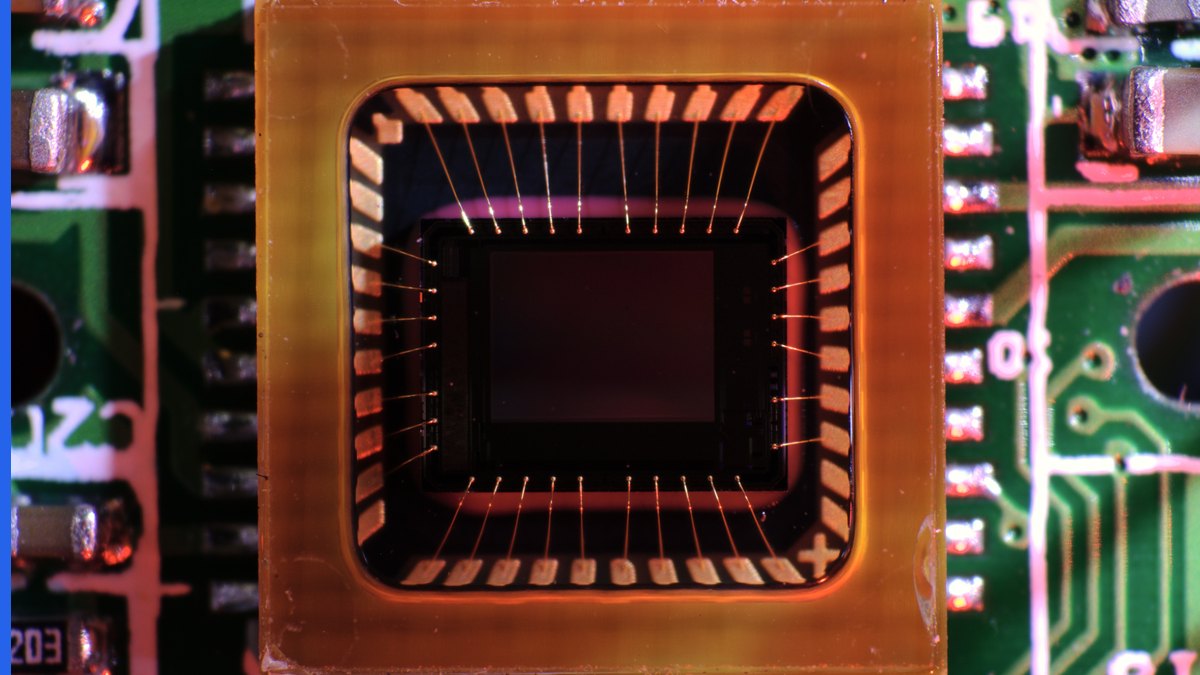
Device patents cluster in a predictable set of classifications. The dominant one is CPC class A61B — diagnosis, surgery and identification, including A61B5 for diagnostic measurement — with A61M (delivering media to the body) and the G16H digital-health classes close behind. Ownership concentrates among incumbents such as Medtronic, Philips, Abbott, Terumo and Boston Scientific, several filing more than a thousand families a year.
Three risk pockets recur. The first is materials and chemistry — enzyme membranes, coatings, biocompatible polymers. The second is mechanism and geometry — catheters, insertion mechanisms, implant structures. The third, and increasingly the sharpest, is software and algorithms — the signal processing that turns a raw sensor reading into a clinical value, plus the data-transmission scheme.
That third pocket is where recent disputes have landed. The continuous-glucose-monitor patent war between Abbott and Dexcom spanned the US and Europe before the two settled in December 2024, and the Masimo matter turned on how an oxygen reading is computed. Auditing the code and its provenance is now as important as clearing the hardware.
Two Fast Injunction Routes: the ITC and the UPC
Most products worry about damages. Medical devices have to worry about being stopped, because two forums can issue fast, border-level injunctions.
- The US ITC. Because most devices are imported, a Section 337 exclusion order from the International Trade Commission can bar them at the border on a timeline faster than a district-court damages case. The Apple Watch pulse-oximetry shutdown came through this route.
- The EU’s Unified Patent Court. A single UPC forum can enjoin a device across most member states at once. Edwards Lifesciences won a UPC injunction against Meril covering 16 UPC states in November 2024, and the Hamburg Local Division fined another medtech company for breaching a preliminary injunction.
The practical consequence is that you cannot clear a device country by country and call it done. A product clear in the United States but exposed in one EU member state is not cleared for Europe, because one forum can turn that single exposure into a continent-wide block.
How to Run a Freedom-to-Operate Analysis for a Device
A disciplined clearance follows a sequence, each step narrowing what the next has to examine:
- Decompose the product into features. Break the device into concrete technical elements — each sensor, mechanism, algorithm and data path — and map each to the patent subclass an examiner would search. Clear features, not the marketing description.
- Pull live, in-force patents per market. For each feature, gather patents currently in force in each target country and read the independent claims against the product as built.
- Separate real blockers from noise. Most hits merely mention a sensor; only a few have claims that actually read on your device. This is where a universe of tens of thousands collapses to a few dozen candidates and then a handful of true blockers.
- Score each blocker by jurisdiction and injunction risk. Flag ITC and UPC exposure specifically, since those are the routes that stop a launch.
- Cost a design-around or a licence for each. Turn every genuine blocker into a number the board can act on, and audit third-party and open-source software for licence and provenance.
Run before design freeze, the clearance lets engineering design around a blocking feature while changes are still cheap. The same patent found after tooling can force a recall-grade redesign or a licence negotiated under duress — and for a regulated device, a late design change can even trigger a fresh regulatory submission. Our medical-device FTO case study walks through the full sequence on a wearable sensor launch.
Freedom to Operate Medical Devices: Common Mistakes
A few recurring mistakes turn a manageable clearance into a crisis. The most common is treating FDA or CE clearance as if it settled the patent question — it does not. The second is clearing the finished product against a marketing description instead of mapping each underlying feature to the classes an examiner would search, which lets a blocking claim slip through.
A third is ignoring software and data provenance. Modern devices live or die on algorithms, and a third-party library with unverified licence terms can import an infringement risk the hardware review never sees. A fourth is clearing only the home market: with the Unified Patent Court able to enjoin across the EU from one forum, a single uncleared European state can block a continent. Building these checks into the clearance is what separates an FTO opinion a board can act on from a search dump.
The Cost of Clearing vs the Cost of a Blocked Launch
An FTO analysis is a fraction of the cost of the exposure it retires. A blocked launch in medtech can mean a disabled feature on a shipping product, an exclusion order halting imports, a continent-wide UPC injunction, or a licence taken from a position of weakness after tooling is sunk — on top of the regulatory cost of any forced design change.
Weighed against a $542 billion global market and injunction routes that can stop a product in weeks, clearing freedom to operate medical devices before launch is among the cheapest insurance a device company can buy. The deliverable — a costed, jurisdiction-tagged blocking list — is something a board can approve a launch on in a single meeting.
Clear Your Device Before You Launch
PerspireIP runs claim-level freedom-to-operate analysis for medical devices across the US and EU — mapping your features to live patents, scoring ITC and UPC risk, and costing a design-around or licence for every genuine blocker. Talk to our team before your design freeze.
Frequently Asked Questions
Does FDA approval give me freedom to operate?
No. A 510(k) clearance, De Novo grant or PMA approval — like an EU CE mark — authorizes you to market the device after a safety or conformity review. None of them assess third-party patents, so a cleared, selling device can still be enjoined or excluded.
What is the difference between an FTO search and a patentability search?
A patentability (novelty) search looks at prior art to see whether your own invention can be patented. A freedom-to-operate analysis looks at live, in-force third-party patents to see whether your product infringes. They use different patents and answer different questions.
Why is the ITC a special risk for medical devices?
Because most devices are imported, a US International Trade Commission Section 337 exclusion order can bar them at the border faster than a typical district-court case. The Apple Watch blood-oxygen shutdown in 2023 came through this route even though the product was FDA-cleared.
How does the Unified Patent Court affect EU device clearance?
A single UPC forum can grant an injunction covering most EU member states at once. Edwards Lifesciences obtained a UPC injunction against Meril spanning 16 states in 2024, so devices must be cleared for the EU as one market rather than country by country.
When should I run a freedom-to-operate analysis?
Before design freeze. Catching a blocking patent while the design is still fluid lets engineering design around it cheaply; the same patent found after tooling can force a recall-grade redesign, a licence under duress, or even a new regulatory submission.