Table of Contents
Collaborative robots — cobots that work safely alongside people instead of behind a cage — are the fastest-growing corner of an already crowded field. That growth sits on top of thirty years of patenting, and anyone building or buying a cobot now has to reckon with collaborative robot patents held by a handful of long-established incumbents. This guide maps who owns the landscape, which technologies are most heavily fenced, when those patents turn into lawsuits, and how to clear a cobot before you commit tooling.
What Collaborative Robot Patents Actually Cover
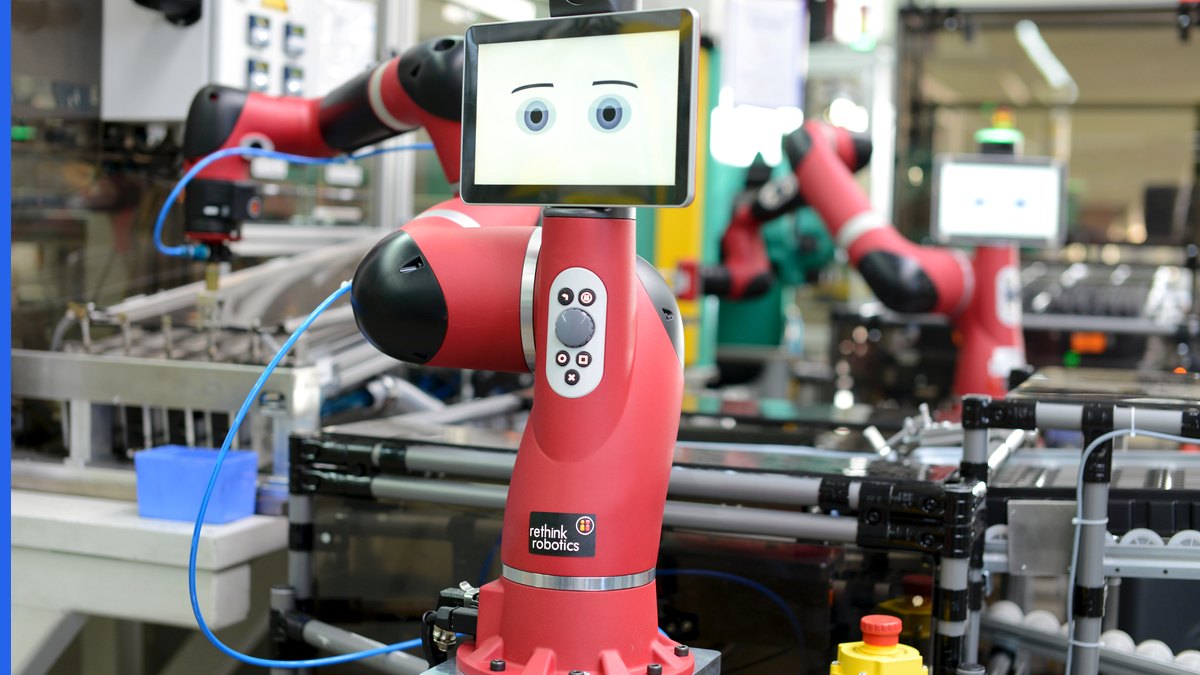
Robotics as a whole is dominated by one patent class: B25J, covering manipulators and robots. Autonomous navigation and control fall under G05D, and surgical robotics under A61B. Collaborative robot patents concentrate in B25J but claim the specific things that make an arm safe to share space with a human.
In practice that means claims over power-and-force-limiting control, safety-rated monitored stop and speed-and-separation monitoring — the behaviours the ISO/TS 15066 technical specification describes for human-robot collaboration — plus hand-guiding, collision detection and the sensor fusion behind them. A cobot is not a mechanically simpler robot; it is a robot with a dense layer of safety-control invention on top, and that layer is exactly where the patents are.
For a company entering the market, the lesson is that the differentiator — safe collaboration — is also the most patented feature. Clearing a cobot is less about the arm’s kinematics and more about how it senses, limits and stops.
Who Owns the Cobot Patent Landscape

Ownership is concentrated. The robotics incumbents — FANUC, ABB, Stäubli, KUKA and Yaskawa — hold deep portfolios, and Universal Robots, which effectively created the modern cobot category, is a prolific filer in the collaborative niche specifically.
The filings cluster geographically too. For collaborative robots, the United States accounts for roughly 33% of filings, China about 29%, the WIPO PCT route around 12% and the European Patent Office about 9%. A newcomer therefore faces the densest exposure in exactly the two markets most launches target first: the US and Europe.
- B25J (manipulators and robots) — the dominant class for cobot claims.
- G05D — autonomous navigation and control, relevant to mobile cobots and AMRs.
- Top holders: FANUC, ABB, Stäubli, KUKA, Yaskawa, Universal Robots.
- Filing hotspots: US (~33%), China (~29%), WIPO (~12%), EPO (~9%).
How Big Is the Market Behind These Patents
The patenting intensity tracks a market that has doubled in a decade. According to the International Federation of Robotics’ World Robotics 2025 report, factories installed about 542,000 industrial robots in 2024, and the worldwide operational stock reached 4.66 million units — up 9% year on year. Annual installations have topped half a million for four straight years.
The geography is lopsided. Asia took roughly 74% of new deployments in 2024, Europe 16% and the Americas 9%, with China alone representing more than half of global installations. Collaborative robots are the segment adding the most new buyers, because a cobot can be deployed in a small shop without the safety cage and integration cost of a traditional industrial cell.
A larger installed base means more products to assert patents against and more incentive to enforce. That is the commercial backdrop to every collaborative robot patent dispute: the prize is a share of a market measured in hundreds of thousands of units a year.
The Technologies Most Densely Fenced
Four clusters carry most of the risk. First, safety control: force- and torque-limiting methods, safety-rated monitored stop and speed-and-separation logic. These are heavily claimed because they are what regulators and standards require of any collaborative machine.
Second, navigation and mapping for mobile cobots and autonomous mobile robots — SLAM, loop closure and obstacle avoidance. Third, machine vision for pick planning and object recognition. Fourth, end-effectors and grippers, where a specific geometry or adaptive-grip mechanism can read on a granted claim even when the underlying arm does not.
None of this sits in a standards pool. Unlike a cellular product, where standard-essential patents can be licensed on FRAND terms, cobot patents are ordinary utility patents. That changes the clearance problem entirely: the answer to a real blocker is usually a design-around or a bilateral licence, not a published rate.
When Collaborative Robot Patents Turn Into Lawsuits
The enforcement risk stopped being theoretical in 2026. In April, the Regional Court of Hamburg granted Teradyne Robotics a preliminary injunction barring Elite Robots from offering cobot software — and, in the court’s words, all products containing that software — in Germany. A single national court order reached the whole of Europe’s largest robotics market.
It is not an isolated case. Boston Dynamics and Ghost Robotics litigated legged-robot patents to a settlement in 2025, and Perrone Robotics asserted five autonomous-operating-system patents against Tesla in the Eastern District of Virginia in late 2025. The pattern that should worry cobot builders most is the Hamburg one: the injunction turned on software, not a mechanical feature.
That makes code provenance a first-order clearance issue. A third-party or open-source motion library with unclear licensing can expose an entire product line, because a court can enjoin the software and everything shipping with it — exactly the outcome the fastest robotics injunction to date produced.
How to Clear a Cobot Before You Launch
A freedom-to-operate analysis for a cobot is sequenced so each step narrows the next. You decompose the machine into concrete features — safety control, navigation, vision, grippers — and map each to the B25J and G05D subclasses an examiner would search. You then pull the live patents in each cluster, read the independent claims against the product as built, and separate patents that merely mention robots from the few whose claims genuinely read on it.
Because a German injunction alone can block the EU, you clear the US and Germany in parallel and flag designs that are safe in one but exposed in the other. For each true blocker you cost a non-infringing design-around against a bilateral licence, and you audit the software stack for copied code and third-party component provenance. Our freedom-to-operate case study on a robotics launch walks the method through end to end, and our freedom-to-operate analysis service explains the deliverables.
What This Means for Robotics Companies in 2026
The collaborative robot market is expanding into portfolios built over decades, and the 2026 Hamburg injunction shows the courts are willing to stop a product fast. For anyone building, buying or investing in cobots, three things follow: budget for clearance early, treat the safety-control and navigation layers as the highest-risk zones, and audit software provenance as carefully as hardware claims.
Handled before tooling is committed, a cobot clearance is a modest, one-time cost. Discovered after launch — in a German courtroom — it can halt the product line. The collaborative robot patent landscape rewards the companies that map it first.
How PerspireIP Can Help
At PerspireIP, our team helps innovators and businesses protect what they build. Whether you need a patent or trademark search, prior-art analysis, or an IP strategy tailored to your goals, we can help. Contact our team to discuss your next step.
Frequently Asked Questions
What are collaborative robot patents?
They are patents claiming the technologies that let a robot work safely alongside people — power-and-force limiting, safety-rated monitored stop, speed-and-separation monitoring, hand-guiding and the sensing behind them. Most sit in patent class B25J.
Who holds the most cobot patents?
Robotics incumbents such as FANUC, ABB, Stäubli, KUKA and Yaskawa hold deep portfolios, and Universal Robots is a leading filer in the collaborative niche. Filings concentrate in the US (~33%), China (~29%), WIPO (~12%) and the EPO (~9%).
Are cobot patents standard-essential like 5G patents?
No. Collaborative robots have no standard-essential patent pool, so these are ordinary utility patents. That means a real blocker is cleared with a design-around or a bilateral licence rather than a FRAND rate.
Why does Germany matter for cobot clearance?
Germany is Europe’s largest robotics market and its courts grant injunctions quickly. In April 2026 the Regional Court of Hamburg enjoined Elite Robots’ cobot software across Germany, showing a single national order can block the whole European market.
Can a cobot’s software really cause an injunction?
Yes. The Hamburg injunction turned on software and covered all products containing it, not one mechanical part. Auditing third-party and open-source component licensing and code provenance is as important as clearing hardware claims.
How do I clear collaborative robot patents before launching?
Run a freedom-to-operate analysis: map features to patent classes, read live claims against the product, clear the US and Germany in parallel, and cost a design-around or licence for each true blocker while auditing the software stack.