Table of Contents
Quantum computing patent trends are one of the clearest early signals of where the technology is actually heading, because a company usually files a patent a year or two before it can build the thing. Reading the public filing record — compiled from WIPO data in the MIT Quantum Index Report and analyst counts — shows a field growing at breakneck speed but concentrating around a handful of countries, companies and technology layers. Here are the five trends that matter most in 2026, and what each one means for anyone deciding where to file next.
Quantum Computing Patent Trends: The Big Picture in 2026

The headline is speed. On WIPO-sourced data compiled in the MIT Quantum Index Report, quantum technology patent filings grew roughly fivefold between 2014 and 2024. Quantum computing specifically has been even hotter: patent families rose more than 300% across 2016–2021 and ran at about a 49% average annual growth rate from 2019 to 2023, according to Foley & Lardner’s analysis of foundational quantum filings.
One caveat frames everything below: the most recent two years are always undercounted, because patents publish 18 to 24 months after they are filed. A dip in 2024–2025 totals is almost always a publication-lag artefact, not a real slowdown — a trap for anyone reading the raw curve.
That is why counting filings is not enough. The value in the record is in the composition — which country is accelerating, who owns it, and which technology layer is filling — and that is exactly what a structured quantum computing patent landscape is built to read.
China Has Taken a Commanding Lead
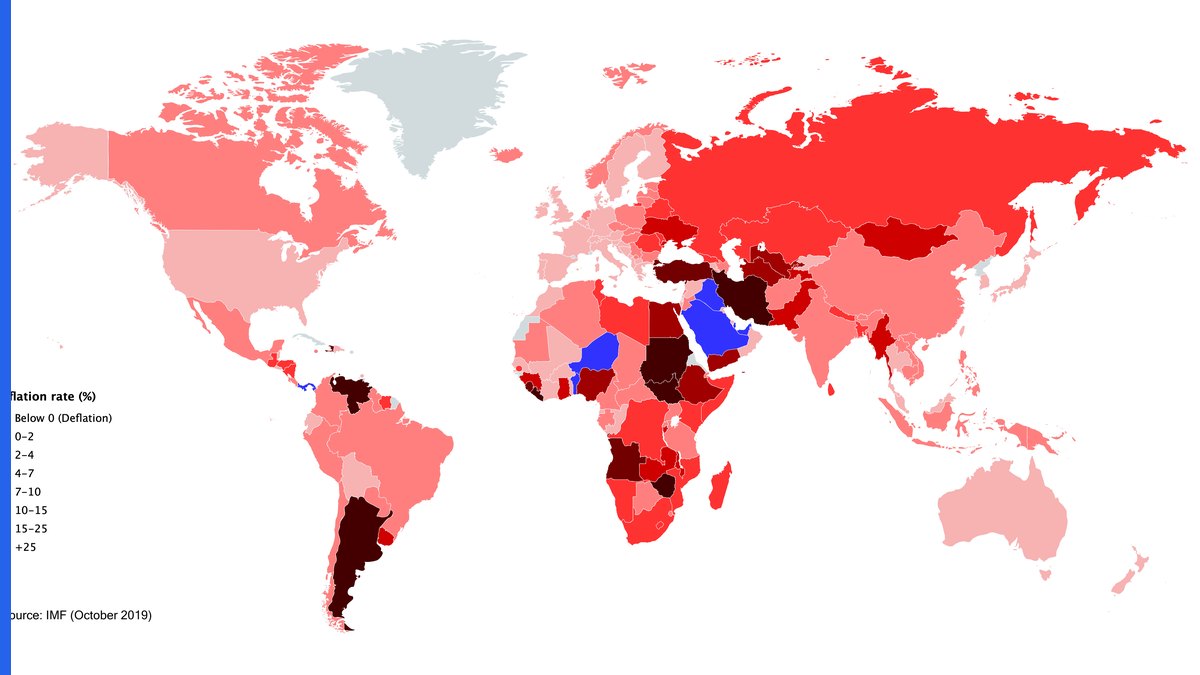
No trend is starker than the geographic one. On the WIPO-sourced figures in the MIT Quantum Index Report, China’s quantum technology filings climbed from about 1,011 in 2014 to roughly 7,308 in 2024 — around 60% of the world total. The United States grew too, from 613 to about 2,301, but that is a 19% share, and international (PCT) filings reached about 1,072.
- China — ~7,308 filings in 2024 (~60% of the world total)
- United States — ~2,301 (~19%)
- International / PCT — ~1,072 (~9%)
- Top three filing origins together — ~88% of all 2024 filings
Concentration that high changes how a filing or freedom-to-operate strategy has to be built. The crowding a company faces in China looks nothing like the crowding at the USPTO or EPO, and a large share of China’s count is domestic rather than international — so raw totals overstate its reach into Western markets unless you weight for family size and jurisdictional coverage.
Quantum Is Still an Unusually Academic Field
Most deep-tech fields are corporate-dominated. Quantum computing is only half so: corporations hold about 54% of patent families and universities about 37% — a combined 91%, with governments, non-profits and individual inventors splitting the rest. That heavy academic weight is the fingerprint of a technology still crossing from the lab into product.
The two curves are also diverging. In 2023, universities filed a record 1,668 quantum patent families — their highest output yet — while corporate filings eased to around 837. A rising academic curve signals foundational research still moving toward filing; a cooling corporate curve can mean a pause in commercial confidence or a shift from broad landgrab filing toward narrower, higher-value claims.
For anyone reading these quantum computing patent trends to plan prior-art or freedom-to-operate work, the academic weight is a practical warning: a great deal of the relevant disclosure sits in university filings and in academic preprints that never become patents at all, so a patent-only search misses a chunk of the real prior art.
It also changes how a portfolio should be valued in a deal. When more than a third of a field’s families sit with universities, a corporate target’s freedom to operate can hinge on in-licensed rights rather than owned patents — and a licence with the wrong field-of-use or a lapsed sponsored-research agreement can quietly hollow out a portfolio that looks strong on a headline count. Reading who actually controls the foundational filings, not just who filed them, is the difference between a defensible position and a rented one.
IBM and Google Lead a Tight Corporate Race
Among companies, IBM sits clearly in front. Analyst counts put IBM at 191 quantum-technology patents granted in 2024 — 117 of them at the USPTO — on top of a cumulative portfolio reported above 2,500 quantum-related patents worldwide, per The Rapacke Law Group’s 2025 review. Google/Alphabet is second at 168 grants in 2024, with Microsoft, Intel and Baidu the other most-cited corporate leaders.
Below the giants, the picture fragments by specialism. IonQ has built a portfolio of roughly 400 patents concentrated in quantum networking; D-Wave holds hundreds of families weighted toward quantum annealing; and Quantinuum is an active trapped-ion filer. Two companies with similar counts can therefore own completely different ground — and it is the overlap, not the raw count, that predicts where cross-licensing pressure and litigation risk will land.
Turning that leaderboard into a shortlist of who to partner with, license from or design around is a technology scouting exercise — reading the primary record rather than the press releases.
Error Correction Is the New Frontier
The most telling trend is not in the hardware headline but one layer down, in quantum error correction — the technology that turns noisy prototypes into machines that can actually run a long computation. It is consistently flagged, alongside quantum networking, as the fastest-growing sub-area of the field.
The counts are still small enough to reveal an open race. Public figures put the United States at roughly 87 quantum-error-correction patents against China’s 69, and the logical-qubit niche at about 117 patents worldwide, of which the US holds around 56. Small absolute numbers in a layer everyone agrees is essential is the classic signature of ground still forming rather than ground locked down.
Classification data reinforce the point: the densest single area is the software layer — quantum algorithms and information processing captured largely under the G06N class — while the hardware modalities (superconducting, trapped-ion, photonic, neutral-atom) each carry their own separate, and separately crowded, filing race. Reading quantum as one field, rather than as these distinct layers, is how a filing budget gets aimed at the wrong target.
The strategic read is that error correction is where the field’s value is migrating. Hardware qubit counts grab the headlines, but a machine only becomes commercially useful once error correction makes its logical qubits stable enough to run a real algorithm — so the patents filed on decoders, codes and fault-tolerant architectures today are the ones most likely to sit on the critical path to a working product tomorrow. A thin, fast-growing layer on the critical path is the textbook definition of a place worth filing early and broadly.
What the Trends Mean for Your Filing Strategy
Read together, the quantum computing patent trends of 2026 point to a field that is growing fast but concentrating in ownership — and where the real openings sit one layer below the headline leaderboard. A me-too filing into a crowded core like superconducting qubit hardware risks colliding with an IBM or Google blocking claim; the defensible positions are usually in error correction, quantum-classical hybrid orchestration and domain-specific algorithms the majors are not yet defending.
Finding those openings is a research exercise, not a guess. Our quantum white-space case study shows the same discipline applied to a neutral-atom hardware challenger — reading the primary claim record to find the thin cells where broad, defensible claims were still reachable, and putting a clock on the ones that were closing.
If you are deciding where to file in quantum — superconducting, trapped-ion, photonic or the error-correction layer — start from the evidence. A structured quantum computing patent landscape turns these trends into a decision you can defend to a board or an investment committee.
How PerspireIP Can Help
At PerspireIP, our team helps innovators and businesses protect what they build. Whether you need a patent or trademark search, prior-art analysis, or an IP strategy tailored to your goals, we can help. Contact our team to discuss your next step.
Frequently Asked Questions
What are the biggest quantum computing patent trends in 2026?
Filings have grown roughly fivefold since 2014, with quantum computing families up more than 300% in 2016–2021. China now leads with about 60% of filings, the field remains unusually academic (universities hold ~37% of families), IBM and Google top the corporate race, and error correction is the fastest-growing sub-area.
Which country leads quantum computing patents?
China. On WIPO-sourced data in the MIT Quantum Index Report, Chinese quantum technology filings reached about 7,308 in 2024 — roughly 60% of the world total — against about 2,301 (~19%) for the United States. The top three filing origins together held about 88% of 2024 filings.
Who owns the most quantum computing patents?
IBM leads corporate assignees with 191 quantum grants in 2024 (117 at the USPTO) and a cumulative portfolio reported above 2,500 patents, with Google/Alphabet second at 168 grants. But corporations hold only about 54% of families overall — universities hold roughly 37%.
Is quantum computing patenting still growing?
Yes, sharply. Quantum technology filings grew about fivefold from 2014 to 2024 and quantum computing families rose more than 300% in 2016–2021. Recent-year totals look lower only because patents publish 18 to 24 months after filing, so 2024–2025 counts are understated at the time of reading.
Where is the white space in quantum computing?
Below the crowded superconducting core. The thinnest, most reachable layers are quantum error correction (only ~117 logical-qubit patents worldwide), quantum-classical hybrid orchestration, and domain-specific algorithms for fields such as pharma, finance and materials. A white-space analysis reads those cells at the claim level to find where broad claims are still open.