Table of Contents
Few countries punch as far above their weight in European patent disputes as the Netherlands. For decades, rights holders have chosen the Dutch courts for their speed, their technically fluent judges, and their willingness to reach cross-border relief. Patent litigation in Netherlands is concentrated in a single specialist forum in The Hague, and since June 2023 it also runs through a local division of the Unified Patent Court sitting in the same city. This guide explains the courts, the two enforcement routes, the famous Dutch summary-injunction procedure, and what a foreign patent owner should expect on cost, timing and remedies.
What Patent Litigation in Netherlands Looks Like
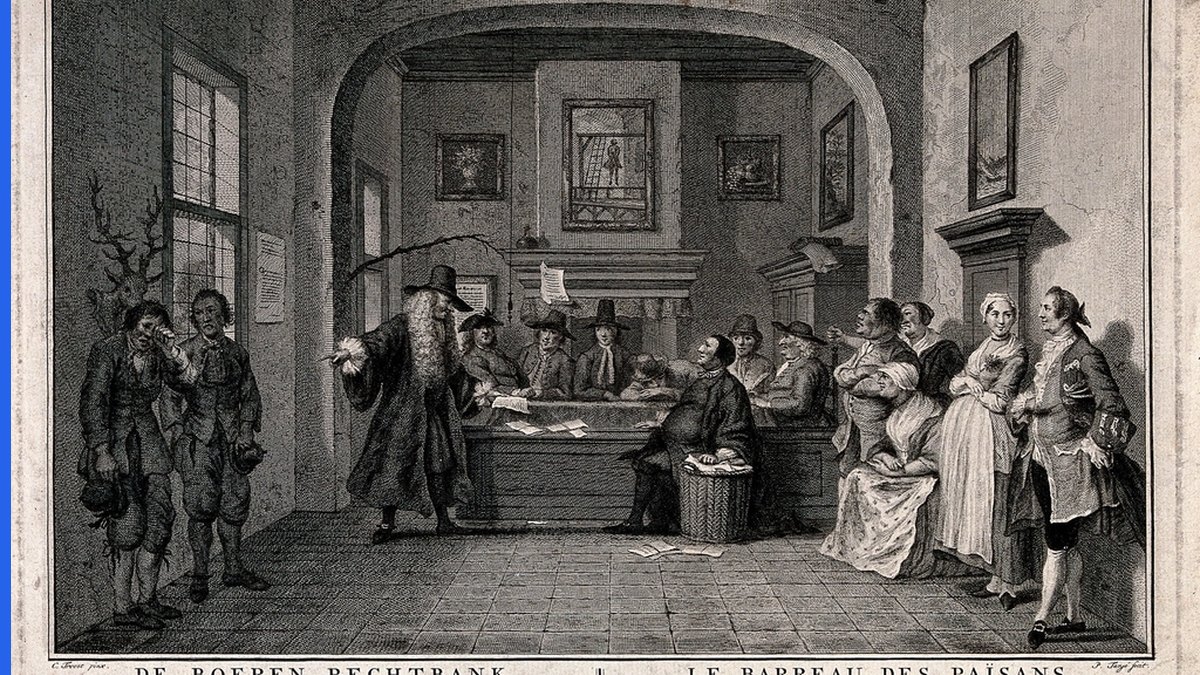
Patent litigation in Netherlands is unusual in Europe for how centralised it is. Every national patent infringement and validity dispute is heard by one court — the District Court of The Hague — which has exclusive first-instance jurisdiction and a dedicated patent chamber staffed by judges with technical backgrounds. Appeals go to the Court of Appeal of The Hague.
That concentration produces a deep, consistent body of case law and predictable procedure. Two features stand out to foreign parties: the Dutch courts do not bifurcate — the same panel decides infringement and validity together — and interim relief is genuinely fast. A patentee can be in front of a judge within weeks.
- One forum: the District Court of The Hague hears all national patent cases.
- No bifurcation: infringement and invalidity are decided in the same proceedings.
- Two routes: the national court, or the Unified Patent Court local division in The Hague.
- Fast interim relief: the kort geding can deliver an injunction in weeks, sometimes with cross-border reach.
Choosing between the national route and the UPC is now the first strategic decision in any Dutch dispute, and it turns on the type of patent you hold and where else your opponent operates.
The Courts: The Hague and the UPC Local Division
The District Court of The Hague sits at the heart of Dutch patent enforcement. Its patent chamber handles full-merits actions on infringement, validity, declarations of non-infringement and cross-border claims. Because national patents in the Netherlands are granted by Octrooicentrum Nederland through a registration system without substantive examination, validity is frequently tested for the first time in litigation — which makes a rigorous prior-art record decisive.
Since 1 June 2023 the Netherlands has also hosted a local division of the Unified Patent Court in The Hague. The division sits with two national judges and one judge from the UPC’s international pool, and it accepts both Dutch and English as languages of proceedings. It has quickly become one of the busiest non-German divisions of the new court.
The two forums coexist. The national court decides disputes over Dutch national patents and over European patents that have been opted out of the UPC. The UPC local division handles unitary patents and non-opted-out European patents, and its orders can reach across every participating member state — a scope the national court cannot match.
Learn how the Dutch venue compares with its neighbours in our companion guides to patent litigation in Germany and patent litigation in the United Kingdom.
National Route or the Unified Patent Court?
The right forum depends on the patent and the commercial goal. A unitary patent can only be enforced at the UPC. A classic European patent can be litigated either at the UPC or nationally — unless its owner filed an opt-out during the transitional period, in which case it stays with the national courts until the opt-out is withdrawn.
- Dutch-only dispute: the national court is often faster and cheaper for relief that only needs to bite in the Netherlands.
- Multi-country infringement: the UPC local division in The Hague can grant a single injunction spanning participating states.
- Opted-out European patent: enforcement stays national until you actively withdraw the opt-out.
- Unitary patent: the UPC has exclusive jurisdiction — there is no national fallback.
Because the opt-out decision is reversible only within limits, most portfolios are triaged patent by patent before any letter before action is sent. Getting this wrong can hand your opponent a jurisdictional advantage.
The Dutch Kort Geding: Fast Preliminary Injunctions
The kort geding — summary preliminary-relief proceedings — is the reason many rights holders litigate in the Netherlands at all. In an urgent case a hearing can be scheduled within one to two weeks, and a reasoned decision follows quickly after. A patentee can realistically obtain a preliminary injunction within roughly six to twelve weeks of starting, at comparatively modest cost.
Dutch injunctions are reinforced by dwangsommen — penalty payments that accrue for each day or each act of continued infringement, which makes non-compliance expensive. In appropriate cases the court has been willing to grant relief with effect beyond Dutch borders, though the availability of cross-border measures has narrowed and now overlaps with what the UPC offers.
Speed cuts both ways. The defendant gets little time to prepare, so an accused party must be ready to raise a serious invalidity defence — backed by strong prior-art and litigation search — almost immediately.
Proving Infringement and Attacking Validity
In a Dutch full-merits action the patentee must show that each feature of an asserted claim is present in the accused product or process, read in the light of the description and drawings. The defendant’s most powerful answer is usually an invalidity attack — lack of novelty, obviousness, added matter or insufficiency — because a successful counterclaim ends the case for good.
The Netherlands has no US-style discovery, but a claimant can seek evidentiary seizure (bewijsbeslag) and descriptive measures to secure proof of infringement before it disappears. That makes early, well-documented evidence gathering a priority for both sides.
For an accused party, an invalidation search in The Hague that surfaces the right prior art is often worth more than any procedural argument. For a patentee, an infringement analysis that maps the claims to the product underpins the whole claim.
Costs, Timelines and Remedies
A national full-merits case in The Hague typically reaches a first-instance judgment in roughly twelve to eighteen months; a kort geding is far quicker. UPC proceedings are designed to reach a decision on the merits within about a year, which is unusually fast for multi-country patent litigation.
Available remedies include a final injunction, recall and destruction of infringing goods, damages or an account of the infringer’s profits, and publication of the judgment. Dutch courts can also award a proportion of the winner’s reasonable and proportionate legal costs to the losing party, which raises the stakes of pressing a weak case.
- Preliminary injunction (kort geding): weeks, lower cost, provisional.
- National merits judgment: around 12–18 months at first instance.
- UPC merits decision: targeted at roughly 12 months, cross-border scope.
- Costs: the loser may bear a share of the winner’s legal fees.
How Foreign Patent Owners Should Prepare
Because Dutch proceedings move quickly and validity is decided alongside infringement, preparation is everything. Before you assert a patent, pressure-test it against the prior art as if you were the defendant, confirm the opt-out status of every European patent in play, and decide whether Dutch-only relief or a UPC-wide injunction serves the commercial objective.
If you are the accused party, treat a Dutch cease-and-desist letter as a countdown clock. Line up local counsel, commission an invalidity search, and prepare a non-infringement position at once — waiting for the formal writ can cost you the kort geding. PerspireIP supports both sides with the search and analysis work that Dutch cases are won and lost on. Explore the wider ecosystem through our Netherlands IP services hub.
Build a Winning Dutch Patent Case with PerspireIP
Whether you are enforcing a patent in The Hague or defending against one, the outcome usually turns on the strength of the prior-art and infringement record. PerspireIP delivers litigation-grade invalidation searches, infringement analyses and claim charts tuned to the Dutch and UPC forums. Talk to our team about your Netherlands patent dispute.
Frequently Asked Questions
Which court handles patent litigation in Netherlands?
The District Court of The Hague has exclusive first-instance jurisdiction over national patent disputes, with appeals to the Court of Appeal of The Hague. Since June 2023 a Unified Patent Court local division also sits in The Hague for unitary and non-opted-out European patents.
Does the Netherlands bifurcate infringement and validity?
No. Unlike Germany, the Dutch court decides infringement and validity in the same proceedings, so a defendant can raise an invalidity counterclaim directly in the infringement action.
How fast can I get a patent injunction in the Netherlands?
Through the kort geding summary procedure, an urgent hearing can be held within one to two weeks and a preliminary injunction obtained within roughly six to twelve weeks, often reinforced by daily penalty payments.
Can a Dutch patent injunction have cross-border effect?
In some cases, yes. Dutch courts have granted cross-border relief, and the UPC local division in The Hague can issue injunctions covering all participating member states for unitary and non-opted-out European patents.
What remedies are available for patent infringement in the Netherlands?
Final injunctions, recall and destruction of infringing goods, damages or an account of profits, publication of the judgment, and a share of the winner’s reasonable legal costs.