Table of Contents
You sold the product. You printed a restriction on the box, put a single-use clause in the shrinkwrap, and priced the unit accordingly. Then a reseller bought your units, refurbished them, and sold them back into your market. You sue for infringement, and you lose — not because the reseller had a license, but because patent exhaustion ended your patent rights in those units the moment you sold them. That is not a loophole. It is the settled rule after the Supreme Court’s 2017 decision in Impression Products, Inc. v. Lexmark International, Inc., and it quietly governs every distribution decision a patent owner makes.
What Patent Exhaustion Means Once You Sell
The doctrine is old and the logic is simple: a patent gives you the right to exclude others from making, using, offering to sell, selling, or importing your invention. Once you sell a particular unit, you have collected your reward for that unit. The law treats the patent monopoly in that item as spent. The buyer owns a chattel, not a license, and the buyer can use it, repair it, and resell it without asking you.
Two features make this rule sharper than most owners expect. First, it attaches to the item, not to the person. A restriction that binds the first buyer by contract does not travel with the goods to a downstream purchaser as a patent matter. Second, it is automatic. There is no notice requirement and no way to opt out by drafting.
Exhaustion also has a sibling in copyright, the first-sale doctrine, which is why the used-book store is lawful. The patent version reaches further into commercial practice, because patented goods are usually sold through channels the patentee wants to control: field-of-use tiers, regional pricing, refurbishment, and aftermarket parts.
- Trigger: an authorized sale of a patented item by the patentee or someone acting with its authority.
- Effect: all patent rights in that specific unit end — use, resale, repair, and importation.
- Scope: the unit sold only. Your patent remains fully enforceable against unauthorized manufacture.
- Not affected: the buyer’s separate promises, which remain a contract question.
Impression Products v. Lexmark: What the Court Actually Held
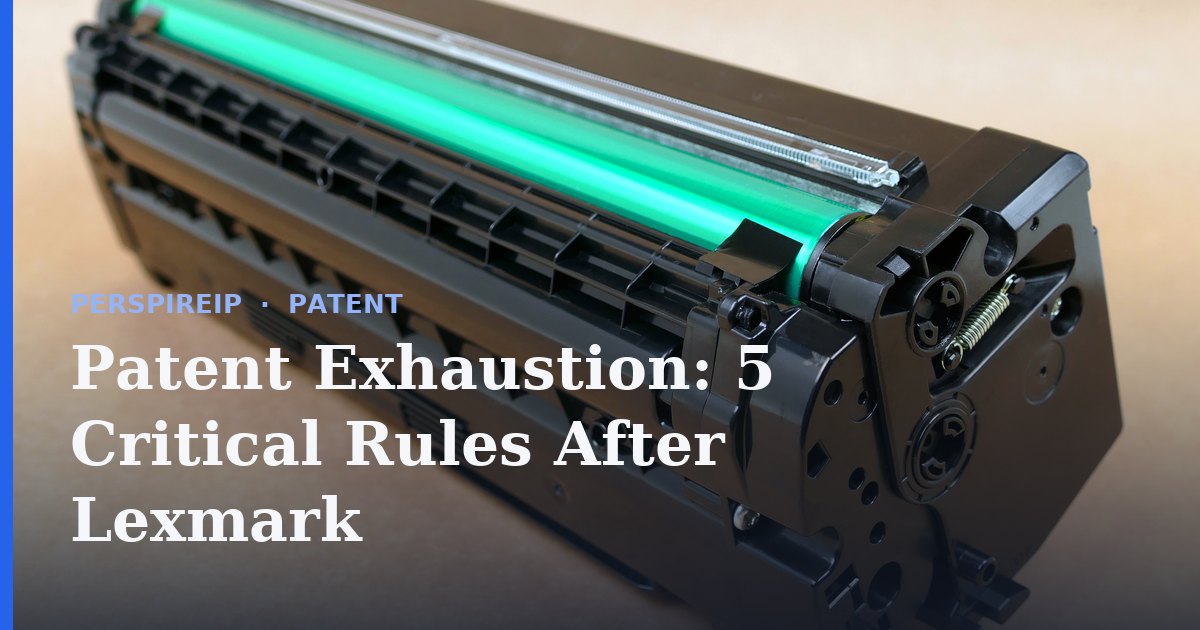
Lexmark sold toner cartridges two ways. A customer could pay full price with no strings, or take a discount under a “Return Program” and promise to use the cartridge once and return the empty to Lexmark. Impression Products collected spent Return Program cartridges, refilled them, and resold them in the United States. It also imported cartridges Lexmark had sold abroad. Lexmark sued on both fronts.
In Impression Products, Inc. v. Lexmark International, Inc., 581 U.S. 360, decided May 30, 2017, the Court rejected both theories. Chief Justice Roberts wrote for the Court. Justice Ginsburg concurred in part and dissented in part, disagreeing only on foreign sales; Justice Gorsuch took no part in the case.
The holding on domestic sales was unanimous among the participating Justices: a patentee’s decision to sell a product exhausts all of its patent rights in that item, regardless of any restrictions the patentee purports to impose. The Court’s framing matters. Restrictions are not void — they simply are not enforceable through a patent infringement suit.
That reasoning overruled the Federal Circuit’s Mallinckrodt, Inc. v. Medipart, Inc. (1992), which had let patentees attach enforceable post-sale conditions. It also displaced Jazz Photo Corp. v. ITC (2001) on the international question, which had held that foreign sales left U.S. rights intact.
Rule 1: An Authorized Sale Ends Your Rights in That Unit
Label language does not survive the sale. “Single use only,” “not for resale,” and “return to manufacturer” have no patent force against a downstream buyer once the unit has been sold with your authority. In practice this is the rule owners most often discover too late, usually in the middle of an aftermarket dispute they assumed was easy.
The corollary is worth stating plainly: an authorized sale by your licensee exhausts your rights just as your own sale would. If a manufacturing licensee sells a finished unit within the scope of its license, the patentee cannot then sue that unit’s purchaser. Control the license scope, because the license scope is what defines an authorized sale.
Rule 2: Foreign Sales Exhaust U.S. Patent Rights Too
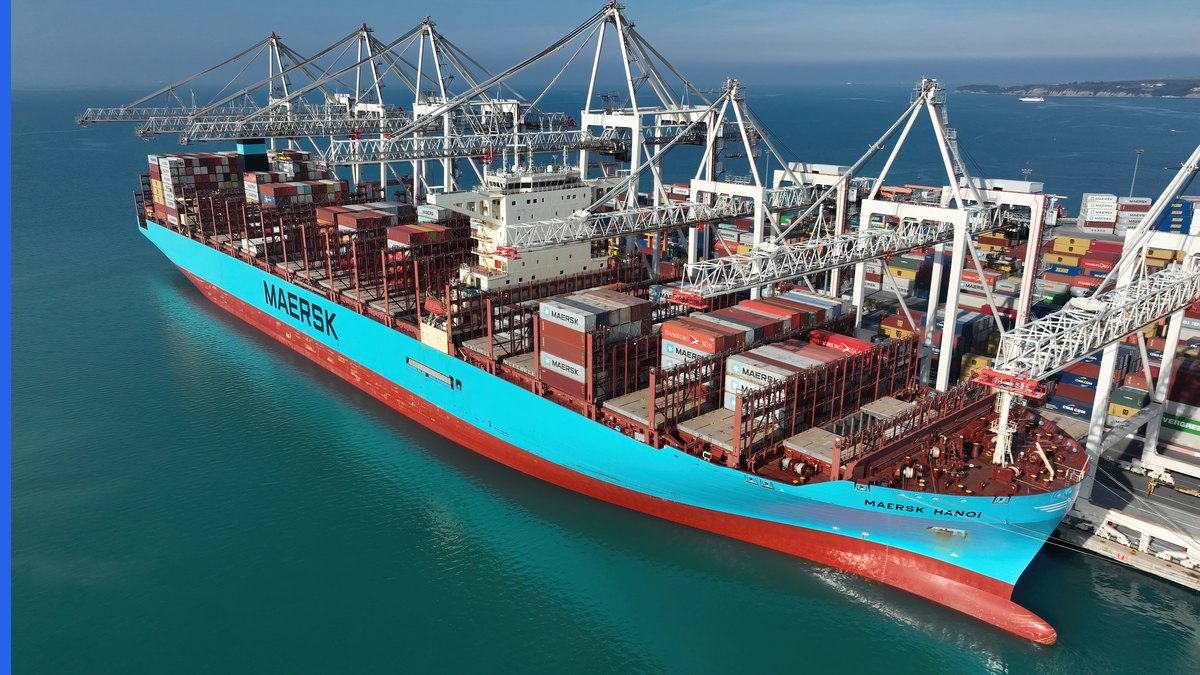
This is the part that reshaped global pricing strategy. The Court held that an authorized sale outside the United States exhausts all rights under the Patent Act, exactly as a domestic sale would. Sell a unit in a low-price market, and you cannot use your U.S. patent to stop that unit from coming back.
Justice Ginsburg’s partial dissent argued the opposite on territoriality grounds: U.S. patents are granted by U.S. law, so a foreign sale should not spend them. She did not carry the Court. For planning purposes the majority rule is what governs — and it means the classic gray-market defense of “we never authorized U.S. entry” no longer works if you authorized the original sale anywhere.
If regional price discrimination is central to your model, patent law will not police it for you. Distribution agreements, territorial supply controls, and trademark or customs tools now carry that weight.
Rule 3: Contract Still Works — Patent Law Doesn’t
The Court was careful here, and the distinction is the whole practical takeaway. Lexmark’s Return Program restrictions might well be enforceable as contracts against the customers who agreed to them. What Lexmark could not do was convert a broken promise into patent infringement.
So the remedy shifts. Against your direct counterparty you have breach of contract, with contract damages and contract defenses. Against a downstream stranger who never promised you anything, you have nothing on these facts. That asymmetry should drive how you paper the first sale in the chain, and it is why a well-drafted IP licensing agreement is doing more work than it appears to.
- Identify who in your chain actually signs something. That is the only person a restriction binds.
- Price the risk of resale into the discount rather than assuming you can sue it away.
- Use supply and warranty levers, which follow the relationship, not the article.
- Keep the contract remedy realistic: damages your counterparty can actually pay.
Rule 4: A License Is Not a Sale, and That Line Still Matters
Exhaustion is triggered by a sale, not by every transfer. A patentee can still impose genuine restrictions on a licensee — field-of-use limits, quantity caps, territory, and permitted customers — because those conditions define the scope of the authority granted rather than trailing an article that has already been sold.
The practical test is whether the transaction transferred ownership of a unit. Structure a genuine license and the restriction lives inside the grant. Structure something the courts will read as a sale, and every restriction on the article collapses into contract. Naming the document a “license” does not decide it; the substance of what changed hands does.
This is also where repair and reconstruction still bite. A purchaser may repair what it owns. It may not build a new article under cover of repair. That boundary survives Lexmark untouched, and it is often the only patent theory left against a refurbisher.
Rule 5: Design the Distribution Before the First Sale
Every rule above points the same direction. The doctrine is triggered by your own commercial act, so the leverage is entirely upstream of it. Once the unit is sold, the patent question is closed and you are litigating a contract you may not have written.
In practice that means deciding, before launch, which entity sells, in which markets, under which licenses, and with which downstream promises actually captured in signed paper. It also means being honest about which parts of the model depend on excluding competitors — a question that runs through patent valuation as much as enforcement, since a portfolio that cannot police its own aftermarket is worth less than one that can.
One more housekeeping point that costs owners real money: exhaustion does not touch your marking obligations. Proper patent marking still governs the damages you can recover against genuine infringers, and that is a separate discipline worth keeping current.
How PerspireIP Can Help
We help patent owners map where exhaustion actually bites in their distribution chain — which sales are authorized, which restrictions survive as contract, and where a licensing structure preserves the control a label never could. If you are weighing a refurbishment dispute, a gray-market problem, or a licensing redesign, contact our team and we will look at the chain with you.
This article is general information, not legal advice; consult a qualified attorney for your situation.
Frequently Asked Questions
What is patent exhaustion in simple terms?
It is the rule that once a patent owner authorizes the sale of a particular item, the patent rights in that item are spent. The buyer can use, repair, and resell that unit without needing a license.
Did Impression Products v. Lexmark overrule earlier law?
Yes. The 2017 decision overruled the Federal Circuit’s Mallinckrodt v. Medipart on post-sale restrictions and displaced Jazz Photo Corp. v. ITC on foreign sales.
Can I still put a single-use restriction on my product?
You can, and it may bind the customer who agreed to it as a matter of contract. What you cannot do is enforce it through a patent infringement suit, and it will not bind a downstream buyer who never agreed to anything.
Do sales outside the United States exhaust my U.S. patent?
Yes. Under Lexmark, an authorized sale anywhere exhausts rights under the U.S. Patent Act. Justice Ginsburg dissented on this point, but the majority rule controls.
Can a licensee’s sale exhaust my patent?
Yes, if the sale falls within the scope of the license you granted. That is why license scope, not label language, is the real control point.
Does exhaustion let a buyer rebuild my product?
No. A purchaser may repair an article it owns, but reconstructing an essentially new article is still infringement. The repair-versus-reconstruction line survives Lexmark.