Table of Contents
If you search for the European rule on the form of patent drawings, you will still be handed Rule 46 EPC by a startling number of law-firm pages. That rule no longer exists. It was deleted on 1 February 2023, and the standard practitioners now check figures against is the EPO Guidelines A-IX drawings chapter, backed by a decision of the President rather than the Implementing Regulations. The change is not cosmetic: it moved the requirements into an instrument the Office can revise without an Administrative Council vote. This is the section-by-section map of that chapter, and the places where a set of figures that sails through the USPTO will still draw an objection in Munich.
What the EPO Guidelines A-IX Drawings Chapter Actually Governs
At its 172nd session on 13 October 2022, the EPO’s Administrative Council adopted a package of amendments in support of the Office’s digitalisation programme. Two of them matter here. Rule 46 EPC, headed Form of the drawings, was deleted outright. So were paragraphs (3) to (12) of Rule 49 EPC, which carried the detailed presentation requirements for application documents generally. Both changes took effect on 1 February 2023.
The requirements themselves did not vanish. They were transferred into a decision of the President of the EPO, and the first such decision was intended to restate the deleted material rather than change it. The practical effect is that the substance survived while the legal vehicle changed — the Office can now adjust presentation requirements by publishing a new decision in the Official Journal, instead of waiting for the Administrative Council to amend the Implementing Regulations.
What remains in the Rules is Rule 49(1) and (2) EPC, the general obligation that the documents making up the application be presented so as to allow electronic and direct reproduction. Everything granular — margins, line quality, reference-sign height — now lives below that line. This is why the EPO Guidelines A-IX drawings chapter has become the document practitioners actually use: it is the Office’s own consolidated statement of how formalities examiners apply the requirements, and it is republished each year.
- Deleted 1 Feb 2023: Rule 46 EPC (form of the drawings) and Rule 49(3)–(12) EPC
- Still in force: Rule 49(1) and (2) EPC — electronic and direct reproduction
- Now carries the detail: a decision of the President of the EPO, published in the OJ
- Working text: Guidelines for Examination, Part A, Chapter IX
One caution before the section map. The Guidelines are administrative instructions to EPO staff, not law. They bind examiners in the first instance but do not bind the Boards of Appeal, and they are revised annually. Cite them for practice; cite the EPC and the President’s decision for entitlement. The current chapter is published by the Office at epo.org.
Sections 1 to 4: What Counts as a Drawing, and How Sheets Are Presented
The chapter opens by defining its own subject matter. A-IX, 1 covers graphic forms of presentation considered as drawings, split into 1.1 technical drawings and 1.2 photographs. That second subsection is where the EPO quietly parts company with US practice, and it is worth dwelling on.
The EPO will accept photographs where the subject matter genuinely cannot be shown in a line drawing — crystalline structures, metallographic sections, gel electrophoresis results, tissue samples. The test is practical rather than procedural: can this be drawn? At the USPTO, 37 CFR 1.84(b) reaches a similar destination by a different road, admitting photographs only where they are the sole practicable medium and, for utility applications, treating them as an exception the applicant must justify. Filing the same biological figure in both offices, you will often clear Munich on the merits and still need to argue the point in Alexandria.
A-IX, 2 deals with the representation of drawings and carries three subsections that cause more trouble than their length suggests:
- 2.1 Grouping of drawings — several figures may share a sheet, but they must be clearly separated and readable without crowding
- 2.2 Reproducibility of drawings — the figures must survive reduction and electronic reproduction without detail loss
- 2.3 Figure accompanying the abstract — under Rule 47(4) EPC the abstract must indicate which figure is to be published with it
Section 2.3 is the one that gets skipped on a rushed filing. It is a small obligation with an outsized effect: the figure published on the front page is the one every searcher sees first, and if you do not nominate one the Office will. Choosing the schematic that shows the claimed combination, rather than the most attractive rendering, is free advocacy.
A-IX, 3 governs conditions regarding the paper used and A-IX, 4 the presentation of the sheets of drawings — usable surface area, sheet dimensions, and the absence of frames around the usable area. Section 3 now reads as a period piece for anyone filing online, which almost everyone is, but it still applies to paper filings and is the reference point when a formalities examiner queries a scan’s quality.
Sections 5 and 6: General Layout and Prohibited Matter
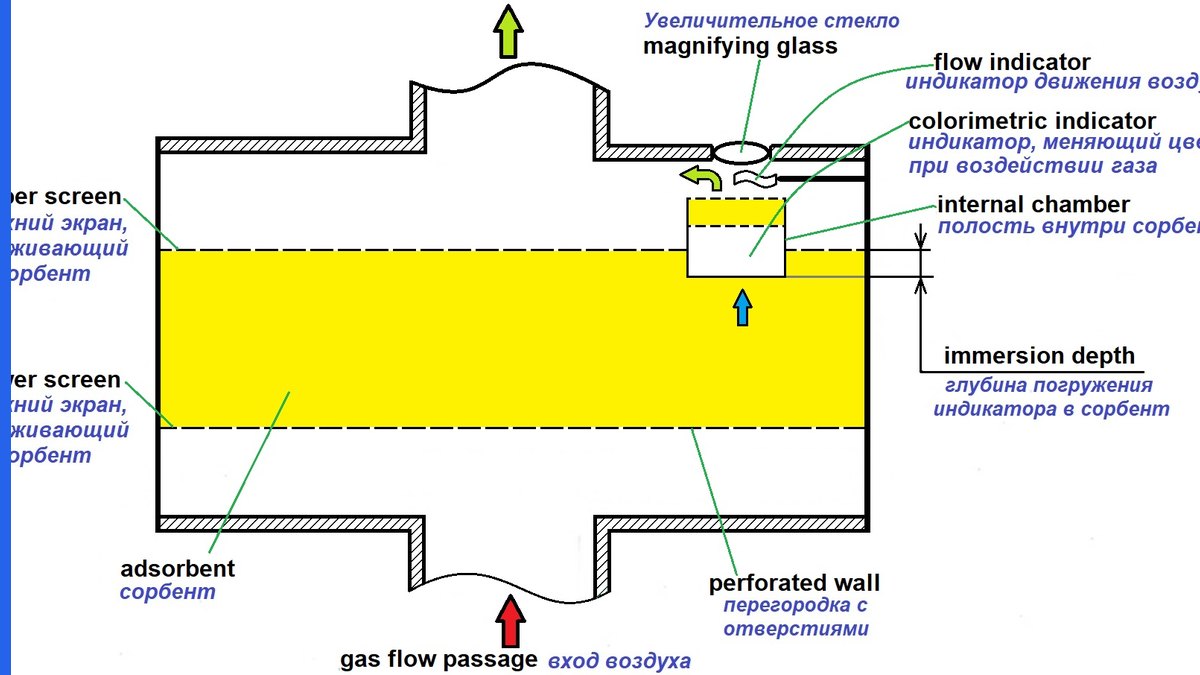
A-IX, 5 is headed General layout of drawings, and it is the section a formalities examiner reaches for most often. It governs how figures are arranged across sheets, how they are numbered, and how the set reads as a sequence. The practical requirements are unglamorous and rigidly applied: figures numbered consecutively in Arabic numerals, independently of the sheet numbering; sheets numbered consecutively as a fraction of the total; the whole set oriented consistently.
The failure mode here is almost always an amendment. A drawing set numbered Figures 1 to 9 stays coherent until you delete Figure 4 during prosecution and renumber nothing. The Office will object, and the description will now disagree with the sheets. If you are already at that point, our note on amending patent drawings walks through the sequencing that keeps the description and the figures in step.
A-IX, 6 covers prohibited matter, applying Rule 48 EPC to the figures. Rule 48(1) EPC bars three categories from the application: matter contrary to ordre public or morality; statements disparaging the products or processes of any third party, or the merits or validity of their applications or patents; and statements or other matter that is obviously irrelevant or unnecessary.
The second limb is the live one in drawings. Comparative figures labelled “PRIOR ART — INEFFICIENT” or a competitor’s product name annotated with its failings will draw an objection. Marking a genuine prior-art figure as such is not merely permitted but expected; editorialising about it is not. The distinction is between identifying prior art and denigrating it.
Note also that a mere comparison with prior art is not itself disparagement. Examiners are directed to a narrow reading, and Rule 48(2) EPC allows the Office to omit prohibited matter from publication rather than refuse the application outright. That is a formalities cure, not a substantive one — but it means an inadvertent label is a correctable problem rather than a fatal one.
Section 7: Executing the Drawings, Line by Line
A-IX, 7, Executing of drawings, is the longest section in the chapter and the one that most closely tracks what the deleted Rule 46 EPC used to say. It runs to six subsections:
- 7.1 Drawings of lines and strokes — durable, uniformly thick, well-defined lines, drawn without colouring
- 7.2 Shading — permitted where it aids understanding and does not obscure detail
- 7.3 Cross-sections — hatching must not impede reference signs or leader lines
- 7.4 Scale of drawings — sufficient that a reduction to two-thirds still resolves every detail
- 7.5 Numbers, letters and reference signs — the subsection with the most sub-subsections
- 7.6 Variations in proportions — when different proportions within one figure are acceptable
Subsection 7.4 is the one worth internalising. The two-thirds reduction test is not an abstraction: it is how the figure will actually appear once published, and a CAD export that looks crisp at full sheet size routinely loses its finest hatching at that scale. Print the sheet at two-thirds before you file and read it at arm’s length. It takes a minute and it catches most reproducibility objections.
Section 7.5 then breaks down further, and the numbered sub-subsections are where consistency is policed: 7.5.2 Arrows, 7.5.3 Height of the numbers and letters in the drawings, 7.5.4 Consistent use of reference signs as between description, claims and drawings, and 7.5.5 Consistent use of reference signs as between drawings.
Those last two are the expensive ones. A reference numeral that means a valve seat in Figure 3 and a valve stem in Figure 7, or a numeral used in the claims that appears nowhere in the figures, produces an objection that is tedious to clear and occasionally forces a substantive amendment. On character height, the EPO applies a minimum under 7.5.3; the equivalent hard figure in the international and US systems is 0.32 cm, set by PCT Rule 11.13(n) and by 37 CFR 1.84(p)(3). Drafting to 0.32 cm satisfies all three routes. We cover the numbering discipline in detail in our guide to patent drawing reference numerals.
Sections 8 to 11: Text, Symbols, Amendments and Non-Drawings
A-IX, 8 governs text matter on drawings, and its rule is the strictest in the chapter. The Guidelines state that the drawings must not contain text matter, except, when absolutely indispensable, a single word or a few words. Where a word is genuinely necessary, the Guidelines direct that a space free of all drawing lines be left around it, so that a translation can be dropped in.
That last instruction explains the rule. The EPO grants in three languages and validates across dozens of states; every word inside a figure is a word somebody must translate and re-typeset. Flowcharts and block diagrams are the recognised pressure point — they are close to unreadable without labels, and the accepted practice is to use short indispensable terms such as “CPU” or “MEMORY” and to carry the explanation in the description instead.
A-IX, 9 covers conventional symbols, permitting recognised standard symbols where they are generally understood in the art, and A-IX, 10 covers amendments to drawings. Section 10 sits directly on top of Article 123(2) EPC: a redrawn figure that adds detail not derivable from the application as filed is an added-matter problem wearing a formalities costume, and it is one of the more common ways applicants damage a case while trying to tidy it.
A-IX, 11 is the sleeper. Titled Graphic forms of presentation not considered as drawings, it carries 11.1 Chemical and mathematical formulae and 11.2 Tables. These are not drawings. They belong to the description or the claims, and they are not subject to the drawing-sheet requirements at all.
Chemical and biotech filers lose time to this in both directions. Some move every Markush structure onto numbered drawing sheets it never needed to occupy; others assume that because a formula is not a drawing it escapes reproducibility requirements entirely, which it does not — Rule 49(1) EPC still applies to it as part of the application documents. Tables are permitted in the description; in the claims they are allowed only where the subject matter makes them desirable.
EPO Guidelines A-IX Drawings vs 37 CFR 1.84: Seven Real Divergences
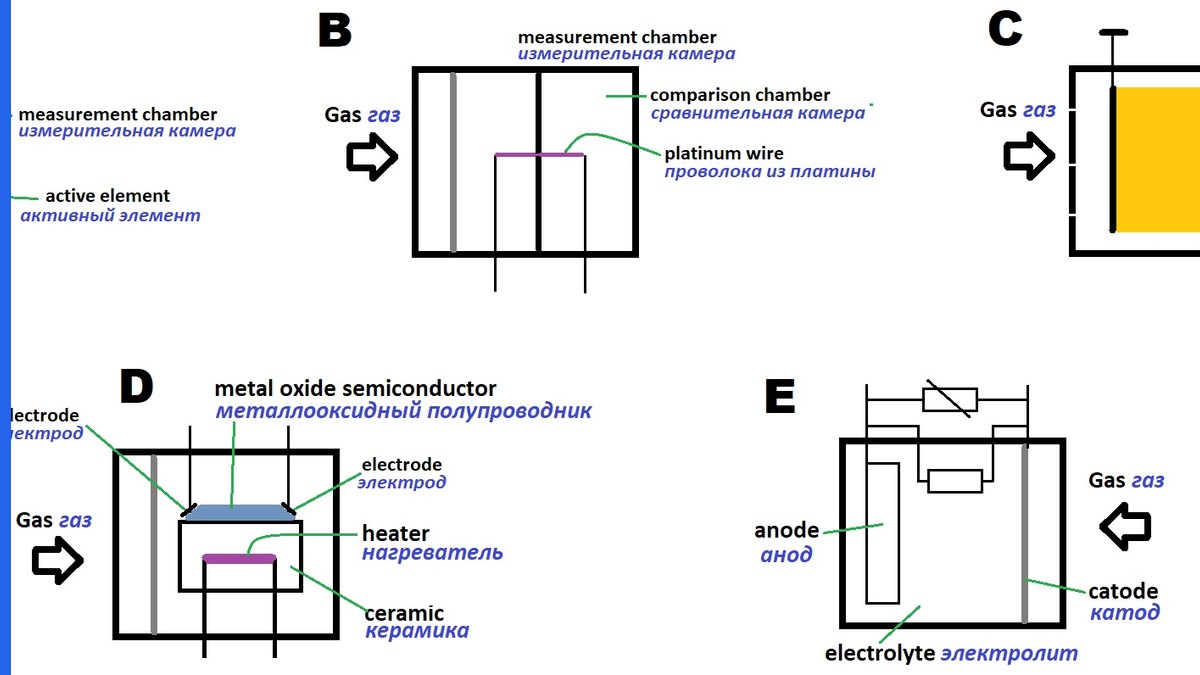
Most applicants want one drawing set for both jurisdictions. That is achievable, but only if you draft to the stricter rule at each point of divergence rather than averaging the two. The differences that actually bite:
- Text in figures. A-IX, 8 allows a single word or a few words when absolutely indispensable. 37 CFR 1.84(o) is comparatively relaxed about descriptive legends. Draft to the EPO limit.
- Photographs. The EPO asks whether the subject can be drawn; 37 CFR 1.84(b) frames photographs as the only-practicable-medium exception. The US route is the narrower one for utility cases.
- Colour. The USPTO requires a petition and fee under 37 CFR 1.84(a)(2), plus a specification reference to the colour drawings. EPO practice on colour has moved recently and separately.
- View numbering. 37 CFR 1.84(u)(1) prescribes the “FIG.” convention explicitly; A-IX, 5 requires consecutive Arabic numerals without mandating the same label.
- Margins and sheet size. 37 CFR 1.84(f) and (g) set numeric margins and two permitted sheet sizes; the EPO figures now sit in the President’s decision rather than the Rules.
- Design cases. There is no EPO equivalent of a design patent. 37 CFR 1.152 governs US design drawings, where broken lines disclaim unclaimed environment; EU designs go to the EUIPO under a separate regime.
- Prohibited matter. Rule 48 EPC bars disparagement of third-party products expressly. US practice polices this far more loosely.
The colour point deserves a flag rather than a footnote, because it is the fastest-moving area in drawing practice and the one where stale guidance does the most damage. We track it separately in EPO color patent drawings, alongside the US position in our note on 37 CFR 1.84.
If the application is heading to multiple offices through the international system, the PCT layer imposes its own presentation rules that the EPO will apply as designated or elected Office. Our guide to PCT drawing requirements covers the Rule 11 provisions that sit underneath all of this.
The Rule 46 Trap: Why Half the Guidance Online Is Out of Date
Search for European drawing requirements today and you will find firm pages, software vendor blogs and drafting checklists that quote Rule 46(2) EPC clause by clause, sometimes with a confident “as amended” attached. That rule was deleted more than three years ago. The advice is not always wrong on substance — the President’s decision restated most of it — but it is wrong on authority, and it fails in two specific ways.
First, anything you cite to a deleted rule is unciteable in a response to a formalities communication. Second, and more seriously, the whole point of the 2023 change was to let the Office revise presentation requirements without amending the Implementing Regulations. Guidance anchored to Rule 46 EPC has no mechanism for noticing when that happens. It will drift out of date silently.
The durable habit is to check three things each year rather than trusting a checklist: the current Guidelines Part A, Chapter IX; the President’s decision in force on presentation of application documents; and Rule 49(1) and (2) EPC, which remain the statutory hook. Our older note on EPO drawing requirements gives the broader filing context, and the EPO Guidelines A-IX drawings chapter is the piece to re-read when the annual revision lands each spring.
None of this is difficult. It is simply a chapter that most people have never read end to end, because for fifteen years there was a tidy rule to quote instead. The chapter is short. Reading it once, in order, is a better investment than any checklist built on top of it.
Drawings That Clear Formalities the First Time
PerspireIP prepares European, US and PCT-compliant figures to the requirements set out above — drafted once, to the stricter standard at each point of divergence, so a single set survives every route your application takes. Our illustrators work from invention disclosures, CAD exports, prototypes or rough sketches, and every set is checked against the current Guidelines rather than a legacy rule.
See our patent drawing services, or contact us with your figures for a formalities review before you file.
Frequently Asked Questions
Is Rule 46 EPC still in force?
No. Rule 46 EPC, which governed the form of the drawings, was deleted with effect from 1 February 2023, along with Rule 49(3) to (12) EPC. The detailed requirements moved into a decision of the President of the EPO, and Guidelines Part A, Chapter IX is the working text examiners apply.
What does the EPO Guidelines A-IX drawings chapter cover?
It runs from section 1 (what counts as a drawing, including photographs) through presentation of sheets, general layout, prohibited matter, execution of the drawings, text matter, conventional symbols and amendments, to section 11 on graphic forms that are not drawings at all, such as chemical formulae and tables.
Can I put labels and text inside a European patent figure?
Only a single word or a few words, and only when absolutely indispensable. The Guidelines also direct that a space free of drawing lines be left around any such word so a translation can be inserted. Flowcharts should carry short indispensable terms and leave the explanation to the description.
Are chemical formulae and tables treated as drawings at the EPO?
No. Section 11 of the chapter expressly classes chemical and mathematical formulae and tables as graphic forms not considered as drawings. They belong to the description or claims and do not go on numbered drawing sheets, though Rule 49(1) EPC still requires them to be reproducible.
Will one drawing set satisfy both the EPO and the USPTO?
It can, if you draft to the stricter rule at each divergence. The main pressure points are text in figures, photographs, colour, view numbering and prohibited matter. Design cases are the exception: 37 CFR 1.152 governs US design drawings and there is no EPO equivalent.
Are the EPO Guidelines legally binding?
They bind examiners in the first instance as administrative instructions, but they are not law and do not bind the Boards of Appeal. Cite the Guidelines for practice, and the EPC together with the President’s decision for entitlement. They are revised and republished annually.