
Table of Contents
Here’s a fact that surprises most founders: when an employee invents something, your company does not automatically own the patent. Under US law, patent rights start with the inventor, not the employer. Without the right paperwork, the engineer who built your core technology may legally own it. An invention assignment agreement is the contract that transfers those rights to the company, and one wrong word in it cost Stanford University the rights to a patent at the Supreme Court. This guide covers the six rules that decide whether your agreement actually works.
What Is an Invention Assignment Agreement?
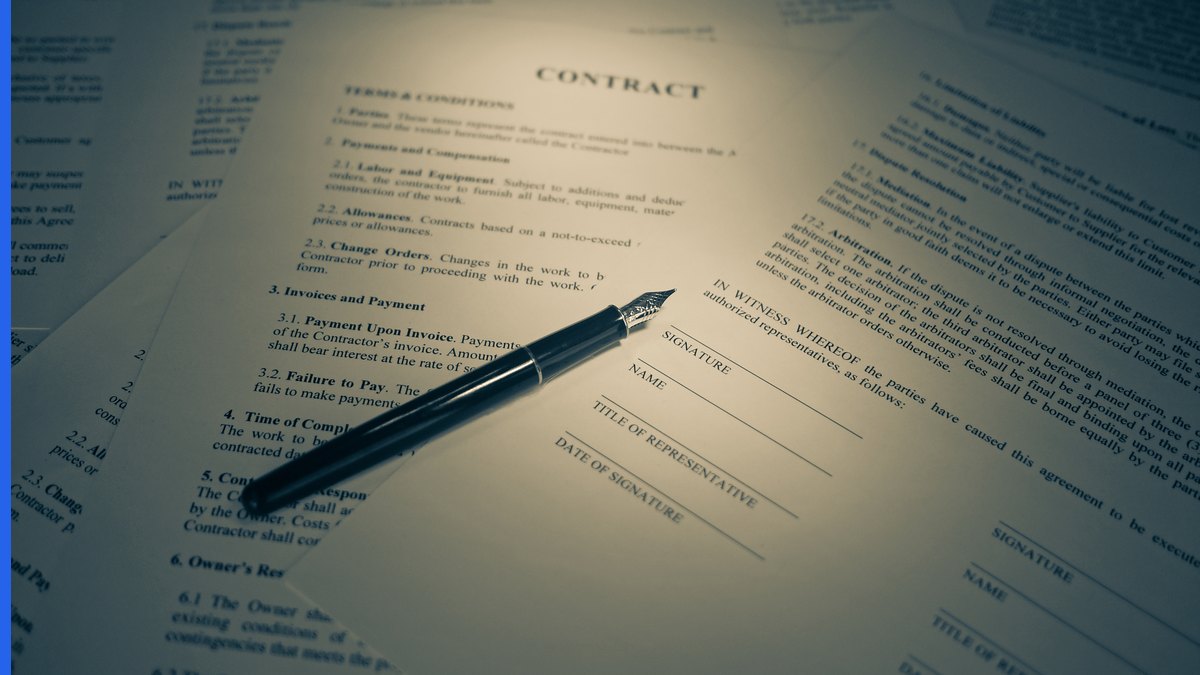
An invention assignment agreement is a contract in which an employee or contractor agrees to assign ownership of inventions and other intellectual property they create to the company. It is often bundled into a broader document called a Proprietary Information and Inventions Agreement (PIIA) or a Confidential Information and Invention Assignment Agreement (CIIAA).
The reason it exists is a quirk of US law. Patent rights initially vest in the human inventor. Copyright has a “work made for hire” doctrine that can pass authorship to an employer automatically, but there is no equivalent automatic rule for patents. Without an assignment, the company may have only limited “shop rights” to use an invention, not the right to own, license, or exclude others from it.
For a startup, that gap is existential. Investors and acquirers run IP due diligence precisely to confirm that every founder, employee, and contractor signed a valid assignment. A single missing signature can stall a financing or kill a deal.
Rule 1: Use ‘Hereby Assign,’ Not ‘Agree to Assign’
This is the single most important drafting point, and it has Supreme Court authority behind it. In Board of Trustees of Stanford University v. Roche Molecular Systems (2011), a researcher had signed one agreement promising he “agree[d] to assign” inventions to Stanford, then later signed another stating he “do hereby assign” his inventions to a company he worked with.
The courts treated the second, present-tense language as an immediate transfer of rights, while Stanford’s “agree to assign” was only a promise to do something in the future. Stanford lost its ownership claim. The lesson is blunt: a present assignment (“I hereby assign”) transfers rights automatically as inventions are created, while a mere promise (“I will assign” or “I agree to assign”) leaves a gap that a later agreement can override.
Every invention assignment agreement should use present-tense assignment language so ownership passes the moment an invention is conceived, with no further signature required.
Rule 2: Respect State Carve-Outs Like California §2870

You cannot lawfully claim everything an employee ever thinks of. Several states limit how far an assignment can reach. California Labor Code Section 2870 is the model: an employer cannot require assignment of an invention the employee developed entirely on their own time, without using the employer’s equipment, supplies, or trade secrets, and that does not relate to the employer’s business or actual or anticipated research.
California Labor Code Section 2872 goes further and requires the employer to give the employee written notice of that carve-out. Similar statutes exist in other states, including:
- Washington, Minnesota, and Illinois, which each protect off-the-clock, unrelated inventions.
- North Carolina, Delaware, Kansas, and Utah, among others, with comparable limits.
- Several of these states, like California, mandate that the agreement include written notice of the statutory exception.
An agreement that ignores these limits can be partially unenforceable, and missing a required notice can expose the employer to penalties. Tailor the assignment to each employee’s state, or use a clause that expressly excludes whatever the governing state law protects. You can read California’s exact language on the official California legislative site.
Rule 3: Make Sure It’s Actually Enforceable
Courts generally enforce invention assignment agreements, but only when the basics are in place. An enforceable agreement usually needs four things:
- It is in writing and signed by the employee or contractor.
- It is supported by consideration. For a new hire, the job offer itself is enough. For an existing employee, some states require fresh consideration, a raise, bonus, or promotion, not just continued employment.
- It clearly defines the inventions in scope, tied to the employer’s business and the employee’s work.
- It complies with state notice requirements, such as California’s Section 2872 notice.
Overbroad agreements get trimmed. A clause purporting to grab every idea an employee has, in any field, forever, invites a court to narrow or strike it. Reasonableness in scope and duration is what keeps the agreement standing when it matters.
Rule 4: Handle Prior and Post-Employment Inventions
Two timing edges cause the most disputes. First, prior inventions: a good agreement asks the employee to list inventions they already own before joining, so there is no later argument about what was created on the job. If the employee lists nothing, they cannot credibly claim later that a key invention predated employment.
Second, post-employment inventions. So-called “holdover” or “trailer” clauses try to capture inventions made shortly after the employee leaves. Courts enforce these only if they are reasonable in time and scope, typically limited to a short window and to subject matter tied to the former employer’s work. A holdover clause that sweeps in everything an ex-employee invents for years is unlikely to survive.
These edges are also where trade-secret protection overlaps with assignment. Pairing the agreement with strong confidentiality terms, as discussed in our guide to protecting employee trade secrets, closes gaps that an assignment clause alone leaves open.
Rule 5: Don’t Forget Contractors and Founders

The most dangerous gaps are usually not employees, they’re everyone else. Independent contractors are not employees, so even copyright’s work-made-for-hire rule often won’t pass ownership to you automatically. Every contractor, developer, and agency must sign an explicit assignment, or you may not own the code or designs you paid for.
Founders are the other classic blind spot. Technology a founder built before incorporating does not belong to the company until it is formally assigned in. Investors will look for a founder IP assignment as a condition of funding. Building this into your startup IP portfolio from day one avoids an expensive scramble during due diligence.
Decision rule: every person who touches your product, employee, contractor, advisor, or founder, should sign a present-tense assignment before they start work, tailored to their state, with a prior-inventions schedule and reasonable scope. Get those elements right and the agreement does its job; miss one and ownership of your most valuable asset becomes negotiable. Note that assignment differs from licensing, a distinction we unpack in patent assignment vs licensing.
How PerspireIP Can Help Protect Your Ownership
Clear ownership is the foundation of every IP portfolio, and it’s far cheaper to get right at the start than to fix during a financing. PerspireIP helps startups and counsel audit their chain of title, identify missing assignments across employees, contractors, and founders, and build an IP portfolio that survives investor due diligence. Talk to our team about securing ownership of your inventions.
Frequently Asked Questions
What does an invention assignment agreement do?
It transfers ownership of inventions an employee or contractor creates to the company. Because US patent rights start with the inventor, this contract is what gives the employer actual ownership rather than just limited rights to use.
Why does ‘hereby assign’ matter so much?
Because of Stanford v. Roche (2011). Present-tense language like ‘I hereby assign’ transfers rights automatically as inventions are created, while ‘I agree to assign’ is only a future promise that a later agreement can defeat.
Can my employer own inventions I make on my own time?
Often not. States like California (Labor Code 2870), Washington, Minnesota, and Illinois protect inventions you develop entirely on your own time, without company resources, that don’t relate to the employer’s business or research.
Do independent contractors need to sign one?
Yes. Contractors are not employees, so ownership of what they create does not pass to you automatically, even for copyrightable work. Without an explicit assignment, you may not own code or designs you paid for.
Is continued employment enough consideration?
It depends on the state. For new hires, the job offer is sufficient consideration. For existing employees, some states require something extra, such as a raise or bonus, to make a newly signed assignment enforceable.
Are post-employment ‘holdover’ clauses enforceable?
Only if reasonable. Courts enforce trailer clauses that capture inventions made shortly after departure when they are limited in time and tied to the former employer’s work. Overbroad, long-running clauses are usually struck down.