Table of Contents
Every patent illustrator eventually takes the same call. The inventor has a sharp, well-lit photograph of the prototype, and wants to know why anyone would pay to have it redrawn. The honest answer is that photographs in patent applications are a narrow exception rather than a choice of style. Under 37 CFR 1.84(b)(1), photographs “are not ordinarily permitted in utility and design patent applications”; the Office accepts them only where they are “the only practicable medium for illustrating the claimed invention.” Misjudge that, and you buy yourself a draftsperson’s objection, a set of replacement sheets, and — in a design case — a claim that is narrower than the one you meant to file.
When Photographs in Patent Applications Are Actually Allowed
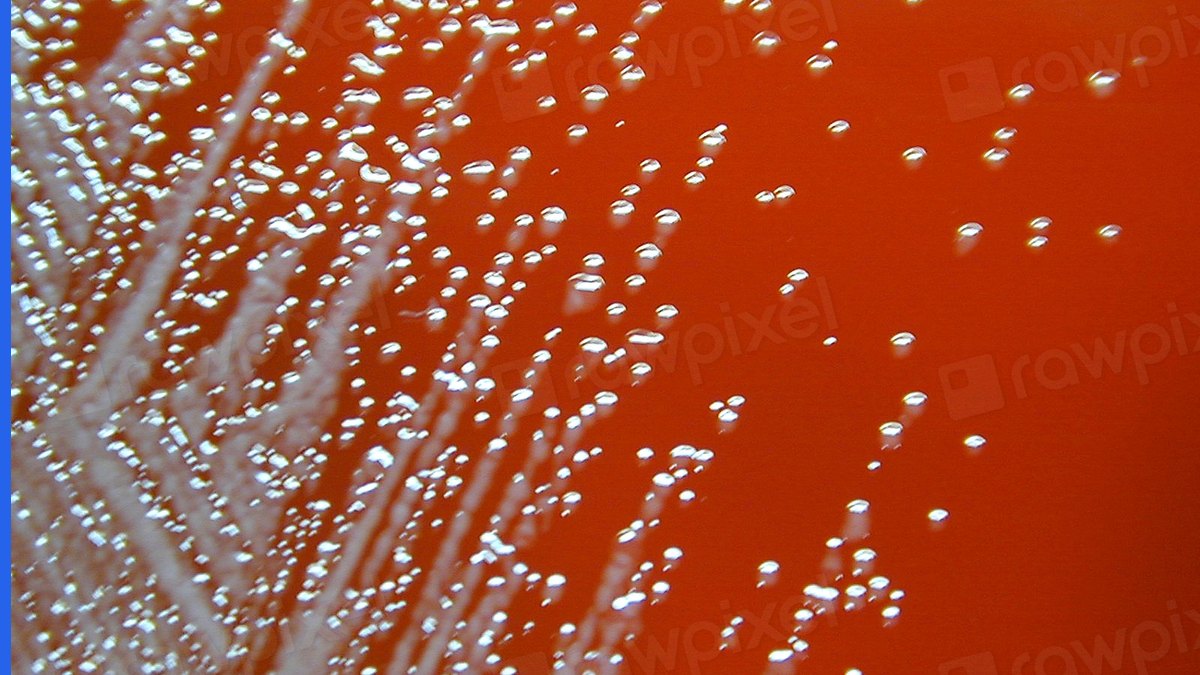
The rule is drafted as a prohibition with a safety valve. 37 CFR 1.84(a)(1) says black and white drawings are “normally required” and that India ink, “or its equivalent that secures solid black lines,” must be used. Photographs get in through paragraph (b)(1), and only where a drawing genuinely cannot carry the disclosure. The regulation then does something unusually helpful: it lists the subject matter the Office has in mind.
- Electrophoresis gels
- Blots — immunological, western, Southern and northern
- Autoradiographs
- Cell cultures, stained and unstained
- Histological tissue cross sections, stained and unstained
- Animals and plants
- In vivo imaging
- Thin layer chromatography plates
- Crystalline structures
- Ornamental effects, in a design patent application
Read that list again and the logic becomes obvious. Every entry is a subject whose appearance is produced by nature or by an assay, not by engineering. A line drawing of a western blot would not be an illustration; it would be an invention. Band intensity, staining gradients and crystal habit are the evidence, and an illustrator redrawing them is quietly editing the disclosure.
The corollary matters more in practice. Mechanical assemblies, circuits, fluidic systems and software architectures never qualify, because a competent illustrator can always draw them. “We already have excellent product photography” is not an argument the Office entertains, which is why our patent drawing services team converts client photography to compliant line work as a matter of course rather than filing it and hoping.
Rule 1: The Test Is the Medium, Not Your Budget
The “only practicable medium” standard asks a question about the subject matter, not about the applicant. Cost, deadline pressure and the absence of a CAD file are all irrelevant to it. The examiner is asking whether a drawing could have carried this disclosure — and for anything with defined edges, the answer is yes.
There is a second, quieter test hiding behind the first: quality. MPEP 1503.02 is blunt that photographs must be of sufficient quality that every detail of the disclosure is reproducible, and that any ambiguity about the features or appearance shown is a ground for rejection under 35 U.S.C. 112. A grainy photograph does not merely draw an objection to the drawings; it can put the adequacy of the disclosure itself in play.
One procedural point is worth stating plainly, because it is widely misreported: black and white photographs do not require a petition or a fee. Paragraph (b)(1) sets a substantive standard and nothing more. If the subject matter qualifies, the Office accepts the photographs; if it does not, you get an objection. The petition machinery belongs to colour, which is the next rule.
Rule 2: Colour Photographs Must Clear Two Gates, Not One
37 CFR 1.84(b)(2) is short and easy to underestimate: “Color photographs will be accepted in utility and design patent applications if the conditions for accepting color drawings and black and white photographs have been satisfied.” In other words, a colour photograph has to satisfy paragraph (b)(1) and the colour-drawing conditions in paragraph (a)(2). Failing either one is fatal.
The colour-drawing conditions under 1.84(a)(2) are procedural and easy to miss on a busy filing day:
- A petition explaining why the colour drawings are necessary.
- The petition fee set by 37 CFR 1.17(h).
- One set of colour drawings if the application is filed electronically, or three sets if it is filed by any other route.
- An amendment inserting the prescribed statement into the specification: “The patent or application file contains at least one drawing executed in color. Copies of this patent or patent application publication with color drawing(s) will be provided by the Office upon request and payment of the necessary fee.”
That last item is the one that trips people up, because it is a specification amendment rather than a drawing act, and it tends to be delegated to whoever is preparing the figures. If you are weighing colour at all, our guide to EPO colour patent drawings sets out how differently the two offices now treat the question.
Rule 3: A Photograph Still Obeys Every Other Drawing Standard
This is where most accepted photographs still generate an objection. Switching medium does not switch off the rest of 37 CFR 1.84. Paragraph (u)(1) still requires views to be numbered in consecutive Arabic numerals starting with 1, each preceded by the abbreviation “FIG.” Paragraph (p) still requires reference characters to be plain and legible, oriented in the same direction as the view, and at least 0.32 cm (1/8 inch) high.
Paragraph (p) also carries a requirement that photographs make genuinely hard: the same part appearing in more than one view must always be designated by the same reference character. On a stained section or a gel, “the same part” is not always visually obvious between exposures, and the illustrator has no line work to anchor the lead lines to.
There is a further trap in 1.84(p)(3): reference characters “should not be placed upon hatched or shaded surfaces,” and where that is unavoidable the character may be underlined with a blank space left in the hatching or shading. A photograph is, in effect, a continuously shaded surface from edge to edge. Numerals dropped onto a dark or textured field fail legibility, and the usual fix — leaving a blank space — means erasing part of the very evidence you filed a photograph to preserve.
The practical answer is a lead line running from a numeral placed in a clear margin or on a white leader block outside the image field. It is finicky work, and it is the main reason a compliant photograph set rarely costs less than the line drawings it replaced. For the wider checklist, see our breakdown of the USPTO patent drawing requirements under 37 CFR 1.84.
Rule 4: Never Combine Photographs and Ink Drawings in a Design Case
In design practice the rule is absolute. MPEP 1503.02, applying 37 CFR 1.152, states that photographs and drawings “must not be combined in a submission of the visual disclosure of the claimed design in one application.” You choose one medium for the entire disclosure.
The consequence is a design decision you have to make before the first figure is produced. If one view of the article can only realistically be photographed — an iridescent finish, a woven texture, a colour gradient — then every other view has to be photographed too, including the plan and elevation views that a line drawing would have rendered far more cleanly. Most applicants who reach that fork discover the photograph was not worth what it costs them elsewhere.
Note the boundary carefully. This all-or-nothing prohibition sits in the design rule, 1.152, not in 1.84. Utility practice is governed by the general standard in 1.84(b)(1) figure by figure — which is how a biotech utility case ends up with photographed gels alongside drawn apparatus. Even there, consistency is the safer instinct: mixed media invite an examiner to ask why the photographed figures could not have been drawn.
Rule 5: Design Photographs Cannot Show Environmental Structure
This is the rule that costs applicants real claim scope, and it is the least understood of the seven. 37 CFR 1.152 permits broken lines in a design drawing to show visible environmental structure, though not hidden planes and surfaces that cannot be seen through opaque materials. Photographs get no such latitude: they “must not disclose environmental structure but must be limited to the design claimed for the article.”
Broken lines are the sharpest claim-scoping instrument in design practice. They let you claim a handle and disclaim the appliance it is attached to, or claim a display screen’s icon and disclaim the device around it. A photograph shows what the camera saw, in solid lines, all of it claimed. Filing photographs in a design application therefore forfeits partial-claiming almost entirely.
There is a partial remedy. MPEP 1503.02 allows a disclaimer, placed in the specification or on the photographs themselves, excluding surface ornamentation, logos or written matter that form no part of the claimed design. It is narrower than broken lines and it works by statement rather than by depiction. Keep 1.152’s shading rule in mind as well: solid black surface shading is not permitted except to represent the colour black or colour contrast. Our guide to design patent drawings works through the broken-line strategy in full.
Rule 6: Europe Allows Photographs, but Rule 46 EPC No Longer Says So
European practice reaches a similar destination by a different road. The EPO Guidelines for Examination note at A-IX, 1.2 that the EPC makes no express provision for photographs; they are nevertheless allowed where it is impossible to present in a drawing what is to be shown, provided they are directly reproducible and meet the applicable requirements for drawings, such as sheet size and margins. The wording is close enough to the USPTO test that a well-reasoned US photograph set usually survives in Europe.
The citation itself is the trap. Rule 46 EPC, “Form of the drawings,” was deleted with effect from 1 February 2023, along with Rule 49(3) to (12) EPC, as part of the Administrative Council’s package of amendments supporting digital transformation of the grant procedure. Those presentation requirements were moved out of the Implementing Regulations and are now prescribed by a Decision of the President, so that they can be revised as filing technology changes.
A submission that cites “Rule 46 EPC” today is citing a provision that no longer exists — an avoidable own goal in a response to a formalities communication. Rule 49 EPC survives as the general provision on the presentation of application documents; the detail lives in the President’s decision.
One more change matters here. Since 1 October 2025 the EPO accepts and publishes greyscale and colour drawings, with electronically filed colour drawings published in colour. The old practice of scanning everything to black and white — which for years silently destroyed the information content of a colour photograph — has ended.
Rule 7: The PCT Accepts Black-and-White Photographs Only
PCT Rule 11.13 requires drawings executed in “durable, black, sufficiently dense and dark, uniformly thick and well-defined, lines and strokes without colorings.” On its face that leaves no room for a photograph at all. MPEP 1825 explains the accommodation: “The PCT makes no provision for photographs. Nevertheless, they are allowed by the International Bureau where it is impossible to present in a drawing what is to be shown (for instance, crystalline structures).”
The conditions are strict and they are formal rather than substantive. Photographs must be on A4 sheets, must be black and white, must respect the minimum margins, and must permit direct reproduction. Colour photographs are not accepted.
For anyone filing one invention into several jurisdictions, that makes the PCT the lowest common denominator, and it dictates the sequence of the work. Build a black and white photograph set that clears PCT Rule 11.13 first, and add colour later by petition on US national entry if the disclosure genuinely needs it. Doing it in the other order means reshooting. Our note on PCT drawing requirements covers the sheet-level formalities in detail.
Deciding Whether to Draw It or Shoot It
Most of the cost of a photograph in a patent application is incurred after filing, in replacement sheets and in claim scope you cannot get back. PerspireIP’s illustrators handle both sides of that call — assessing whether your subject matter genuinely meets the 1.84(b)(1) standard, and producing compliant line work where it does not. See our patent drawing services, or contact us with a sample figure and we will tell you which way it should be filed.
Frequently Asked Questions
Do black and white photographs in patent applications require a petition?
No. 37 CFR 1.84(b)(1) sets a substantive standard only — photographs are accepted if they are the only practicable medium for illustrating the claimed invention. The petition and fee under 1.17(h) are required for colour, not for black and white photographs.
Can I file colour photographs at the USPTO?
Yes, but they must satisfy two sets of conditions. Under 1.84(b)(2) a colour photograph must meet both the black and white photograph standard in (b)(1) and the colour drawing conditions in (a)(2), which include a petition, the 1.17(h) fee, the required number of sets, and the prescribed statement in the specification.
Can photographs and line drawings be combined in the same application?
Not in a design application. MPEP 1503.02, applying 37 CFR 1.152, states that photographs and drawings must not be combined in the visual disclosure of a claimed design in one application. Utility applications are assessed figure by figure under 1.84(b)(1), but mixing media still invites an objection.
Does the EPO accept photographs in a European patent application?
Yes, exceptionally. The EPC makes no express provision for photographs, but the Guidelines at A-IX, 1.2 allow them where it is impossible to present in a drawing what is to be shown, provided they are directly reproducible and meet the applicable drawing requirements.
Is Rule 46 EPC still the rule for the form of drawings?
No. Rule 46 EPC was deleted with effect from 1 February 2023, together with Rule 49(3) to (12) EPC. The presentation requirements for drawings are now prescribed by a Decision of the President of the EPO rather than by the Implementing Regulations.
Will filing photographs narrow my design patent?
Almost certainly. 37 CFR 1.152 requires photographs to be limited to the claimed design and to show no environmental structure, so you lose the broken-line disclaimer that lets a drawing claim part of an article. A specification disclaimer under MPEP 1503.02 recovers only a little of that scope.