
Table of Contents
When you file a continuation, the specification is usually a clean copy of the parent. The figures feel like the safe part of the filing. They are not. Continuation application drawings are measured against the parent’s disclosure as filed, and a single added line, view or callout that the parent never showed can cost the benefit date the continuation was filed to capture. The rules are not aesthetic. They come from 35 U.S.C. 120, 35 U.S.C. 132 and, for designs, a Federal Circuit decision about a bottle. Here are the seven that decide whether your figures survive. Which figures to carry forward is ultimately a question of patent continuation strategy: the drawings should support the claims you intend to pursue next, not just mirror the parent.
Continuation Application Drawings: What Actually Carries Over

A continuation is not a fresh application that happens to borrow a filing date. Under 35 U.S.C. 120, it earns the parent’s filing date only for subject matter that was disclosed in the parent in the manner required by 35 U.S.C. 112(a). The statute also requires copendency: the continuation must be filed while the parent is still pending.
The practical consequence is that the drawings are part of the disclosure being inherited, and they are also part of the disclosure being tested. In the ordinary case you file a copy of the parent’s sheets and nothing more needs to be said. The difficulty starts the moment someone decides the continuation is a good opportunity to improve the figures.
That instinct is understandable. The parent’s drawings may have been informal, or the new claims may emphasise a feature the old figures showed only incidentally. But the test applied to continuation application drawings is not whether the change is helpful. It is whether the parent already disclosed what the new figure now shows.
Rule 1: The Parent’s Disclosure Is the Outer Boundary
Everything else in this article is a corollary of one principle: the parent application as filed sets the outer boundary of what the child may show. Not the parent as later amended, and not what the inventor plainly had in mind. The document as it was filed.
This matters most when the claims shift. A continuation is very often filed to pursue a feature the parent disclosed but never claimed, and the drafter reasonably wants a figure that foregrounds it. That is permitted if the feature is genuinely in the parent’s disclosure, including in its drawings. It is not permitted if the new figure supplies detail the parent left out, even where that detail is obvious to an engineer.
Treat the parent’s sheets as evidence, not as a draft. Before you change anything, identify the specific figure, paragraph or reference numeral in the parent that supports the change, and write that support down. If you cannot point to it, you do not have it.
- Support must exist in the parent as filed, including its drawings and written description.
- Copendency is jurisdictional: file before the parent issues or goes abandoned.
- A feature shown in a parent figure but never discussed in the text can still be disclosure.
- Obviousness to a skilled engineer is not a substitute for disclosure.
Rule 2: New Matter Is Barred by 35 U.S.C. 132 – Even in a Figure
35 U.S.C. 132(a) states that no amendment shall introduce new matter into the disclosure of the invention. The rule side says the same thing: under 37 CFR 1.121(f), no amendment may introduce new matter into the disclosure of an application. Neither provision carves out drawings, and examiners do not read them as if it did.
A drawing can introduce new matter in ways that text cannot, because a figure asserts structure whether or not the drafter intended to assert it. Adding a sectional view that shows an internal wall the parent never depicted is new matter. Adding a dimension, a ratio or a material callout absent from the parent is new matter. Replacing a schematic block with a detailed mechanism is new matter, even if the mechanism is conventional.
The remedy when an objection lands is procedural rather than creative. Drawing changes in a pending case go in as replacement sheets under 37 CFR 1.121(d), labelled in the top margin, with marked-up copies submitted as an Annotated Sheet; a replacement sheet must carry every figure that appeared on the sheet it replaces, even when only one figure changed. We cover that mechanism in detail in our guide to amending patent drawings.
Rule 3: You May Perfect Form, Not Substance
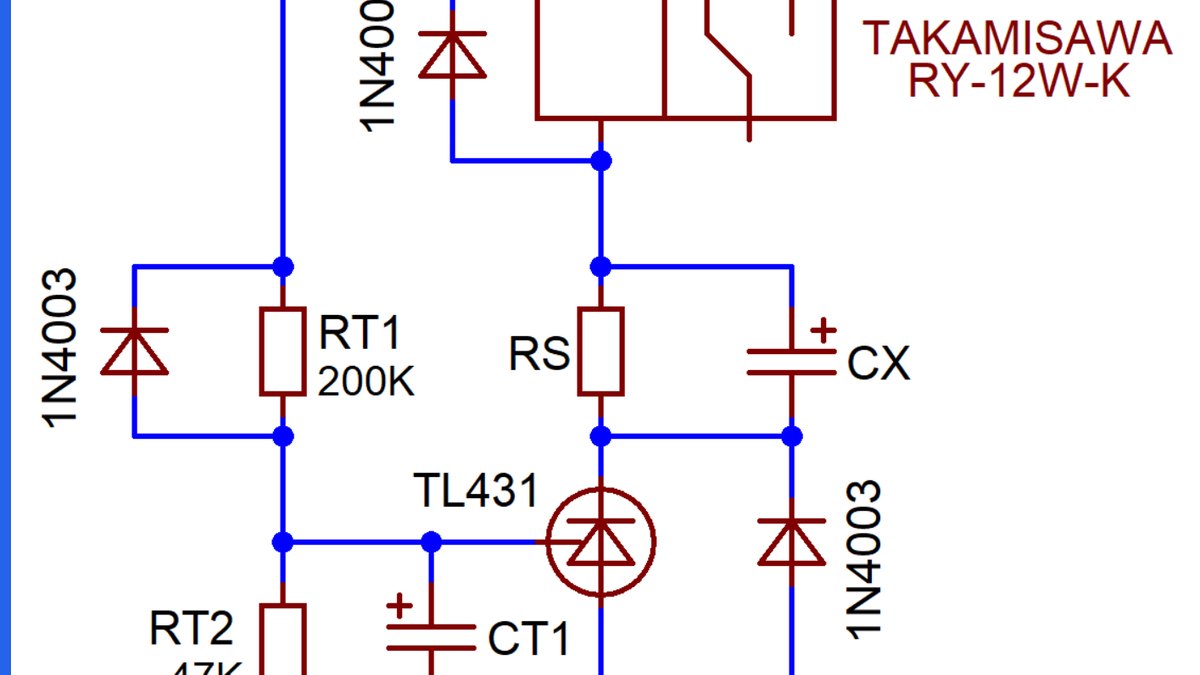
There is a genuine and useful freedom here, and practitioners often underuse it out of caution. A continuation is an excellent moment to bring a figure set into compliance with 37 CFR 1.84, because form is not disclosure. Line weight, sheet size, margins, hatching legibility, lettering height, view labelling and numbering can all be corrected without touching what the drawing discloses.
This is how informal drawings filed under time pressure get replaced with formal sheets. The subject matter is identical; only its execution changes. The same logic allows you to redraw a figure that reproduced badly, to split an overcrowded sheet across two sheets, or to renumber figures so the sequence matches the new claim order.
The boundary is whether a reader would learn something new. Re-inking the same mechanism at a usable line weight teaches nothing new. Re-inking it and adding the fastener that was always there in the prototype but never on the sheet teaches a great deal. If you want the detail on the form rules themselves, see our breakdown of the USPTO drawing requirements under 37 CFR 1.84.
- Safe: line quality, margins, sheet size, lettering, shading legibility, figure renumbering.
- Safe: converting informal sheets to formal sheets showing the same structure.
- Not safe: new views that reveal unshown structure, added dimensions, added components.
- Borderline, so document your support: enlarged detail views drawn from an existing figure.
Rule 4: In re Owens Shows How One Broken Line Costs the Benefit Date
The clearest illustration of the limit is In re Owens, 710 F.3d 1362 (Fed. Cir. 2013). Owens filed a design continuation for a bottle. To claim only part of a pentagonal front panel that the parent had shown in full, he bisected the panel with a broken line. The examiner rejected the claim, and the Federal Circuit affirmed.
The problem was that the parent disclosed no boundary, explicit or implicit, where the new broken line fell. By drawing it, Owens defined a trapezoidal surface that had not existed as a discrete region in the parent’s disclosure. The court applied the ordinary written description standard of 35 U.S.C. 112 to a design case and held that the parent would not have conveyed to a designer of skill in the art that the inventor possessed the narrower, newly bounded design.
The USPTO’s MPEP 1503.02 now reflects the resulting line. An unclaimed boundary line is acceptable where it makes explicit a boundary that already existed in the original disclosure but was simply unclaimed. Applicants may add a straight broken line connecting points on existing full lines. A boundary that is anything other than a straight broken line may constitute new matter, because it invents a contour the parent never drew.
The operational takeaway for design families is to plan the broken lines in the parent. If you may later want to claim a sub-region, show that region’s boundary in the parent while you still can. Our guide to design patent broken lines works through how the solid and broken line distinction sets claim scope.
Rule 5: Design Continuations Answer to 37 CFR 1.152
Design cases run on a different form rule from utility cases, and the difference bites in continuations because the drawing is the claim. Under 37 CFR 1.152, the drawings must contain a sufficient number of views to constitute a complete disclosure of the appearance of the design.
Two specific prohibitions in that rule catch people out. Solid black surface shading is not permitted except when used to represent the colour black or colour contrast. And photographs and ink drawings may not be combined as formal drawings in one application, which forecloses the tempting shortcut of filing a continuation that mixes a photograph of the product with redrawn line figures.
Because the figures carry the claim scope, adding a view to a design continuation is almost never a neutral act. A new view either shows the same appearance from a different angle, in which case it must be derivable from the parent’s views, or it shows something the parent did not disclose, in which case it fails. When a design family needs real flexibility, build the views into the parent.
Note also that solid black surface shading is treated differently in utility practice under 1.84(m), where surface shading is encouraged for legibility. Carrying a utility shading habit into a design continuation is a common and avoidable objection.
Rule 6: A CIP Buys New Figures at the Cost of a Later Date
If the new drawing genuinely does add matter, there is a legitimate route: a continuation-in-part. A CIP is permitted to contain subject matter not disclosed in the parent, which means it can contain genuinely new figures. The cost is that the benefit of 35 U.S.C. 120 is claim-by-claim, not application-wide.
Claims fully supported by the parent keep the parent’s date. Claims that depend on the new drawings get the CIP’s actual filing date, and are exposed to everything that became prior art in the interval, including the applicant’s own earlier publication. In a crowded field that interval is often decisive, which is why a CIP should be a considered decision rather than a way to avoid an awkward conversation about support.
Divisionals sit differently again. A divisional under 35 U.S.C. 121 responds to a restriction requirement, so its claims are directed to an invention the parent already disclosed; the drawings should need no substantive change at all. Section 121 also provides a safe harbour so that the parent and the divisional are not used against one another as prior art. If you are choosing between the three, our comparison of a continuation and a divisional application sets out the trade-offs.
Rule 7: At the EPO, Article 76(1) Replaces the New-Matter Test
European practice reaches a similar result through different machinery, and one point is worth stating plainly: the EPC has no continuation-in-part. There is no mechanism for adding subject matter to a pending family and keeping the earlier date. A European divisional under Rule 36 EPC must be filed while the earlier application is pending, and under Article 76(1) EPC it may not extend beyond the content of the earlier application as filed.
Article 123(2) EPC imposes the parallel bar on amendment during prosecution. The EPO applies these provisions strictly, and an added figure is a classic way to fall foul of them. Where US practice weighs written description, the EPO asks whether the skilled person is presented with information not directly and unambiguously derivable from the earlier filing.
On form rather than substance, note a change practitioners still get wrong. Rule 46 EPC, which used to govern the form of the drawings, was deleted with effect from 1 February 2023, along with Rule 49(3) to (12) EPC. Those presentation requirements are now set by a Decision of the President of the EPO and reflected in the EPO Guidelines, Part A, Chapter IX. Citing Rule 46 EPC as live authority dates a filing immediately. The EPO’s own Guidelines for Examination carry the current text.
For PCT-derived families the drawing standard is PCT Rule 11, which national phases generally accept, so a well-prepared international figure set usually travels without redrawing.
A Pre-Filing Checklist for Continuation Application Drawings
Run this before the continuation goes out. It takes ten minutes and it is the cheapest insurance available on the filing.
- Diff the sheets. Place the parent’s figures beside the child’s and identify every difference, however small.
- For each difference, name the support in the parent as filed – figure number, paragraph or reference numeral.
- Classify each change as form or substance. Form corrections under 37 CFR 1.84 are safe; substance needs support or a CIP.
- Check reference numerals still match the specification text you carried over, and that no numeral is orphaned.
- In design cases, confirm every broken line traces a boundary the parent disclosed, and that it is straight where it connects existing full lines.
- Confirm copendency on the filing date, and that the benefit claim recites the full chain.
- If any claim depends on a new figure, decide consciously between dropping the figure and filing a CIP.
If step two fails for any change, the honest answer is usually to revert the figure to the parent’s version and pursue the improvement in a separate filing. Reverting costs an afternoon. Losing a benefit date in litigation costs considerably more, because by then the question is being argued by someone who is paid to find exactly this.
Have Your Continuation Figures Checked Before Filing
PerspireIP prepares and audits patent drawing sets for USPTO, EPO and PCT filings, including parent-to-child diffs on continuation, divisional and CIP families. We will tell you which proposed figure changes are form corrections and which ones need support or a CIP. Contact us with the parent’s sheets and the claims you intend to pursue.
Frequently Asked Questions
Can I add a new figure to a continuation application?
Only if the parent as filed already disclosed what the figure shows. Adding a figure that reveals unshown structure is new matter barred by 35 U.S.C. 132(a) and 37 CFR 1.121(f). If the matter is genuinely new, file a continuation-in-part and accept the later filing date for claims that depend on it.
Can I replace informal drawings with formal drawings in a continuation?
Yes, and it is a good use of the filing. Correcting line weight, margins, sheet size, lettering and shading to meet 37 CFR 1.84 changes execution rather than disclosure, so it does not raise a new matter issue provided the figures show the same subject matter.
What did In re Owens actually hold?
In In re Owens, 710 F.3d 1362 (Fed. Cir. 2013), a design continuation added a broken line bisecting a panel the parent had shown in full. Because the parent disclosed no corresponding boundary, the new line defined a surface the parent never disclosed and the claim failed the written description requirement of 35 U.S.C. 112.
Do divisional applications have the same drawing restrictions?
Yes. A divisional under 35 U.S.C. 121 is limited to the parent’s disclosure in the same way, so its figures should normally be unchanged. Because a divisional follows a restriction requirement, the claims were already disclosed, and substantive drawing changes are rarely necessary.
Is Rule 46 EPC still the authority for the form of drawings?
No. Rule 46 EPC was deleted with effect from 1 February 2023, together with Rule 49(3) to (12) EPC. Drawing presentation requirements are now set by a Decision of the President of the EPO and reflected in the EPO Guidelines, Part A, Chapter IX.
Does the EPC have an equivalent of a continuation-in-part?
No. There is no CIP in European practice. A divisional under Rule 36 EPC may not extend beyond the content of the earlier application as filed under Article 76(1) EPC, and Article 123(2) EPC bars added subject matter during prosecution.